
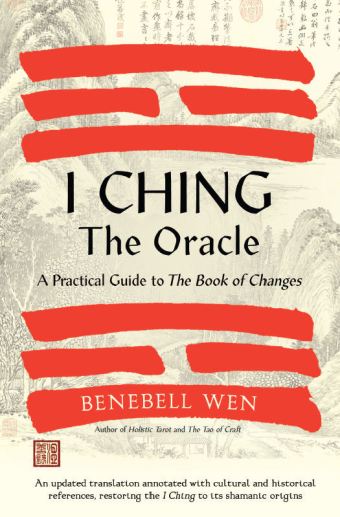
The Book of Changes is both a compass and an atlas for finding your path. Just as a path is found by walking it, to know the Tao, you practice the Way. The I Ching is a guidebook for how to practice the Way, putting wisdom into action.
I Ching, The Oracle (North Atlantic Books, 2023) is a treatise on the mythological and historical context for the I Ching, providing an overview of its scholarly discourse through the ages. My translation and annotations of the I Ching endeavors to restore the Oracle to its shamanic origins.

The Book of Rites, dated around 300 BC, noted that under the employ of the king were nine wu 巫 shamans charged with the role of divination for the kingdom, three specializing in each of the three forms of divination, named as Liánshān 連山, Guīcáng 歸藏, and the third, Zhōuyì 周易, the Zhōuyì being a reference to the I Ching.
Thus, I Ching divination was historically under the purview of wu 巫 shamans. An I Ching diviner, called a shì rén 筮人, would be considered a wu 巫, but was a specialized subset within wu shamanism. “All important events of the kingdom must be determined first and foremost by divination,” noted the Book of Rites, and this divination method utilized dried stalks of grass or reeds.

As rationalist philosophy develops through the imperial dynasties, shamanistic practices are looked down upon as superstition. Although the Book of Changes maintains its cultural importance, it is treated as a historical text that inspires deep reflection and personal contemplation.
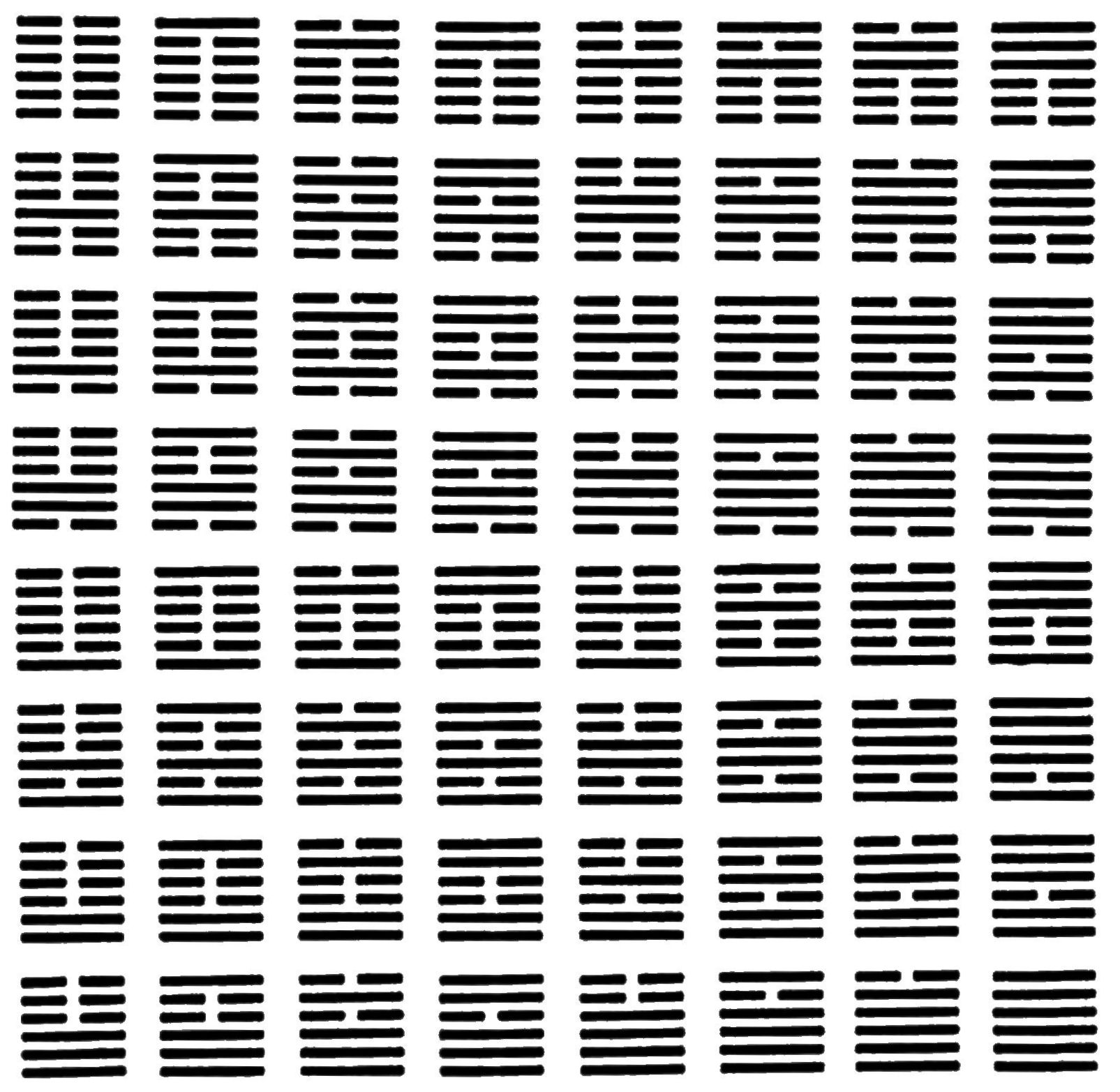
By the 20th century, mathematicians and scientists at work on computing systems renewed an interest in the I Ching, noting the Oracle’s lines of binary code forming hexagrams, the machine language of the Tao, that become the basis of all operations in the universe. These hexagrams, written in a binary code, follow a sequence that aligns with arithmetic logic. The divination method is not unlike an algorithm, a step-by-step procedure and set of rules performed for solving the problem at hand.
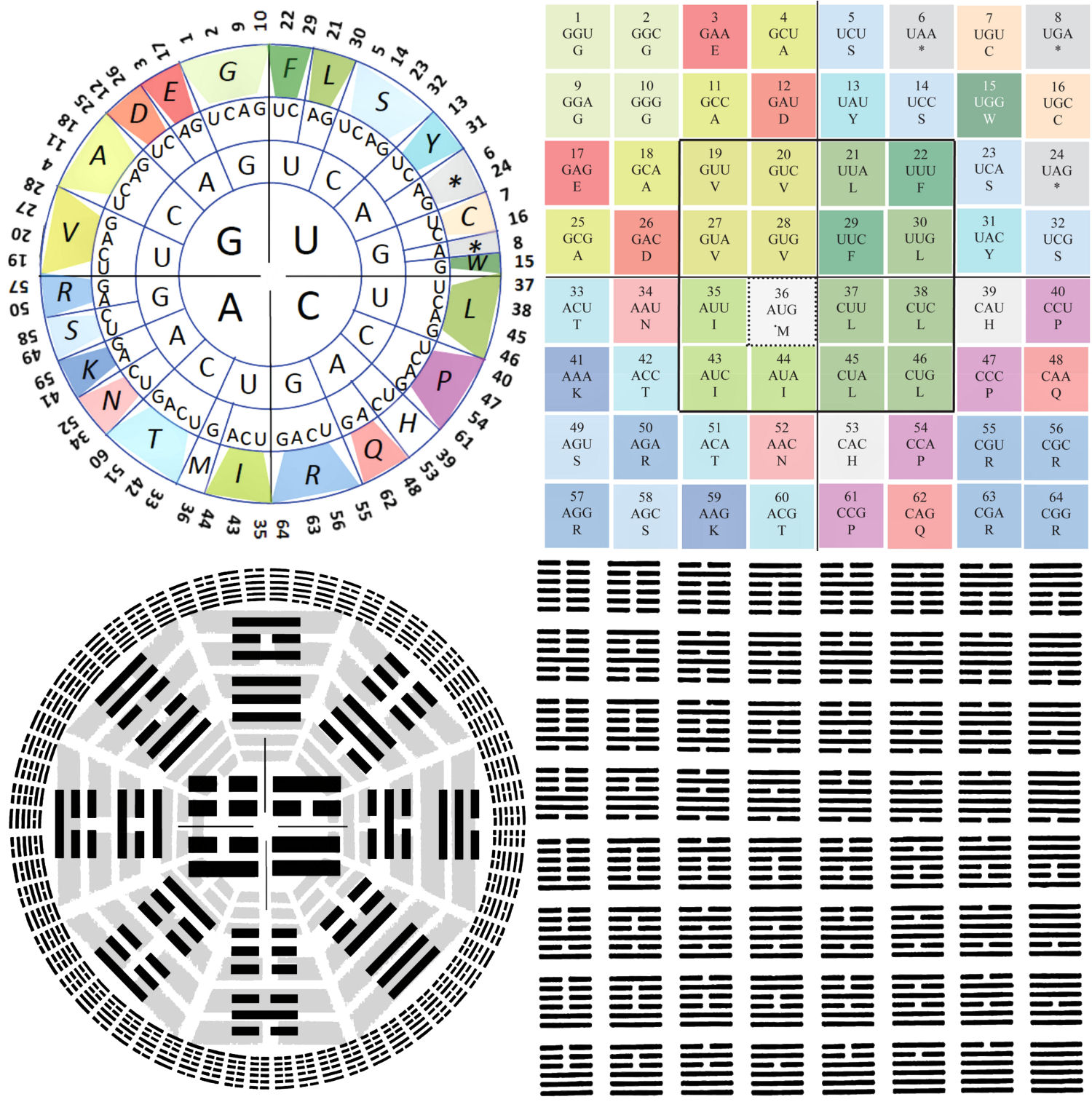
What’s more, the I Ching and computing systems are not unlike the DNA complex: all three serve as a centralized information storage system, and also represent a processing system.
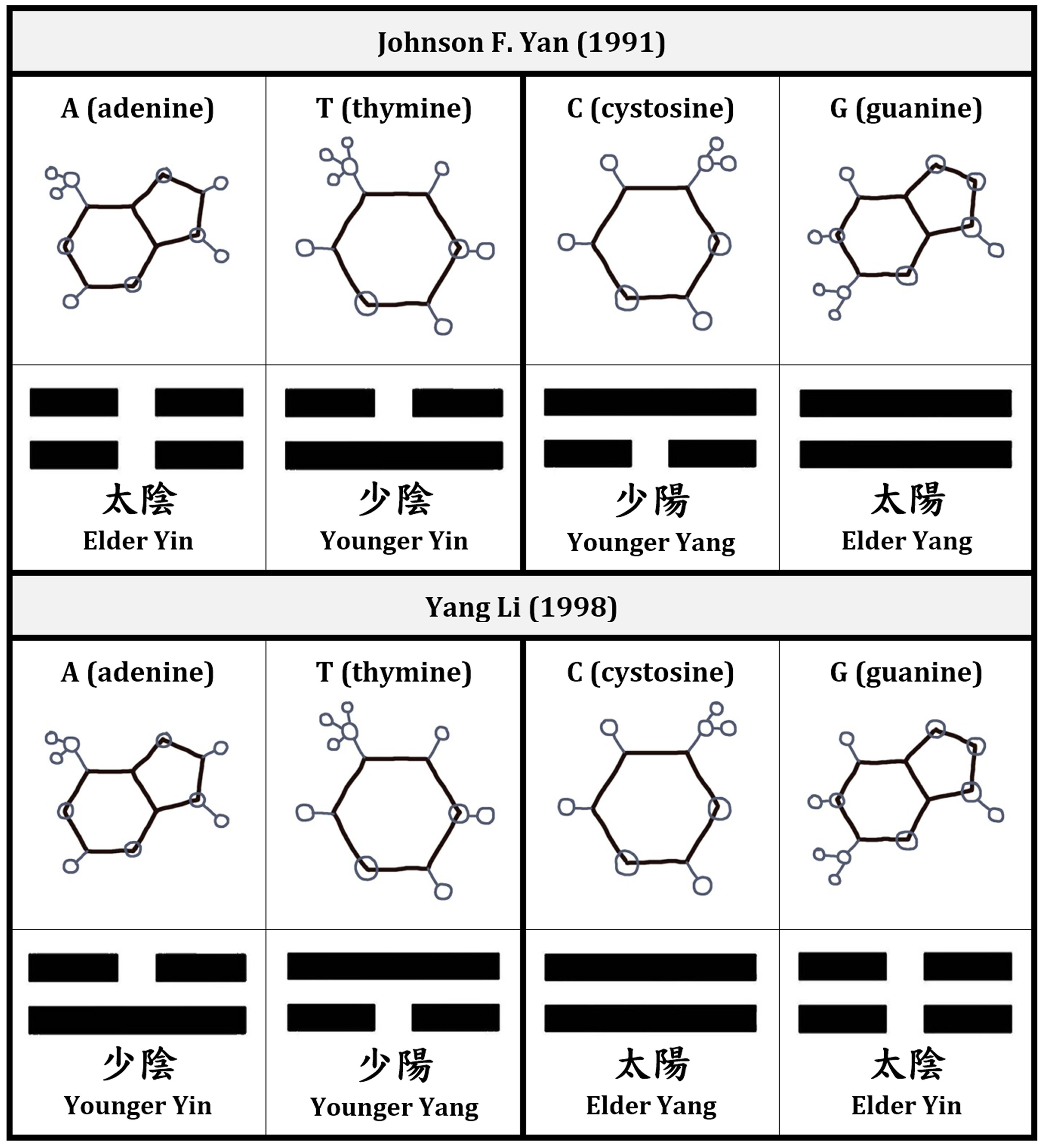
DNA is like the software program that runs the body’s hardware, comprised of binary and quarternary codes forming sixty-four triplet combinations, an architecture that mirrors the I Ching sixty-four hexagrams.

It is as if this operation of binary code functions represent a universal blueprint for an operation that can store and transmit information, and both express and change physical systems. Whether it is biology or computer science, physics, engineering, or economics, these systems are based on applications of calculus, which is defined as the mathematics of change. The I Ching, then, is a 3,000-year-old theorem for the mathematics of change.
Yet the I Ching is first and foremost for prayers to gods and ancestors, through which the spirits answer. The Oracle is a mediator between worlds, revelatory of Heaven’s Will.

The two most important characteristics of the Yellow River civilizations, noted Chinese philosopher Li Zehou 李泽厚, is the clan system and shamanism. The Book of Changes is an artifact that epitomizes both.
With this I Ching reference book, you’ll…
- Contextualize the origins of the I Ching within the framework of Chinese myths, legends, and cultural heroes
- Follow the development of I Ching scholarship (Yì Xué) and discourse from the Warring States period, the schism between New Text and Old Text schools, esoteric I Ching and the School of Mystery to its journey westward
- Learn the two main interpretive approaches, the Image and Number Tradition and the Meaning and Principle Tradition
- Integrate numerology and lunisolar astrology with the I Ching in Plum Blossom methods of divination
- Deepen your understanding of the eight trigrams (Ba Gua) and the five alchemical changing phases (Wu Xing), and how to apply the metaphysical correspondences in Taoist magic and ritual
- Learn various divination methods, from the yarrow stalk method circa 221 BC and the coin toss method from 200 AD to divination with cowrie shells, rice grains, and channeling. This text will also present a merger divination method of the Oracle with tarot.
- Connect with ancestors and East Asian cultural heritage through I Ching divination
- Understand the shamanistic-historical traditions of the I Ching, the eight gods of Shang shamanism, soul retrieval, and the invisible hand of folk gods and goddesses present in the Oracle
The Book of Changes is a revelation of metaphysical philosophy, epistemology, and ethics, in addition to being a system for divination and a book of occult secrets. The Oracle is a master teacher to both the rationalist scholar and the mystic. This updated iteration strives to reconcile both worlds.
What I Ching, The Oracle really is, though, is a magical grimoire. We write the books we want to read. This book is mentorship in the esoteric arts. Contained within a primer on the I Ching and Yì Xué scholarship is a book of practical methods in spell-crafting, folk magic, and spiritual cultivation.
My objective is to impart a deep-dive learning experience into the history and mythological references found in the Book of Changes, keyed specifically with transcendental spiritualism in mind.

- READ EXCERPTS. Read excerpts from the book.
- TABLES & REFERENCES. For your studies and note-taking, this page provides select charts and diagrams from the book for your free download.
- COMPANION COURSE. Supplemental video tutorials on the I Ching and its cultural context.
- AMENDMENTS TO TEXT. Errata. List of corrected errors found in the first printing of the book.
- PRACTICUM WORKSHEETS. Printable worksheets that guide you through selected Practicums excerpted from the book.
 benebell wen