THE PROJECT:
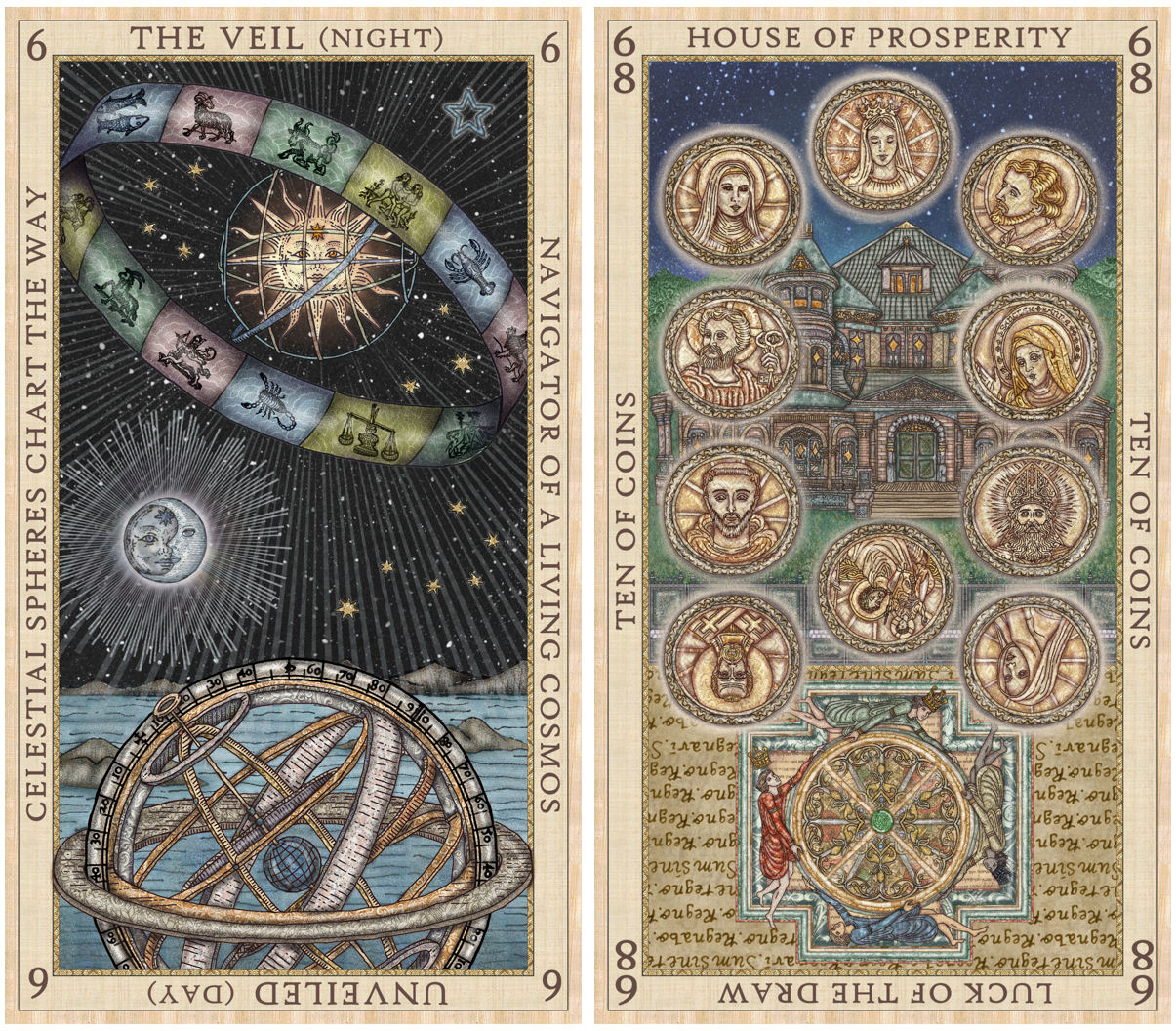
The Tarot of Thoth-Hermes is my 21st century re-drawing of the Etteilla deck, closely following key design elements reconciled from Grand Etteillas I, II, and the various iterations of the IIIs. Some of the card titles have been renamed and many of the keywords reinterpreted to update the deck for the modern reader.

The deck will come with a Little White Booklet for quick reference to divinatory meanings of the cards in addition to a bulkier trade paperback Etteilla Guidebook.
The card meanings reconcile various French editions of Etteilla texts, namely:
- Etteilla’s Cahiers and other writings,
- Le Grand Etteilla ou L’Art de Tirer Les Cartes et de dire la Bonne Aventure, par Julia Orsini (Paris, 1838), published by Blocquel-Castiaux, and
- Les Récréations de la cartomancie, ou Description pittoresque de chacune des cartes du grand jeu de l’oracle des dames, avec des combinaisons pour expliquer le présent, le passé, l’avenir, par Mlle Lemarchand (Paris, 1867).
The Guidebook will include images from Etteilla II, and thus can be used as a general book of card meanings and reading methods with any deck from the Etteilla system.
I started the illustration and writing project in early 2022 and at present it continues as an ongoing work-in-progress. This space is a placeholder for that final work.

THE ART PROCESS:
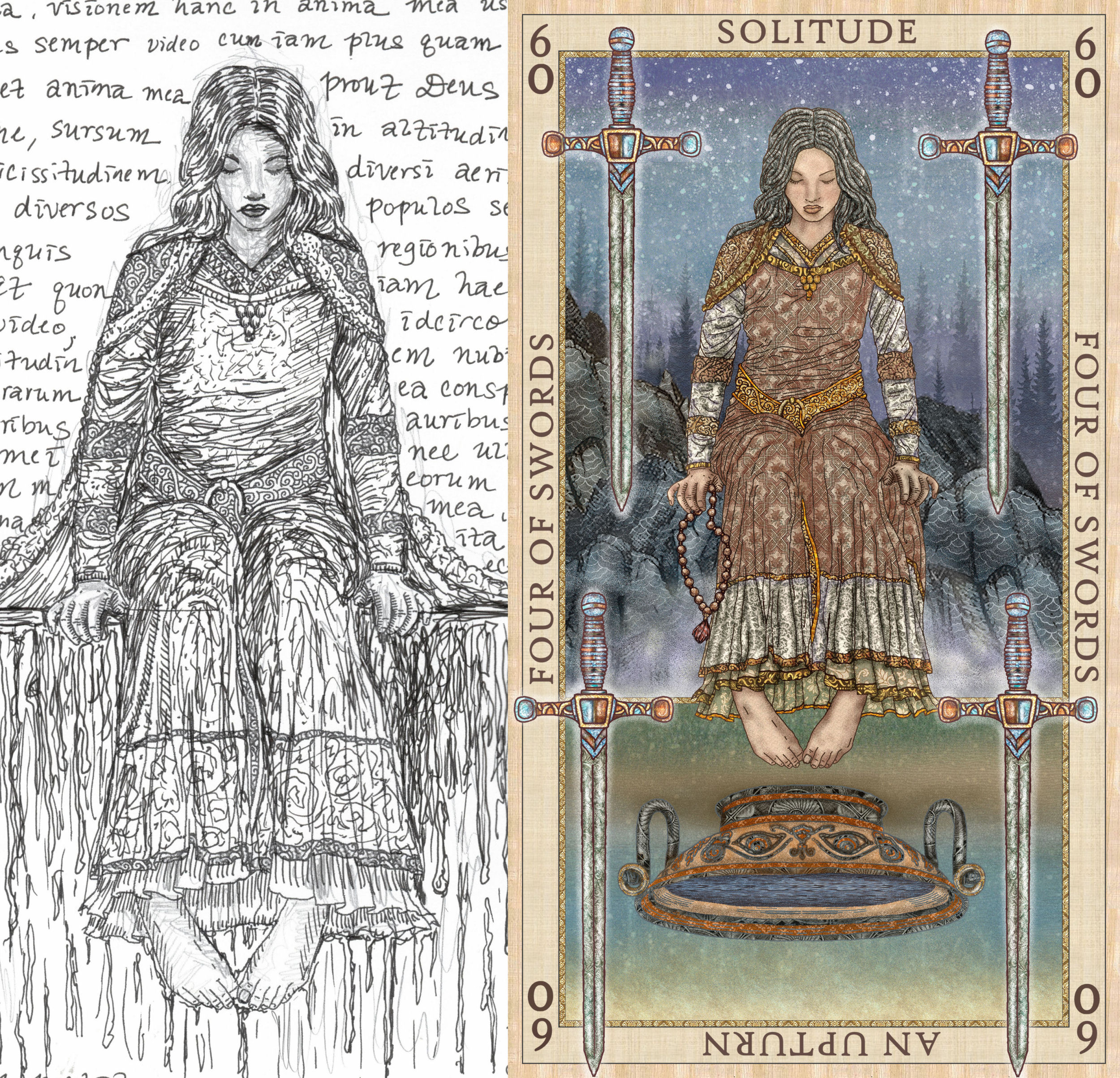
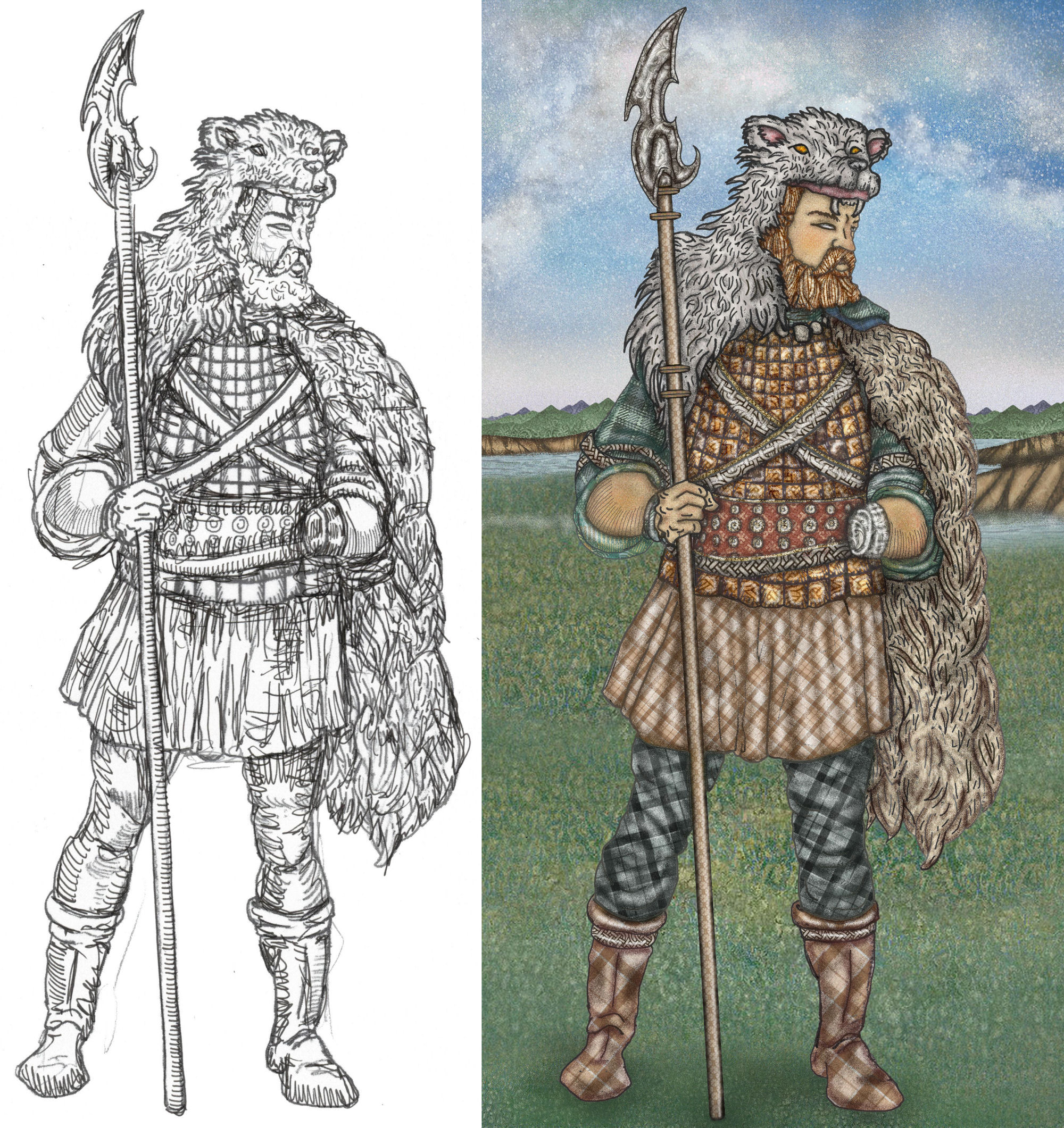
For my card illustrations, I employ a hybrid technique. The line drawings are done by hand, a rough thumbnail sketch done with a mechanical pencil, and then outlined with black ink. I then scan that pen-and-ink line drawing onto my computer and complete the composition and coloring work with digital paint brush tools and layering techniques.
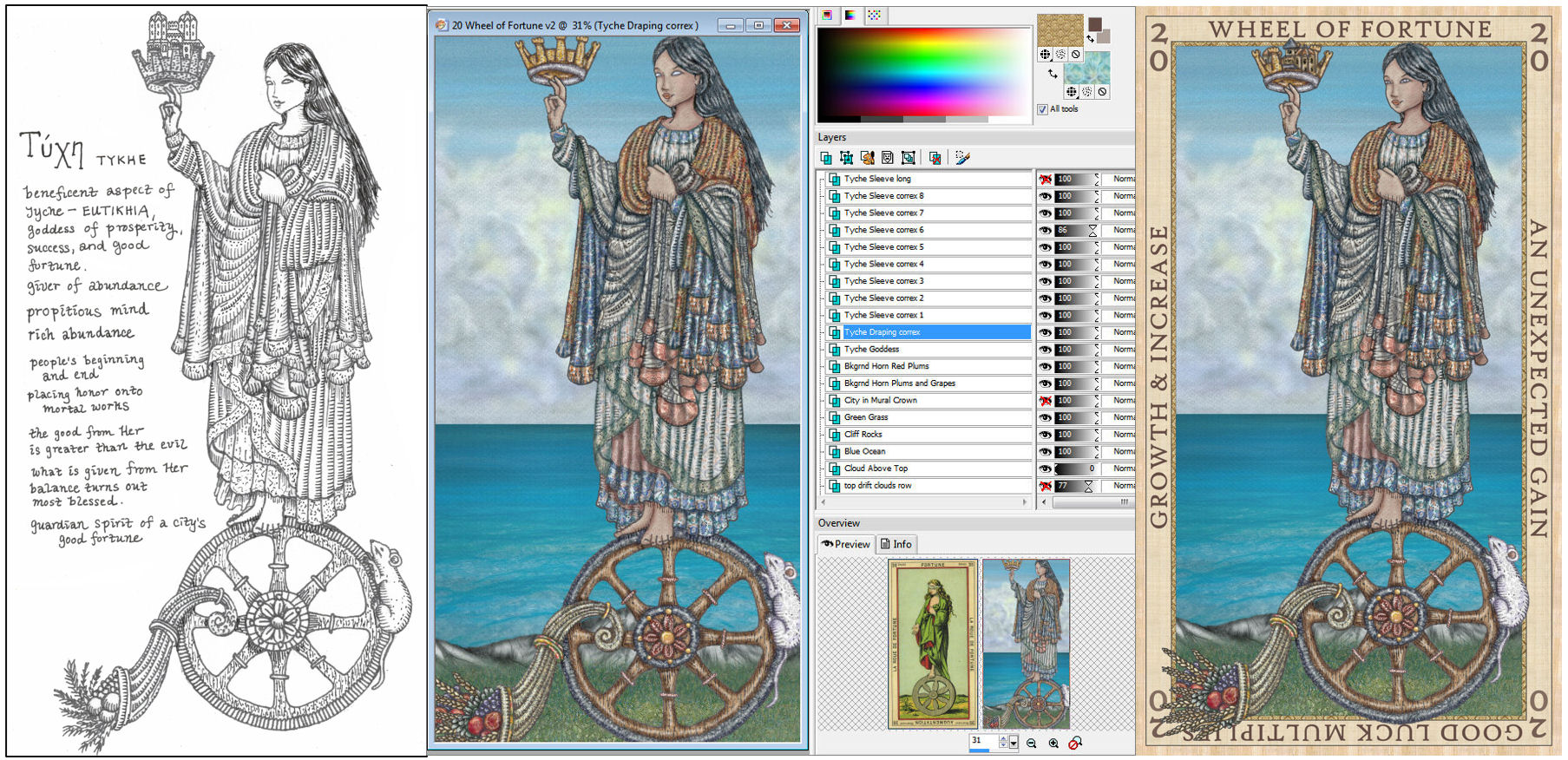
After I’ve scanned in my sketch, I digitally separate out the design elements into distinct layers, which makes it easier to rearrange the composition and ultimately set it inside the tarot card frame (where you see edges of design elements “breaking the fourth wall,” self-acknowledging that this is a tarot deck).
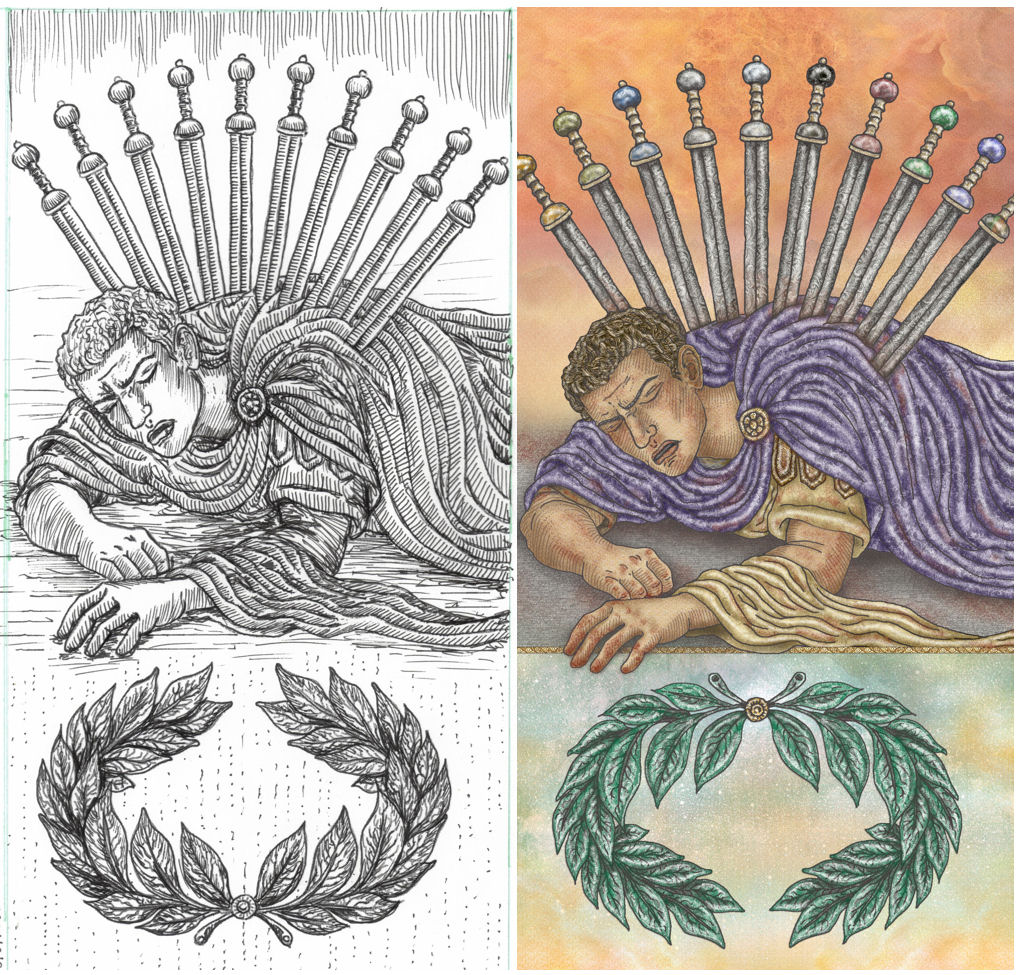
To give the color a luminescent quality, I don’t use solid colors, but rather, use seamless tiles I’ve designed myself in place of color. Not all of the illustration features are done by hand. The background clouds, sky, and seas are done via digital paintbrush tools.
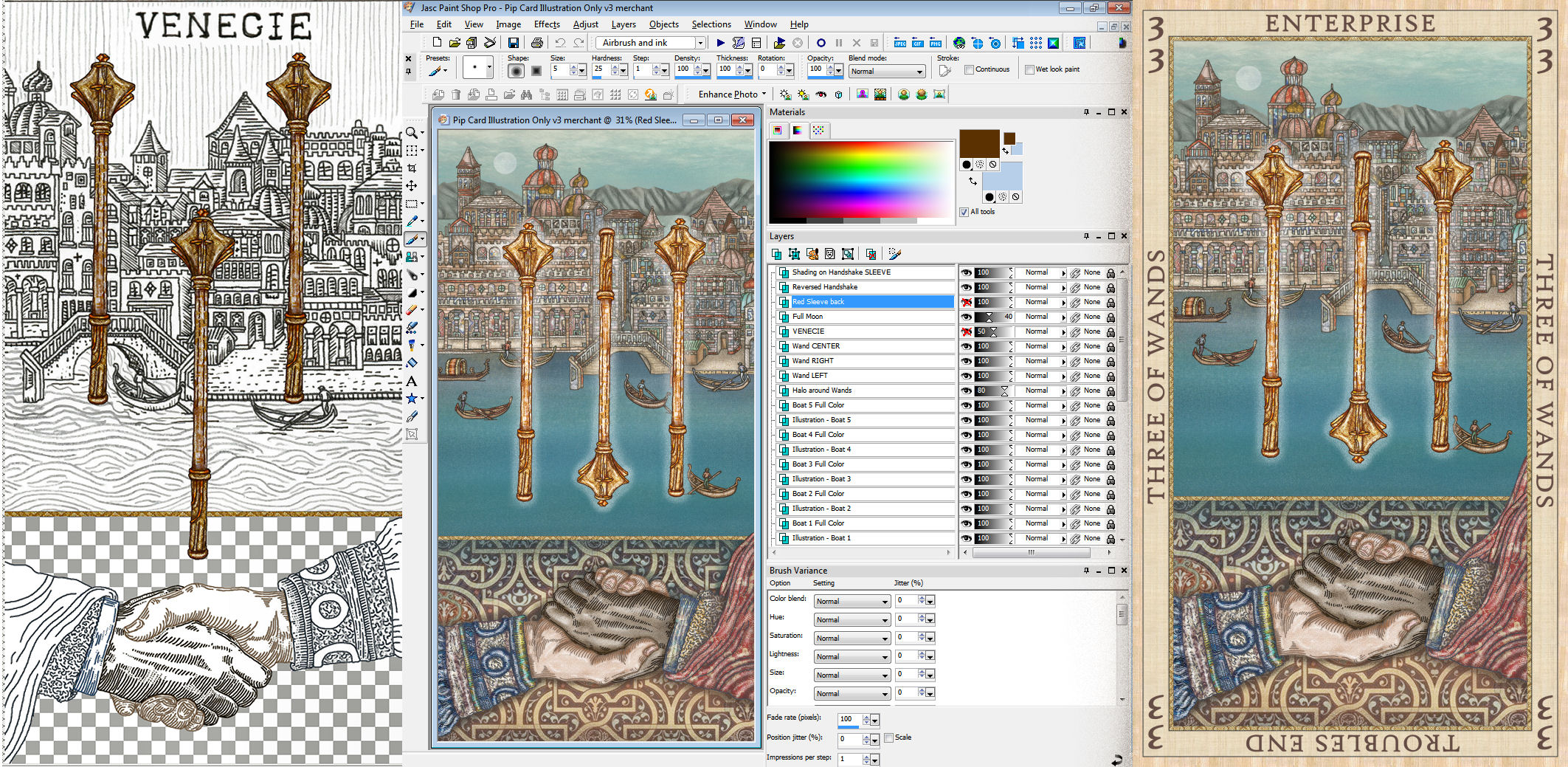
The final illustration is then set into the frame design for the card.
For the digital art, I use Jasc Paint Shop Pro v. 9.0, circa 2004. This artistic choice for the digital art component to be created in an obsolete software program that was once state-of-the-art (back in the 90s, when I first started exploring art as a medium) is itself commentary on nostalgia, reconstruction, and the very purpose behind a 21st century resuscitation of the Etteilla tarot system.
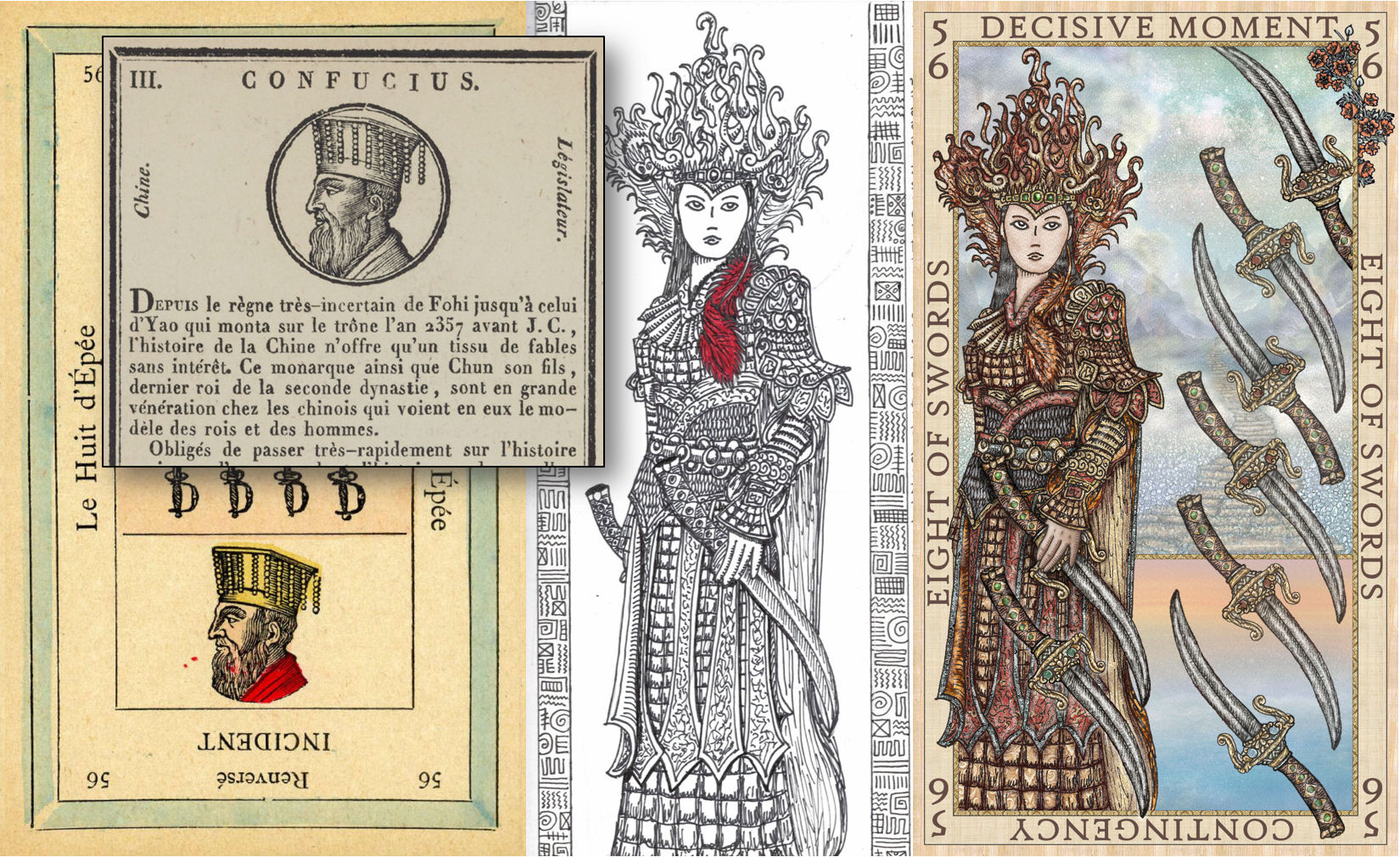
As a vehicle for expression, the hybrid approach of traditional and digital mediums presents a discourse between the past and the present, an exchange of ideas across time and space. Drawing by hand brings organic creativity and then finishing the composition digitally brings structured precision.
While I do use digital instruments for rendering the art, it is with a 2004 digital art software program, and the extent of technology I use goes only up to that year. In other words, no AI, not even the types of photo editing techniques used post 2010s. Any aspect of digital art I am using for this deck could have been done with the basic technology available in the early 2000s.
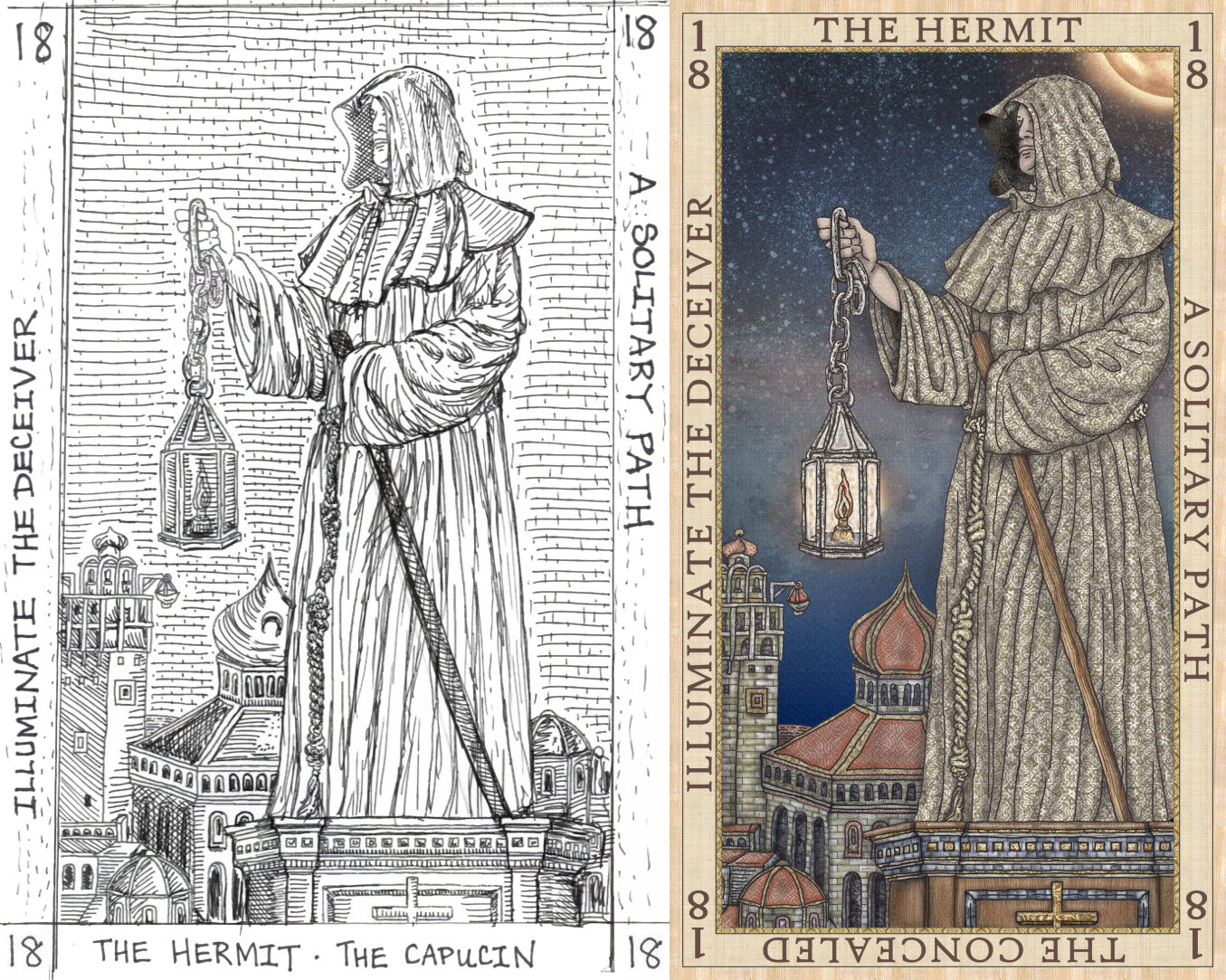
My 21st century hybrid process mirrors the hybrid process of producing the full-color Etteilla decks back in the late 18th and early 19th centuries. The historical Etteillas were first created in line via letterpress or engraved plates, printed on a press, then brought to life mechanically with hand-applied watercolors and paints.

My process flips that, beginning with hand-rendered line sketches, then “applying pigment” digitally, our modern version of creating illustrations on engraved plates. Just as the 18th century tarot artisans used the technology of their time to balance reproducibility with human artistry, my hybrid process bridges traditional draftsmanship with the digital palette. Using two different mediums in hybrid becomes a dialogue between line and color.
CURRENT STATUS:
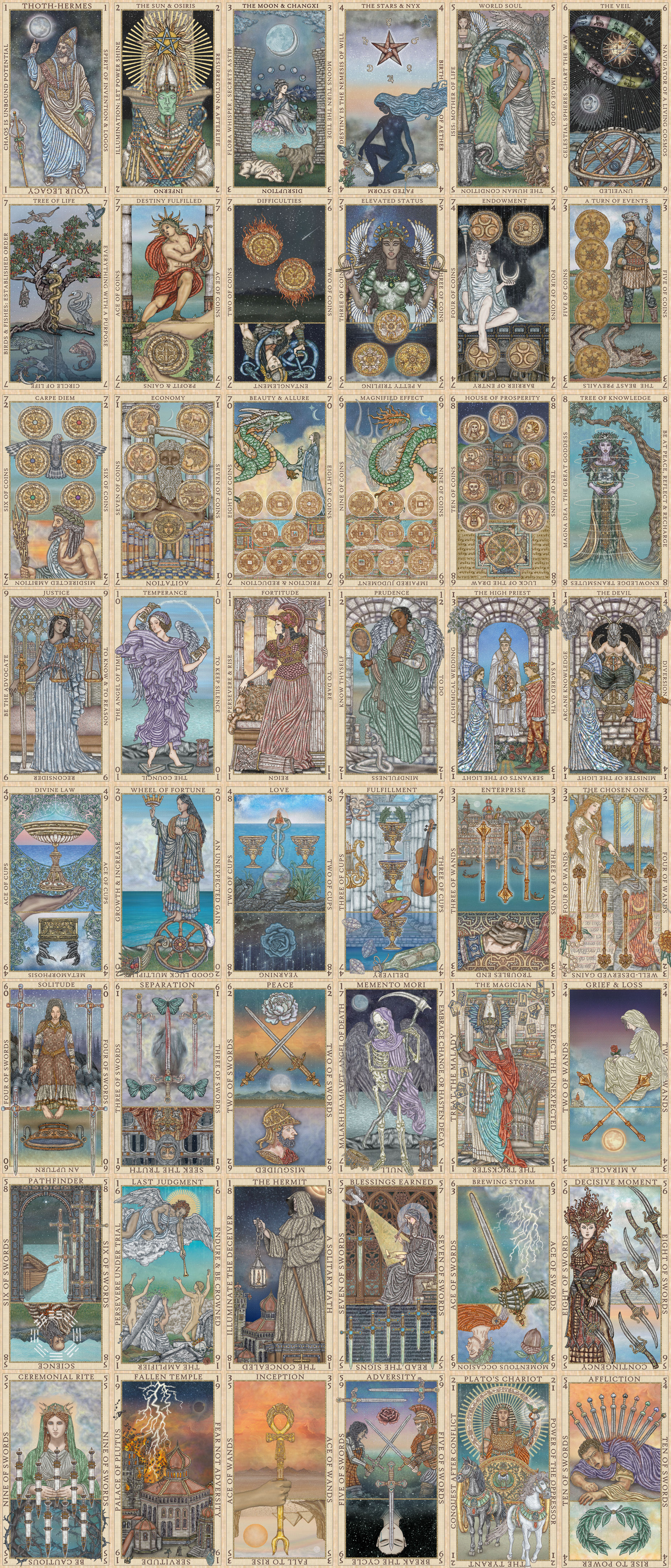
I’ve completed 48 of the 78 cards and am writing both the little white booklet and the larger companion guidebook entry by entry alongside the drafting of each card illustration. [2025 Aug. 3]
ETTEILLA DOWNLOADS:
You can also explore freely downloadable public domain JPG image files of several historical Etteilla tarot decks, including the full 78-card sets from Etteilla I, II, and III, packaged in ZIP archives:
FREE ETTEILLA TAROT DOWNLOADS
These are perfect for study, as design elements in your tarot journal, print-on-demand projects, or creative reinterpretation.

Continue Reading
ABOUT THE ETTEILLA TAROT
 benebell wen