What Business Lessons the Tarot Can Teach an Entrepreneur

busintarot
The Rider Tarot Deck, Miniature Edition (U.S. Games).

The archetypal imagery of tarot teaches us many lessons, and lately I’ve been thinking about what business lessons the Major Arcana might teach us. The following is by no means an exhaustive list and it would have gotten excessive for me to address every single Major Arcanum. For sure, each of the twenty-two cards has a lesson to be learned, but here are the key cards I found most pertinent.

line

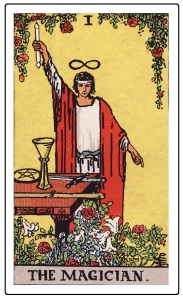
Key 1 The Magician

The Magician: Creating Change with Available Resources

The Magician card is about using the limited material resources and assets availed to us to create progressive change. One of the first business lessons an entrepreneur learns is how to create product and run a business with only what is on hand. The Magician is the master of manifestation, and inspires the entrepreneur to model an attitude after the magus.

Continue reading “What Business Lessons the Tarot Can Teach an Entrepreneur”

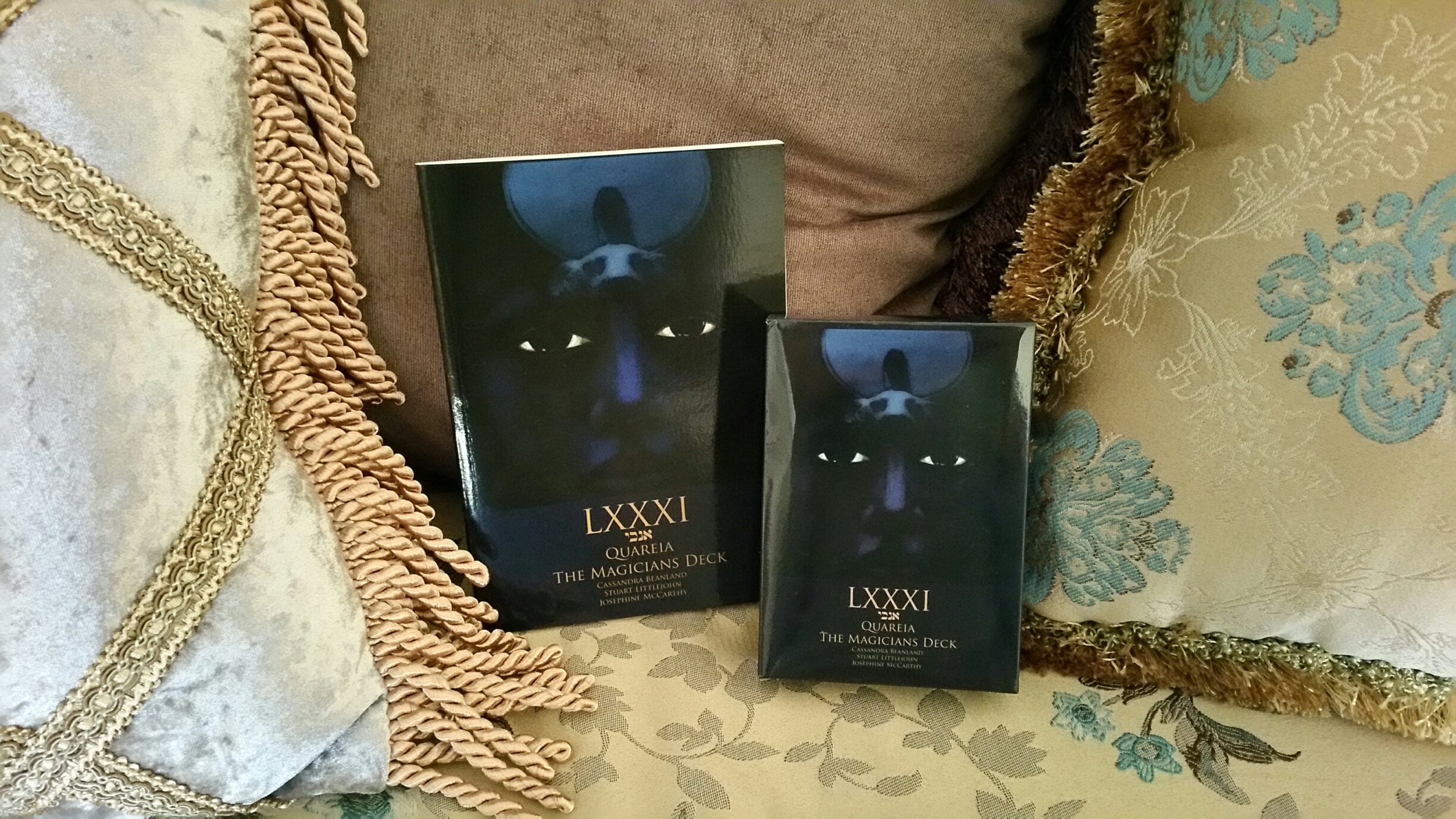
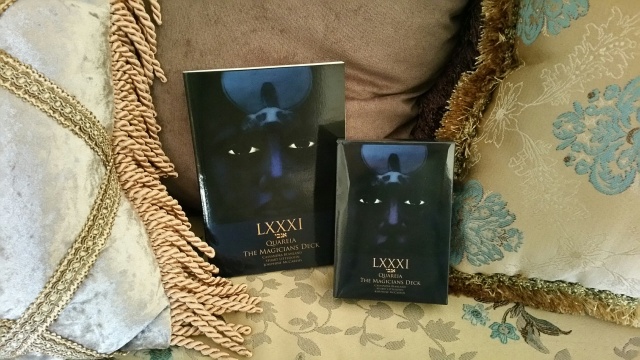
LXXXI Quareia The Magician’s Deck

LXXXI Quareia Deck 01 Book and Cards

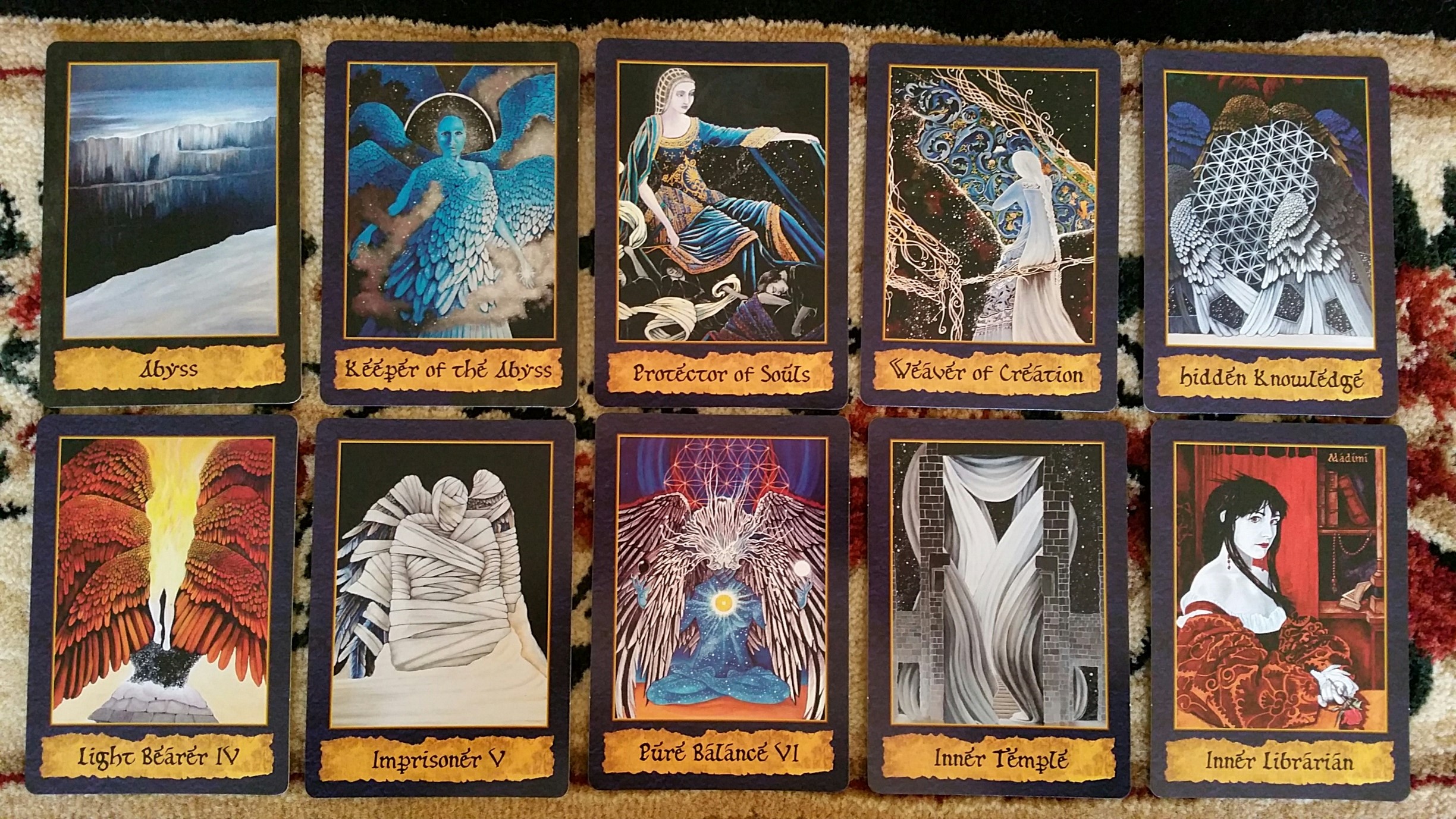
The LXXXI is an 81-card esoteric deck by Josephine McCarthy, Stuart Littlejohn, and Cassandra Beanland. It’s not a tarot deck, though you’ll see cards captioned “Chariot,” “Wheel of Fate,” Hierophant,” “Luna” (Moon), “Sol” (Sun), and “Death.” You’ll see “Fellowship” with imagery that may remind you of the RWS Three of Cups.

On a technicality, some might categorize LXXXI as an oracle deck, but I’ll just stick to what it’s been named: The Magician’s Deck. The LXXXI Quareia: The Magician’s Deck “draws upon the mythic, mystical and magical powers that underpin the magical systems that tarot eventually developed out of.” See here. “It is based upon real inner realms, real inner contacts, beings and forces that the practitioner of magic is very likely to involve themselves with. Because of this approach, the deck works as a contacted deck, i.e. used magically the images can act as gateways to inner realms, inner beings and magical patterns.”

The premise behind the LXXXI reminds me of the inner and outer gods concept in Taoism where, in short, certain “gods” reside within us (and they have names, along with descriptions of what they do) and certain “gods” are romping out and about, around us (both on earth among us and in other various supernatural realms). Granted that was the Cliff-Notes-Taoist-Deities-for-Dummies version but you get what I mean.

According to esoteric Taoist principles, a magician or metaphysical practitioner can invoke or summon these “gods” (I put the term in quotes because if you’re looking to translate/interpret the term, 帝, it can be “gods,” “emperors,” “divine beings,” “Divinities,” take your pick) and work with those energies to influence both the natural and supernatural worlds.
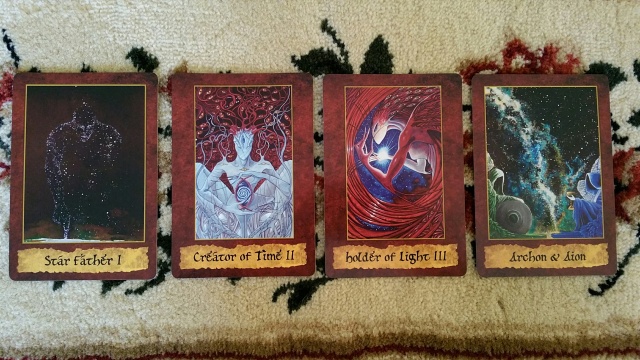
LXXXI Quareia Deck 03 Divine Realm

The deck is subdivided into four realms. Red bordered cards indicate contacts (the term that the companion guidebook for the deck describes these metaphysical energies as) from the Divine Realm. There are four contacts of the Divine Realm in this deck, pictured above. Star Father I correlates with Divine Intention. Creator of Time II is the energetic movement flowing from the Star Father toward manifestation. Holder of Light III expresses the eventual return of all souls to Divine Source. Archon and Aion are archangelic and symbolize a divine binary. In readings, the card serves as a warning that the practitioner has come to a threshold that cannot and should not be crossed. The message is to turn back.

In both the above photograph and the one below, note how some of the card titles end with roman numerals. I’ll address that later in this review.
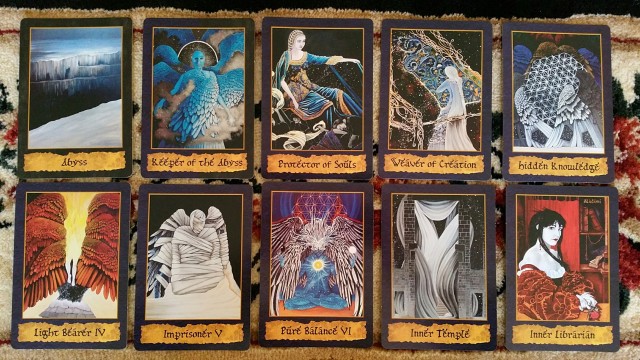
LXXXI Quareia Deck 04 Inner Realm

Contacts from the Inner Realm are noted by blue borders, case in point Madimi, described here as the “Inner Librarian.” Madimi was one of the spirits that was purportedly in contact with 16th century occultists John Dee and Edward Kelley.

In the printing of the deck copy I received, the borders look more like a deep purple than a blue, but blue or purple, I’m not terribly concerned.

According to the deck description, the art here is done in oils, acrylics, and watercolors. They appear to have been polished and fine-tuned digitally afterward. The art and imagery is very much imbued with Western esotericism and is definitely going to resonate with any practitioner of such traditions.

So far I’ve been trying to remain fair, objective, and factual, but I’m going to break for a moment here and just gush. Omigod I love this deck! The deck fills a void in the tarot/oracle/cartomancy world that I haven’t seen any other deck on the market during the time I’ve been alive and interested in cartomancy even come close to filling. I am not a Quareia practitioner or even a practitioner of Western magic. I don’t even identify as a magician. And yet there is something for me here in this deck.

Continue reading “LXXXI Quareia The Magician’s Deck”

What Your Favorite Tarot Deck Says About You

lotsadecks

Let me tell you what your favorite go-to tarot deck says about you. That’s right. I think I know you better than you know yourself. And all from knowing which tarot deck you like.

Visconti-Sforza Tarot by U.S. Games

Tarot de Marseille

You’re kind of an elitist snob. You think your tarot deck is more authentic than other people’s tarot decks and so that makes you better. When you’re talking about tarot, you make sure to emphasize that you read with the Marseille (no, you would say “TdM”) deck because you’re pretty sure that fact alone conveys the depth and breadth of your tarot knowledge.

Oswald Wirth Tarot by U.S. Games

Esoteric Tarot Deck Pre-1900

You’re an elitist snob. You’re probably a voracious reader of obscure books, especially books bearing titles that begin with “Liber.” You get all academic and historian-y when talking about witchcraft or ceremonial magic.

Continue reading “What Your Favorite Tarot Deck Says About You”

A Glimpse at the Pre-Release Orbifold Tarot

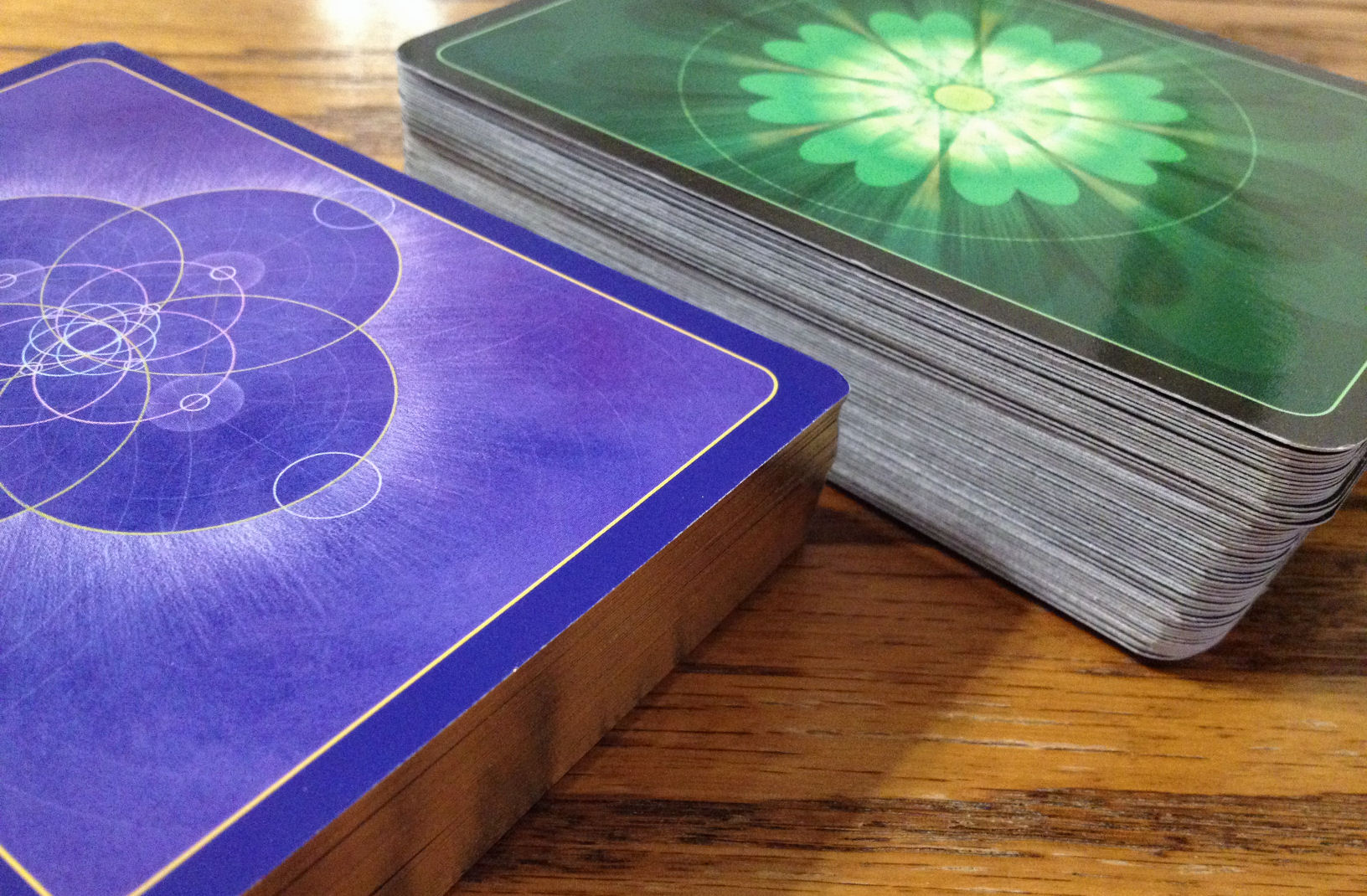
Orbifold Tarot - Card Back

The Orbifold Tarot comes from the inventive mind of Michael Bridge-Dickson and I have been granted the privilege of reviewing a pre-release version. The Orbifold Tarot is grounded on the cosmological principles of sacred geometry, a cross-cultural concept that the physical world and its metaphysical dimension can be expressed through mathematics, specifically, geometric design.

The god principle and intelligent design are not mutually exclusive from geometric design, and if we accept that “as above, so below,” then the mathematics of our universe is synchronistic with the mathematics of our personal lives. All that we as tarot practitioners have accepted as occult theory is thus rooted in mathematics, in sacred geometric forms. That is the premise from which we begin our journey with the Orbifold Tarot.

Orbifold Tarot - 0 The Void

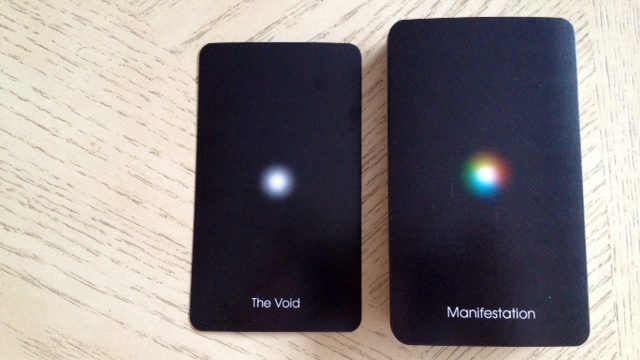
There are 80 cards in total, with the traditional tarot structure of 78 plus 2 cards, The Void and Manifestation. Initially I associated The Void with Key 0, The Fool and Manifestation with Key 1, The Magician, so I was confused by the distinction made between these two additional cards with Keys 0 and 1 of the Majors. However, Bridge-Dickson explained it cogently to me.

Orbifold Tarot - 1 Manifestation

Bridge-Dickson himself debated whether to make the distinction. To him, Key 0, The Fool is the blank slate individual, a soul ready for the new adventure ahead, the journey through the three septenaries of the Major Arcana. The Void, in contrast, is the non-individual, the utter lack of manifestation whereas in The Fool, we still have the ego present. Key 0 represents beginnings, as traditionally associated with the card, whereas The Void is before the beginning.

Manifestation, too, is the non-individual, beyond being, though as manifestation, of course it encompasses being. Together, The Void and Manifestation represent the paradox of simultaneous being and non-being beyond the individual. Bridge-Dickson felt the principle had to be separated out from Keys 0 and 1, as The Fool and The Magician include personal Will, which renders both cards affirmatively being.

Orbifold Tarot - 2 The Fool (Air and Void)

The Orbifold Tarot is color coded to represent the elemental correspondences that Bridge-Dickson sees as the deconstruction of each card’s essence. White is Spirit. Yellow-gold is Air. Red is Fire. Blue is Water. Green is Earth. Keep that in mind as we examine the card samples. Here in The Fool card, we see Air encompassed by Spirit in the form of the unit circle. The beginnings of the formation of self are thus Air, the mind or thought, beginning to occupy a specific space of Spirit.

Continue reading “A Glimpse at the Pre-Release Orbifold Tarot”

Tarot of The Holy Light: A Continental Esoteric Tarot (A Book Review)

Tarot of the Holy Light, ISBN: 978-0-9673043-2-8

Tarot of the Holy Light: A Continental Esoteric Tarot (Noreah/Brownfield Press, June 2015) is a book that started ten years ago, and so when I talk about the long-awaited arrival of this book, I’m not kidding. It is the first volume of companion text to the Tarot of the Holy Light tarot deck by Christine Payne-Towler and Michael Dowers, which I’ve reviewed on this site before.

Volume two, forthcoming, will be Foundations of the Esoteric Tradition. The two volumes together function as left and right hemispheres of the same mind. This book review will only be of volume one, Tarot of the Holy Light (“THL Companion Book”)

THL - Book and Deck Closed

The THL Companion Book is self-published by Christine Payne-Towler and Michael Dowers under their publishing entity, Noreah/Brownfield Press. The book is soft-cover and perfect bound, and at 492-pages, is full of meat. I love the unique dimension, too, at 5″ x 7″, which makes it an incredibly compact text to throw into your handbag.

Continue reading “Tarot of The Holy Light: A Continental Esoteric Tarot (A Book Review)”

Golden Tarot of Klimt: Deck Review

Klimt Tarot 01 Deck Box

One year in high school I had a spiral bound day planner I bought at a museum gift shop that featured Klimt’s artwork. I carried Klimt around with me everywhere that year and afterward, cut out the full-color prints that appeared in the day planner, framed and placed them around my room. An art poster print of “The Kiss” was hung up in my bedroom through my adolescence and young adulthood. Currently in the halls of my day job office hangs a really nice framed print of “Adele Bloch-Bauer I.” [Also, tell me it isn’t just me– is there or isn’t there something very Nine of Pentacles about that painting.]

Klimt Tarot 19 Card Backs Closeup

Like many artists of his time (Pamela Colman Smith included), Klimt was influenced by Japanese block art. Klimt’s art is bold, sensual, deeply ornate yet symbolic, and iconic of the Art Nouveau and Symbolist Art movements, with mystical tendencies. His art was controversial for its time. Klimt would have been about 50 years old around the time Waite and Smith created their tarot deck.

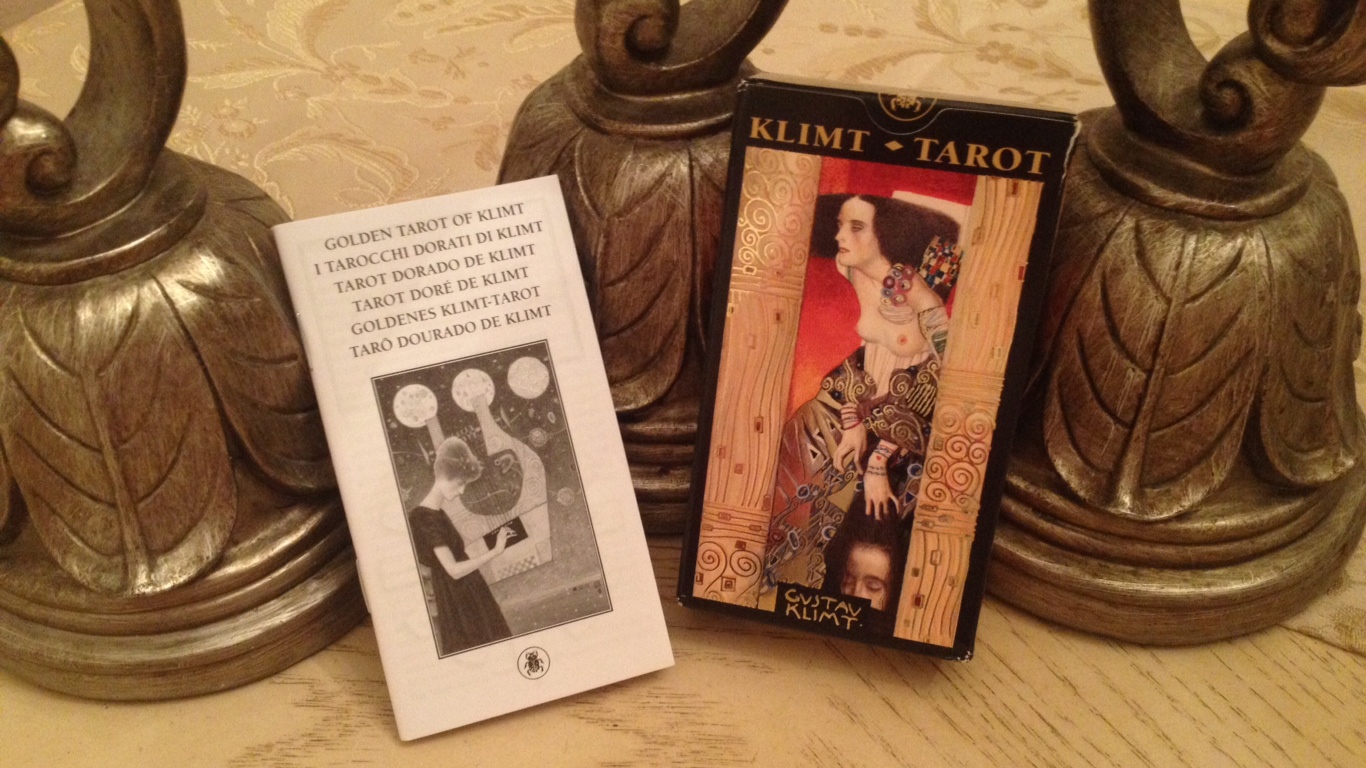
Klimt Tarot 04 Box and LWB

The Klimt Tarot or Golden Tarot of Klimt by Lo Scarabeo and Llewellyn is one of the most well-done collector’s art deck I’ve seen. There on the box cover you see one of Klimt’s iconic paintings, “Judith I.” The cards are 2.5″ x 4.6″, which fits comfortably in my hands and the smooth texture on the cardstock renders the deck very easy to shuffle and fan for reading purposes. There isn’t much to the Little White Booklet (LWB), as the text in there is short and sweet, and in those few pages, is packed with 6 language translations.

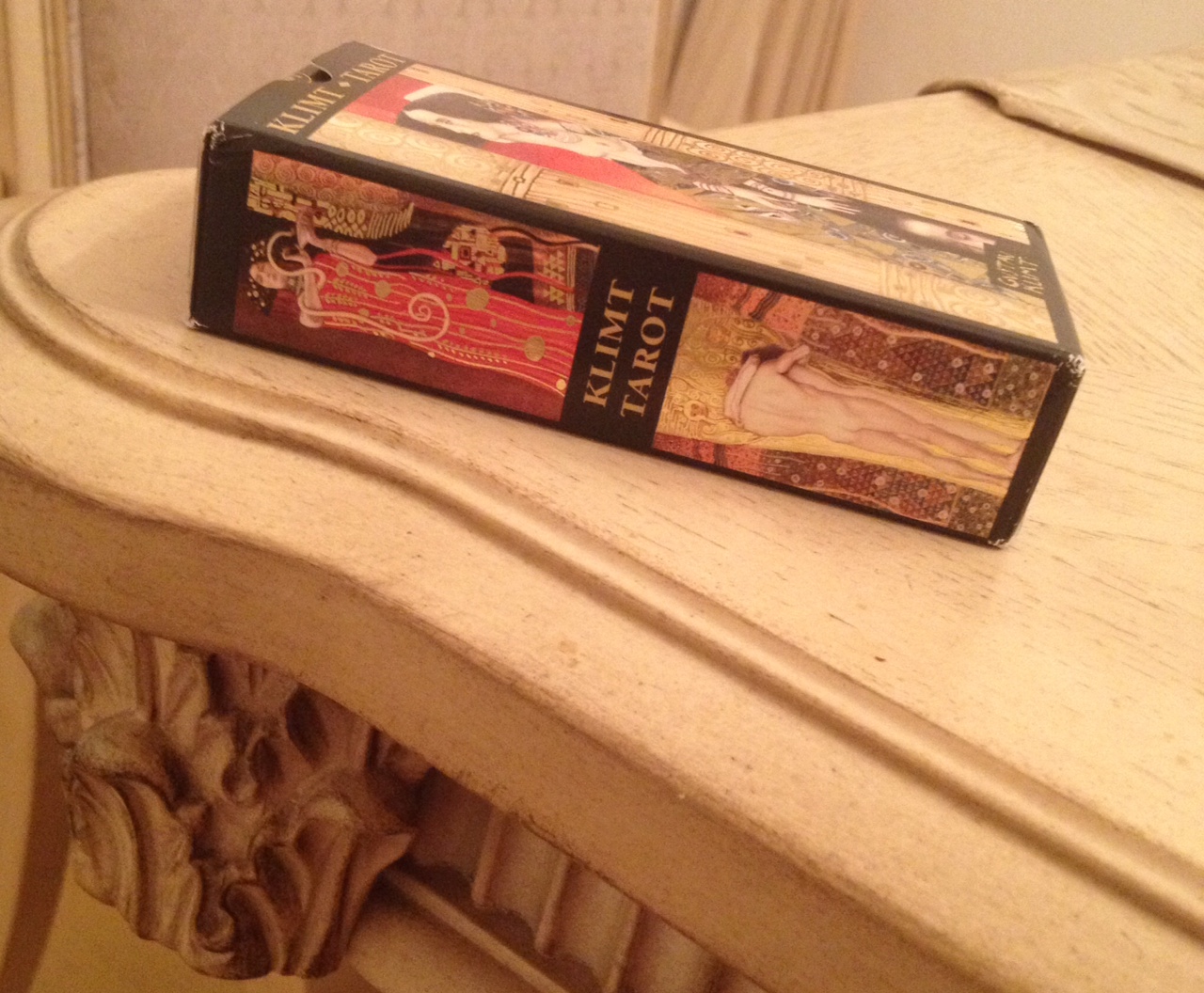
Klimt Tarot 02 Box Side View

On the side of the box pictured above, the top image is from one of my favorite paintings by Klimt, “Medicine (Hygieia),” which so perfectly appears on The Magician card in the deck. While more and more decks are moving to China for printing and manufacturing, these decks are still made in Italy. The box and packaging is finished beautifully and is part of what renders this deck such a rewarding collector’s item. It was first published in 2005 and the brainchild of the Bulgarian-born Atanas Antchev Atanassov. Continue reading “Golden Tarot of Klimt: Deck Review”

Review of Tarot of the Holy Light

image_1

See also:

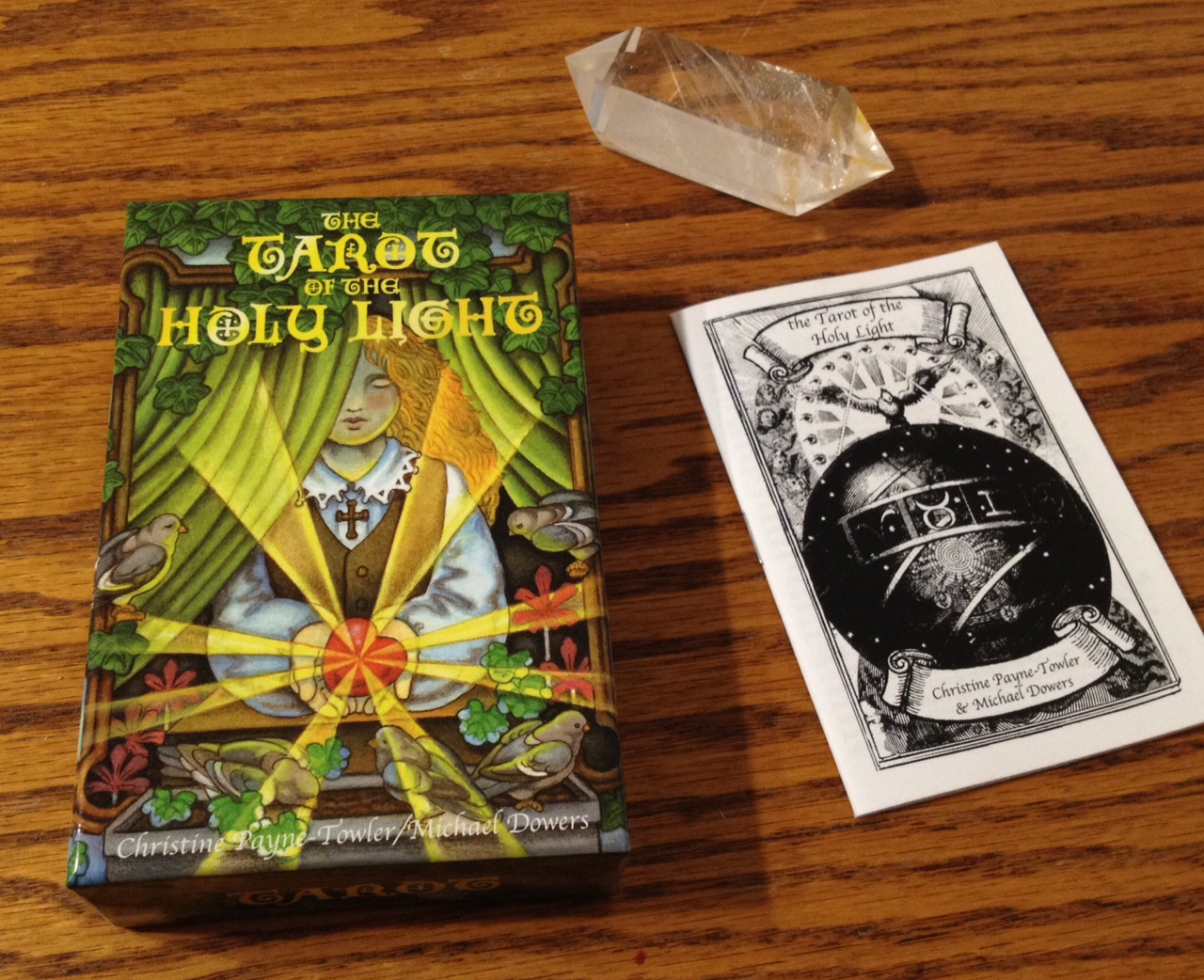
Back in 2011, Christine Payne-Towler came out with Tarot of the Holy Light, illustrated by comic book artist Michael Dowers. It was self-published by her via Noreah Press.

However, for reasons unbeknownst to me, I didn’t become aware of the deck’s existence until last year. You can order the deck over at Tarot University. This deck, along with Christine Payne-Towler, is going down in tarot history, mark my words, and while far be it for me to tell you what to do, I’d get a copy of this deck while it’s still available.

The Tarot of the Holy Light, with its little white booklet

Anyone who has explored esoteric tarot has heard of Christine Payne-Towler. She’s written some of the most compelling, provocative articles on tarot scholarship available, many of which you can find at Tarot.com or at ArkLetters. Payne-Towler is one of my tarot heroines.

Continue reading “Review of Tarot of the Holy Light”

Triggering Creativity with Tarot: Replay of a Free Webinar

On February 21, 2015, North Atlantic Books hosted a free webinar where I talked about intuitive-creativity and tarot. You can check out a replay of the webinar above.

About the Webinar

Albert Einstein attributes his most ground-breaking insights not to logic or mathematics, but to intuition and inspiration or, as artists and writers often express it, to the muses. However, the one trait believed about the muses, about how intuition and inspiration hits us, is that it comes only when it comes, almost divinely, and the artist or writer cannot call upon it at will.

Yet through tarot, learn how to harness intuitive-creativity at will. Tarot facilitates the transcendent experience needed for the muses to speak to us. Learn how to use tarot to trigger your intuitive-creativity and apply the tarot fundamentals taught in my book, Holistic Tarot to remove creative blockages.

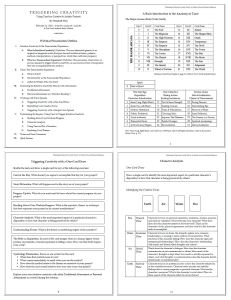
Preview_Slides
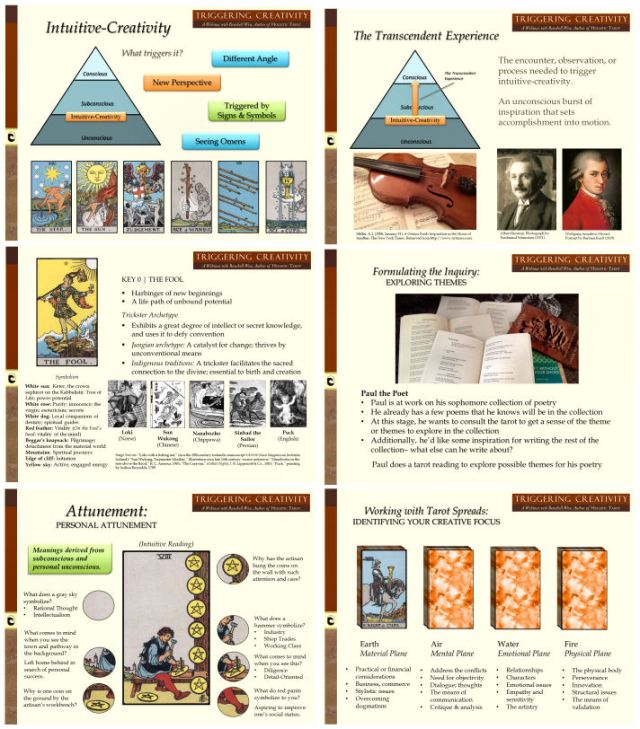
Presentation Slides Preview

In this 45-minute webinar that will be invaluable to any artist or writer, I’ll be lecturing about how to use tarot cards as an intuitive and inspirational tool for creative and artistic passion projects. The lecture will cover attunement, how to exercise the intuition muscle, and specific techniques for using tarot spreads to read about your creative projects.

When I say “intuitive-creativity,” I’m talking about the muses, about divine inspiration, about that “a-ha” moment. Learn how to use tarot to identify your creative focus, mind-map your project trajectory, perform character analysis if you’re writing a novel, explore the themes of your project in greater depth, and generally trigger your own inspiration with tarot card imagery.

Download the Handout

There is also a handout in PDF format that goes along with the webinar. Please be sure to download it as reference for the techniques and exercises discussed during the webinar.

CLICK TO DOWNLOAD THE HANDOUT

Preview_PDF

Review of the Psychic Tarot Oracle Deck

IMG_6923

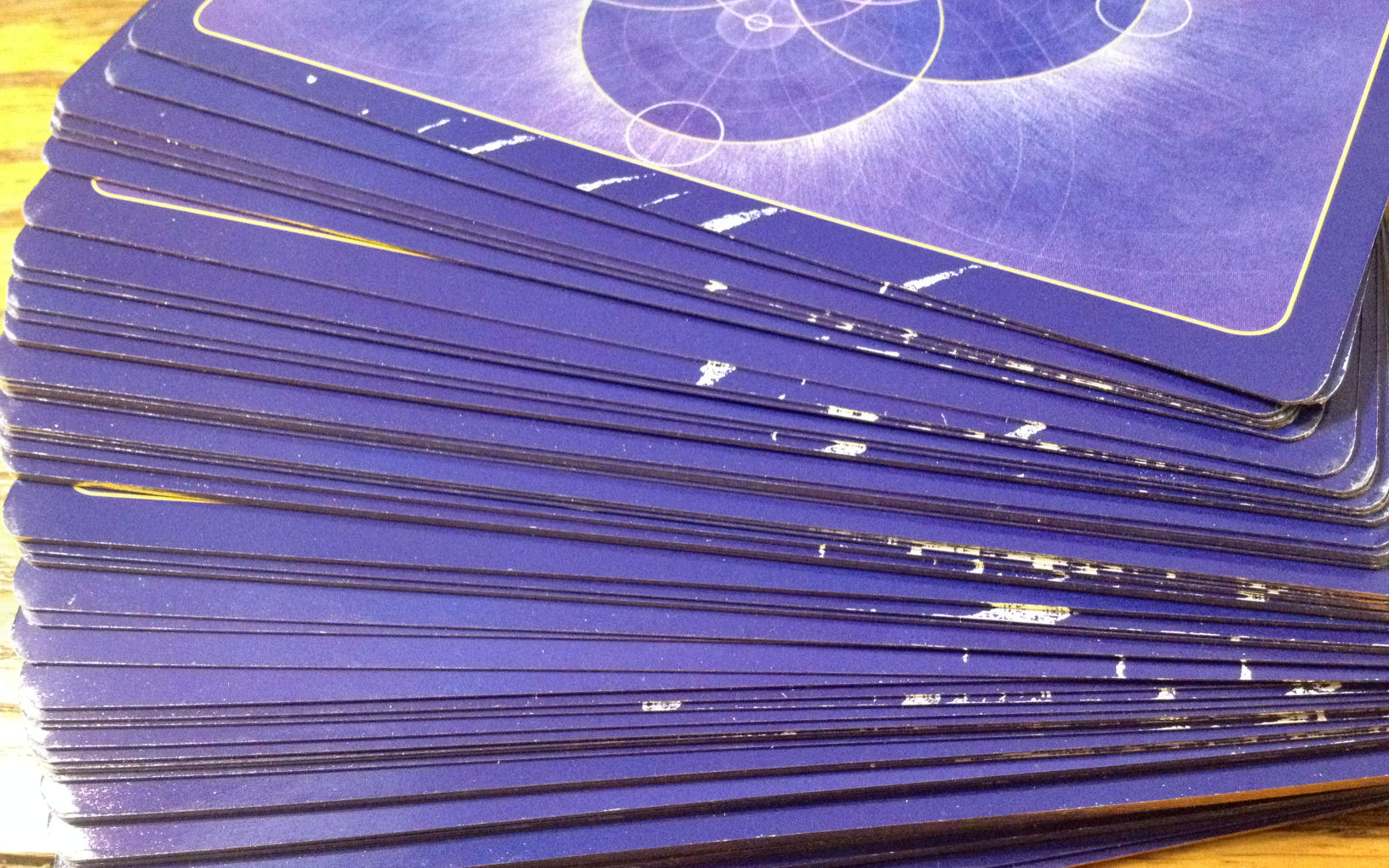
I’m not liking the Psychic Tarot oracle deck at all. I mean, let’s just start with the above photo of the cards. Look at the quality. This is a brand new deck mind you. I bought it still encased in shrinkwrap. All that white stuff you see along the edges of the card backs is how these cards came, brand new.

It’s a fortuitous thing that I got my hands on the Psychic Tarot for the Heart before this one, otherwise I’m not sure I would have had the mind to give the Heart one a try. Earlier I reviewed Psychic Tarot for the Heart here.

IMG_6924

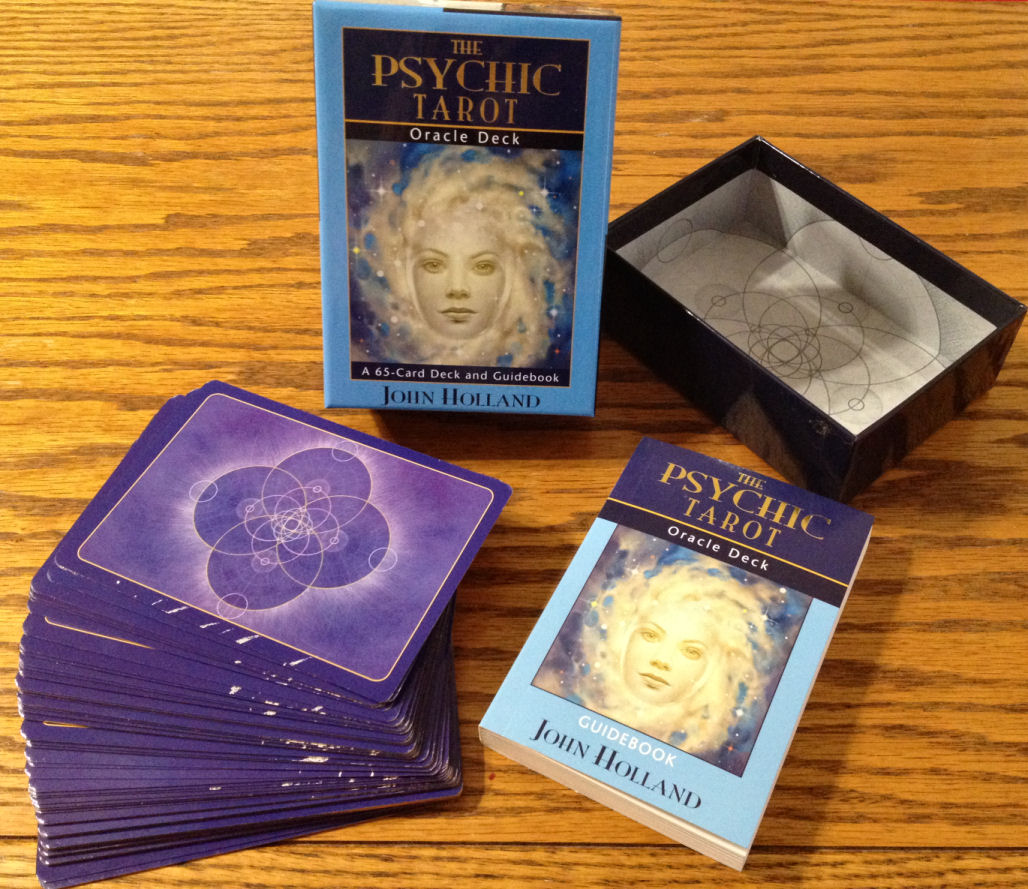
Here is a close-up of the cards. I’m digging the reference to sacred geometry on the card backs and throughout the packaging (such as the interior of the box that the cards come in), but if returning these cards and getting a refund wasn’t such a hassle, I have to tell you, that is exactly what I would have done.

IMG_6925

And…here’s the front of the cards. It wasn’t that the plastic wrap peeled the coloring of the cards off. That was my first hypothesis, but the plastic wrap was clear. It came like this! Many of the cards from the center of the deck, which wouldn’t have come in touch with plastic wrap or anything sticky, had that white scrape-y stuff.

IMG_6932

I believe both the Psychic Tarot and the Psychic Tarot for the Heart oracle decks have the same number of cards, but look at the thickness of the Psychic Tarot deck compared to the Heart one. Yes, I am dazzled by the gold gilded edges of the Psychic Tarot, but that wasn’t enough to appease me. I much, much, much prefer the Heart one over this deck. I’m so bummed. And the backs of the Psychic Tarot are so nice, too!

Continue reading “Review of the Psychic Tarot Oracle Deck”

Triggering Creativity with Tarot: Free Webinar this Saturday, Feb. 21

 webinar

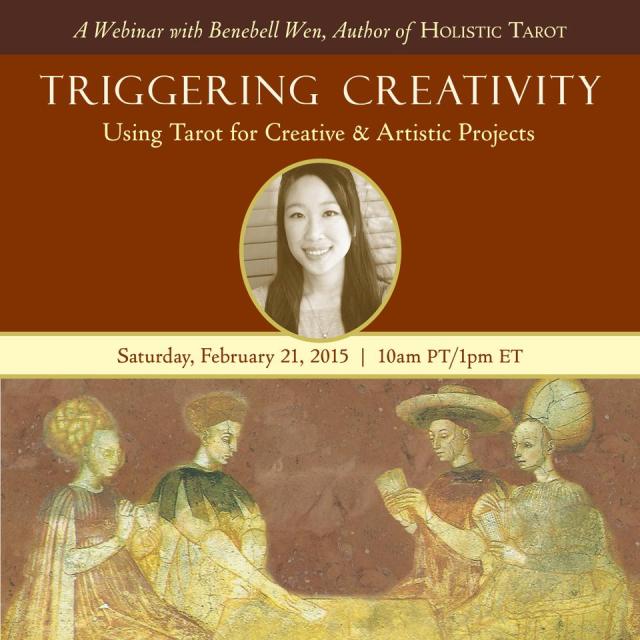
Join me on February 21, a Saturday, at 10 am Pacific Time (12 pm Central or 1 pm Eastern) for a free webinar sponsored and hosted by North Atlantic Books and NAB Communities.

CLICK HERE TO REGISTER

There is also a handout that goes along with the webinar. Please be sure to download it as reference for the techniques and exercises discussed during the webinar.

CLICK HERE TO DOWNLOAD THE PDF HANDOUT

Preview_PDF

* * *

Albert Einstein attributes his most ground-breaking insights not to logic or mathematics, but to intuition and inspiration or, as artists and writers often express it, to the muses. However, the one trait believed about the muses, about how intuition and inspiration hits us, is that it comes only when it comes, almost divinely, and the artist or writer cannot call upon it at will.

Yet through tarot, learn how to harness intuitive-creativity at will. Tarot facilitates the transcendent experience needed for the muses to speak to us. Learn how to use tarot to trigger your intuitive-creativity and apply the tarot fundamentals taught in Wen’s new book, HOLISTIC TAROT to remove creative blockages.

Preview_Slides
Presentation Preview

In this 45-minute webinar that will be invaluable to any artist or writer, I’ll be lecturing about how to use tarot cards as an intuitive and inspirational tool for creative and artistic passion projects. The lecture will cover attunement, how to exercise the intuition muscle, and specific techniques for using tarot spreads to read about your creative projects.

When I say “intuitive-creativity,” I’m talking about the muses, about divine inspiration, about that “a-ha” moment. Learn how to use tarot to identify your creative focus, mind-map your project trajectory, perform character analysis if you’re writing a novel, explore the themes of your project in greater depth, and generally trigger your own inspiration with tarot card imagery.

2/27/2015 UPDATE:

Watch a replay of the webinar HERE:

So the actual webinar on Saturday (2/21) had a video camera of me yapping away at the corner of what would have been your computer screen as the PowerPoint presentation played, which I would assume would make the webinar more engaging. (Maybe.) However, in the upload, the video camera of me is no longer there. (Also, now I will never get to see how I looked during the webinar. If there were boogers hanging out of one nostril throughout the thing, now I will never know.)

Yikes, now watching this replay (without the webcam of me, which I really don’t know whether it added or took away from the webinar), this looks kind of boring. So sorry. Thank you even more to those who stuck it out with me to the end!