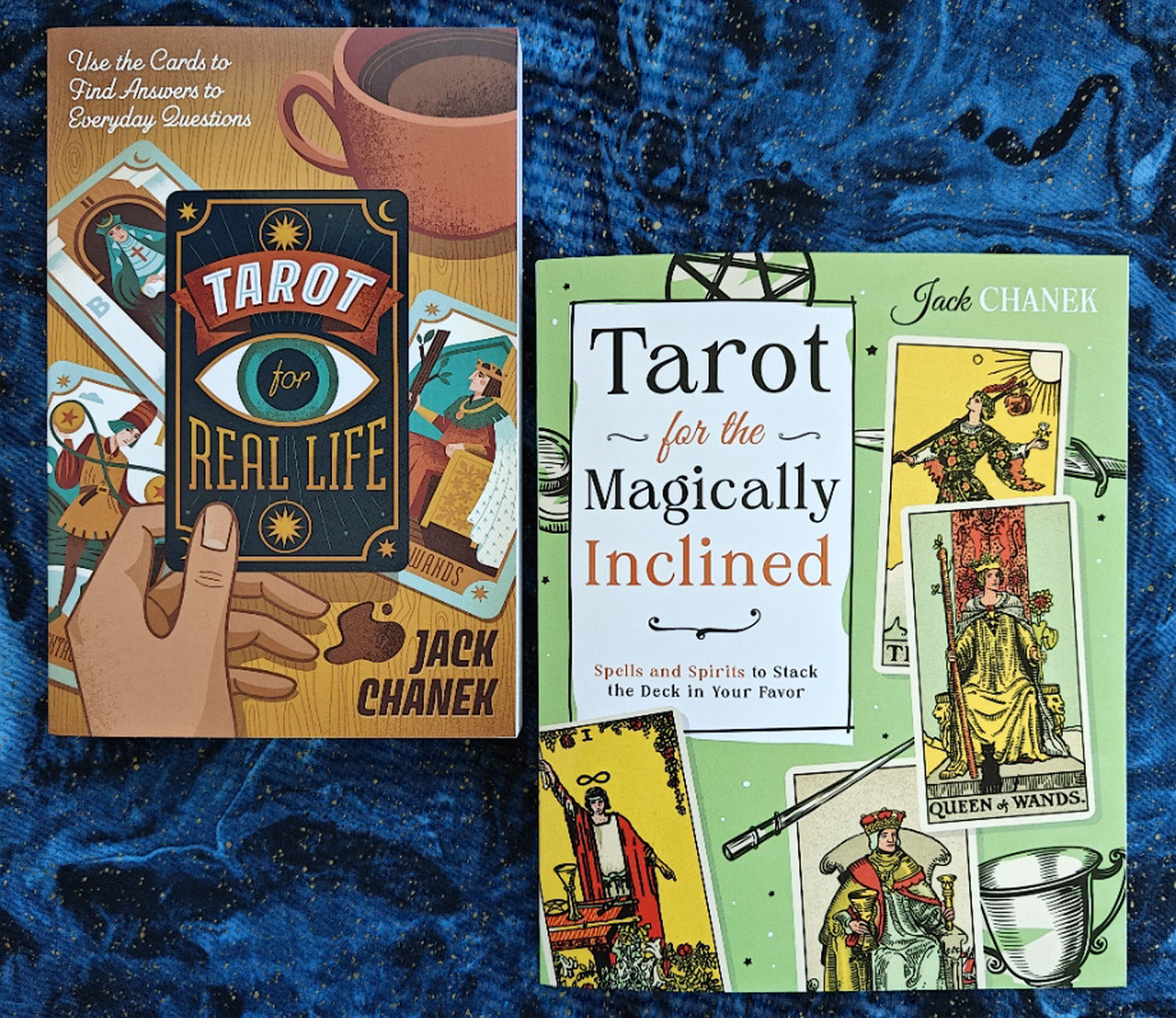
This is a wonderful sequel to Jack Chanek’s Tarot for Real Life, a down-to-earth primer that de-mystifies the tarot, whereas here in Tarot for the Magically Inclined: Spells and Spirits to Stack the Deck in Your Favor, we delve straight into the mysteries of the tarot.
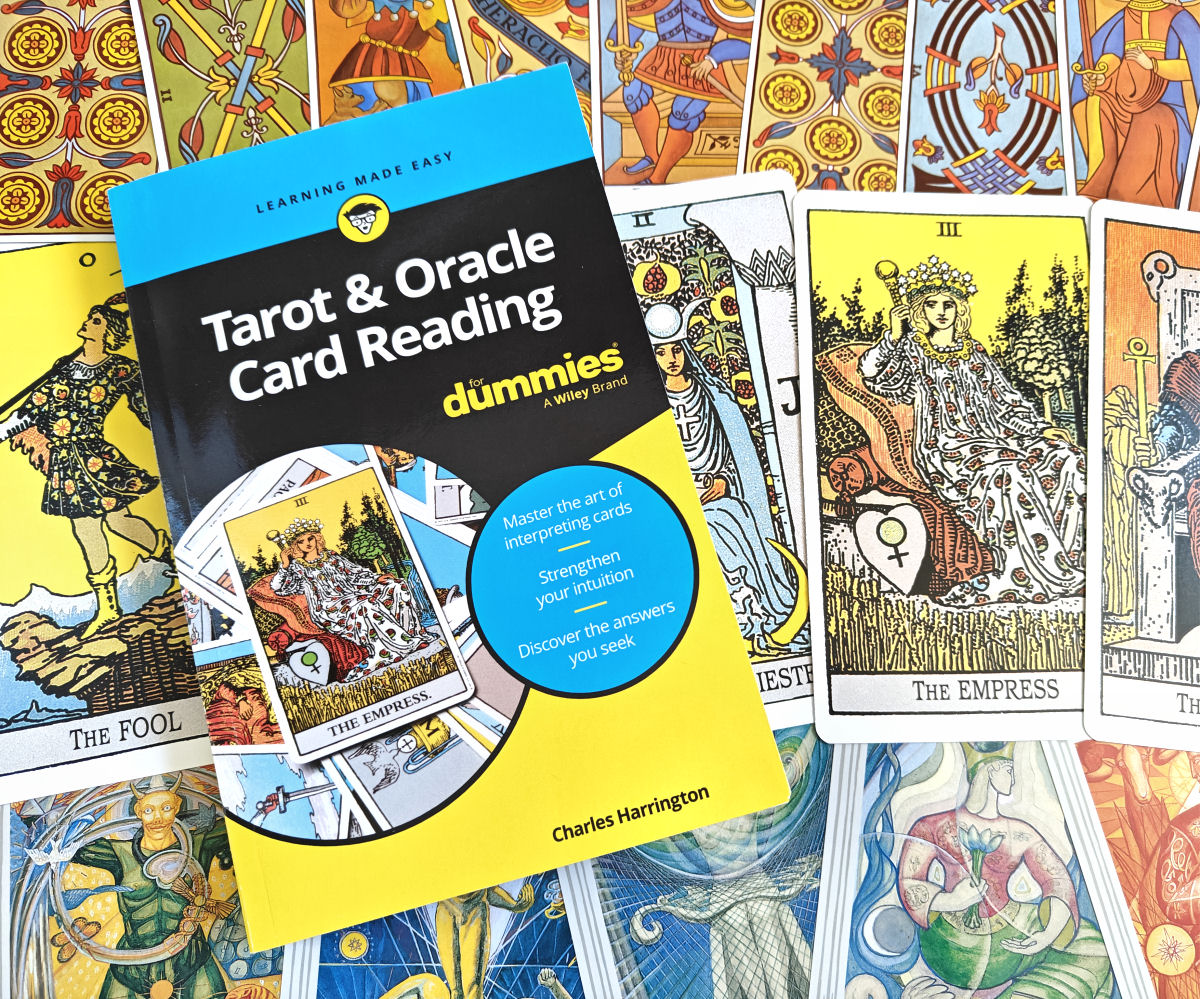
You’re probably quite familiar with the “For Dummies” learning series that were popularized in the 90s. The book series published by Wiley & Sons de-mystifies difficult subjects and is known for accessible, easy-to-understand, plainspoken writing. Wiley could not have chosen a better author for the task than my dear friend Charles Harrington.
Although the “For Dummies” series catches a kitschy rep, this is in all seriousness a legit, no-nonsense, superb beginner’s book on tarot and oracle decks — and I love the dual coverage this compact yet comprehensive book packs for you.
Just a note for those who might be interested: the “Learning the Opening of the Key” video and workbook course from 9 years ago is now freely available.
You’ll first want to click onto the below hyperlinked page to download the workbook PDF and all supplemental materials:
The Oneful Tarot is inspired by MBTI (Myers-Briggs Type Indicator) personality archetypes and using the tarot to recognize our personality patterns. It was created by Dr. Maggie Man Sin Lee, a Hong Kong-based academic researcher, caregiver advocate, naturopath, and corporate wellness consultant, and brought vividly to life by illustrator Chinkal Pareek.
NOTE: If you’d like to download my personal notes on the MBTi personality profiles for the tarot court cards, which I use as reference in tandem when working with the Oneful Tarot, scroll down to the end of the deck review.
Botanical Dreams Oracle by Lynn Araujo and Catrin Welz-Stein
I partook in this thought leadership workshop and learned about the five categories of questions to ask for more effective, strategic decision-making. Being me and having the interests I do, of course I immediately connected these learnings to tarot, I Ching, and in general divinatory readings.
Teachers in nearly every divinatory tradition or system talk at length about the importance of how you ask and frame questions for divination. The quality of answers you receive — be that in strategic leadership, personal development, or divination – is directly influenced by the clarity, precision, and intention behind the questions you’re asking.
Apothecary Spirits Oracle by Eric Maille, Michael Anthony, and Thomas Witholt
A well-framed question acts like a lens. It brings your focus to what truly matters, and in the case of readings, hones the focus narrowly on what it is you most want or need to know. The better your question, the more noise will get filtered out of the reading result, enhancing meaningful insight.
Thinking about how to frame questions through the principles of these five categories is really helpful, I think. Hence, this share.
In an executive leadership workshop I attended, I learned about identity capital and how people leaders need to help their teams cultivate identity capital. It’s a concept popularized in The Defining Decade by Meg Jay, which in short summary is the collection of professional and personal assets that define why you’re great. This is subdivided into four categories: (1) skills and credentials, (2) social networks, (3) life experiences, and (4) personal qualities.
Identity capital is what sets you apart in your marketplace or industry. It attracts more opportunities, builds your credibility, and empowers you to be more persuasive. Even when headhunters don’t consciously realize it, they’re looking for candidates with identity capital in abundance. Those who stand out in competitive environments are the ones who are rich with these assets.
I found the workshop useful, so I want to share what I learned. And of course I thought, how fun would it be to combine those professional development learnings with divination as a tool for self-reflection.
Below is a free downloadable Identity Capital Workbook.
The Playful Heart Tarot and the PipSpeak Tarot by KittenChops
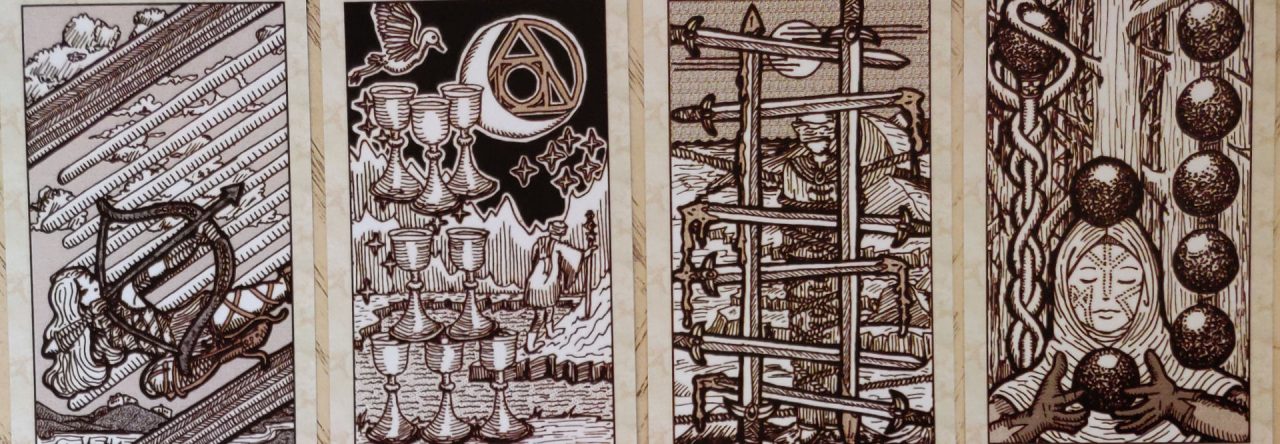
You may be familiar with the Playful Heart Tarot by Kitten Chops (Zaara), based on the RWS, whereas the latest creation from the KittenChops studios is a Marseille-based pip deck, the PipSpeak Tarot.
After completing the RWS-based Playful Heart Tarot, Zaara redefined her work with the tarot by unpacking her RWS framework and re-learning the tarot with the Marseille. The result is the PipSpeak Tarot, which became a liberating experience. Likewise, this might just be the very deck to get a seasoned RWS reader out of a rut.
From the little white book (LWB) for the PipSpeak Tarot
“Fortune tellers and cunning folk have been reading with Marseille and playing card/pip decks for hundreds of years,” writes the artist. “Instead of esoteric intellectual prowess, these readers have been relying on their common sense, their understanding of human nature and key card reading wisdom passed down from generation to generation.”
If you’re from the corporate world you might have heard of the Six Sigma quality management methodology or the acronym DMAIC blah blah but even if you haven’t, no worries. This is just a tarot spread inspired by Six Sigma principles and that process flow of D (Define), M (Measure), A (Analyze), I (Improve), and C (Control).
This card reading method (it’s workable with an oracle deck, not just tarot) is less in the space of mysticism or divination, and more in the space of pragmatism and driving you to be a more creative and critical thinker.
If you haven’t been watching the 2024 Marvel TV series Agatha All Along, it’s a spin-off from WandaVision focused on the character Agatha Harkness. And the episodes have been chock full of tarot (and witchy) goodness.
I love how the online tarot community is currently having fun with a fictional but bona fide tarot spread in the show, named the Safe Passages spread, a key feature in Episode 7 (“Death’s Hand in Mine”). It’s got Celtic Cross vibes in the formation of a pentagram.
(Ignore my graphic above; I squished all the card positions together, which is why you can’t really see the pentagram anymore. In the TV show, the pentagram shape is more pronounced.)
Just a head’s up: there may be spoilers in this blog post, but nothing too major; I’m focusing on the tarot parts.
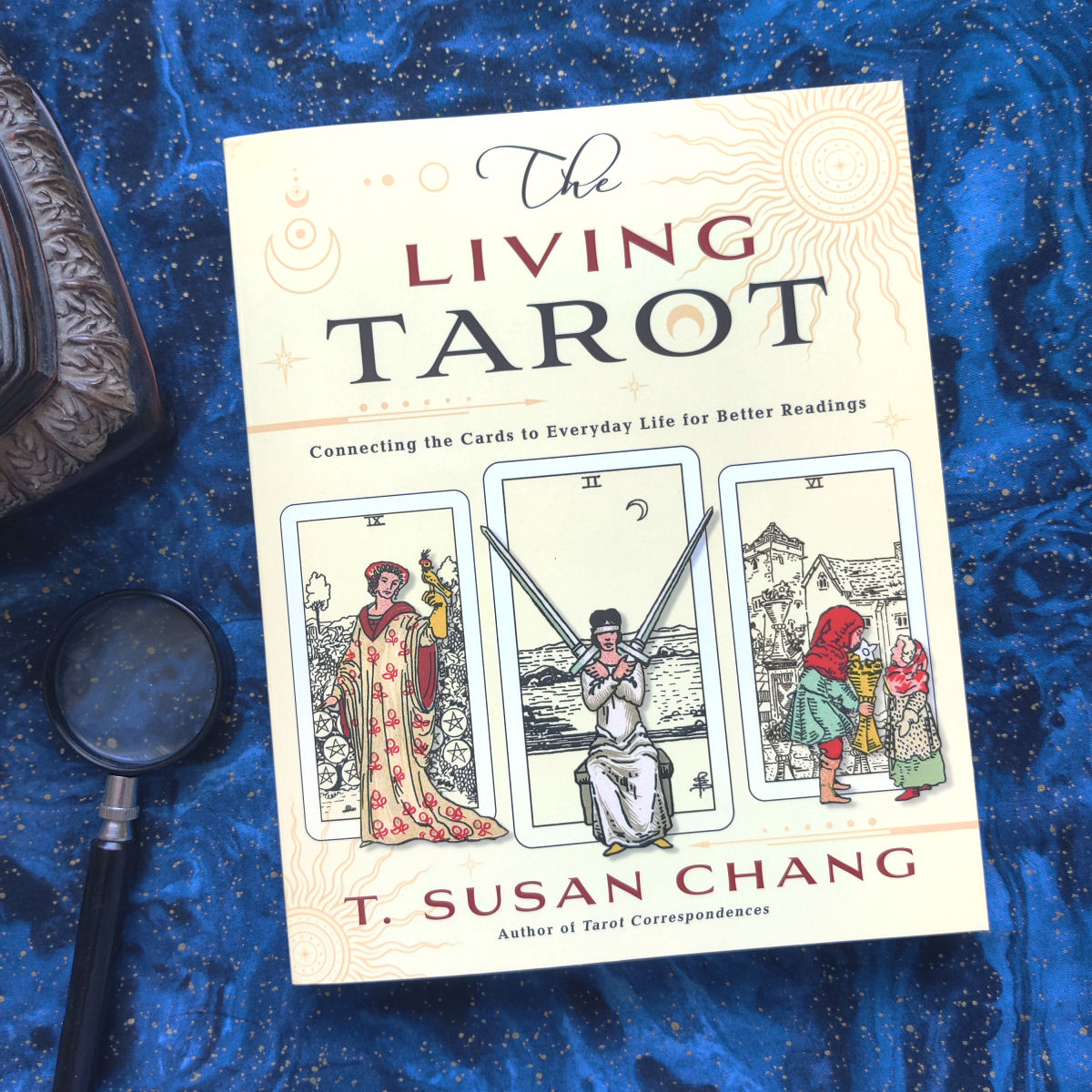
I’m a huge fan of T. Susan Chang’s work. I loved Tarot Correspondences, which I’ve reviewed before here, have and cherish my copy of Tarot Deciphered, co-authored with M. M. Meleen, creator of the Rosetta Tarot and Tabula Mundi Tarot, two of my all-time favorite decks, ever.
So I’m thrilled about the opportunity to review Chang’s latest book, The Living Tarot published by Llewellyn Books. Unlike her previous publications, The Living Tarot is written with the beginner in mind, and more pertinently, how the modern reader can find personal, everyday meanings to the 78 cards.





 benebell wen