Are Authors and Content Creators Obligated to Engage?

Recently I came across this video essay by a fellow community content creator on YouTube who had some candid critiques of authors, influencers, and content creators from our mutual community. She shared frustrations about seeing a growing disconnect between those who create content and those who consume content, i.e., the audience that supports an author or content creator.

She had a lot of very legit criticism of the present day online creator ecosystem. Bots and AI-generated responses, monetizing parasocial relationships in a way that feels exploitative, the end of peer to peer communications and the rise of transactional relationships, alienating many socioeconomic classes with paywalls, and having assistants manage community spaces rather than the big-name content creator themselves engaging in those community spaces — I hear you. All valid points speaking truth to power. Also, her concerns speak to something deeper– the loneliness and disconnection many of us feel online these days. Where has that sense of fellowship gone?

Though as someone who also writes, publishes, and maintains an online presence, I have some strong feelings about these points, particularly around community engagement and the unrealistic expectations that get imposed on authors and content creators.

I’d like to unpack some of those critiques, not just from that one YouTuber or from that particular video essay, but because what she said reflects a majority view currently held against content creators when they’re not being responsive in their comments section. I want to offer my perspective. But this isn’t a response to that video, no. These are just my reflections on the realities of engagement, from a content creator’s perspective, inspired by the points she raised in that video.

Continue reading “Are Authors and Content Creators Obligated to Engage?”

2026 Metaphysician’s Day Planner $17

NOTE: we will be out of the country and without access to our email from November 22nd to December 10th. We will process any orders received during this time by December 12th. Thank you for your understanding and patience. Apologies for any inconvenience.

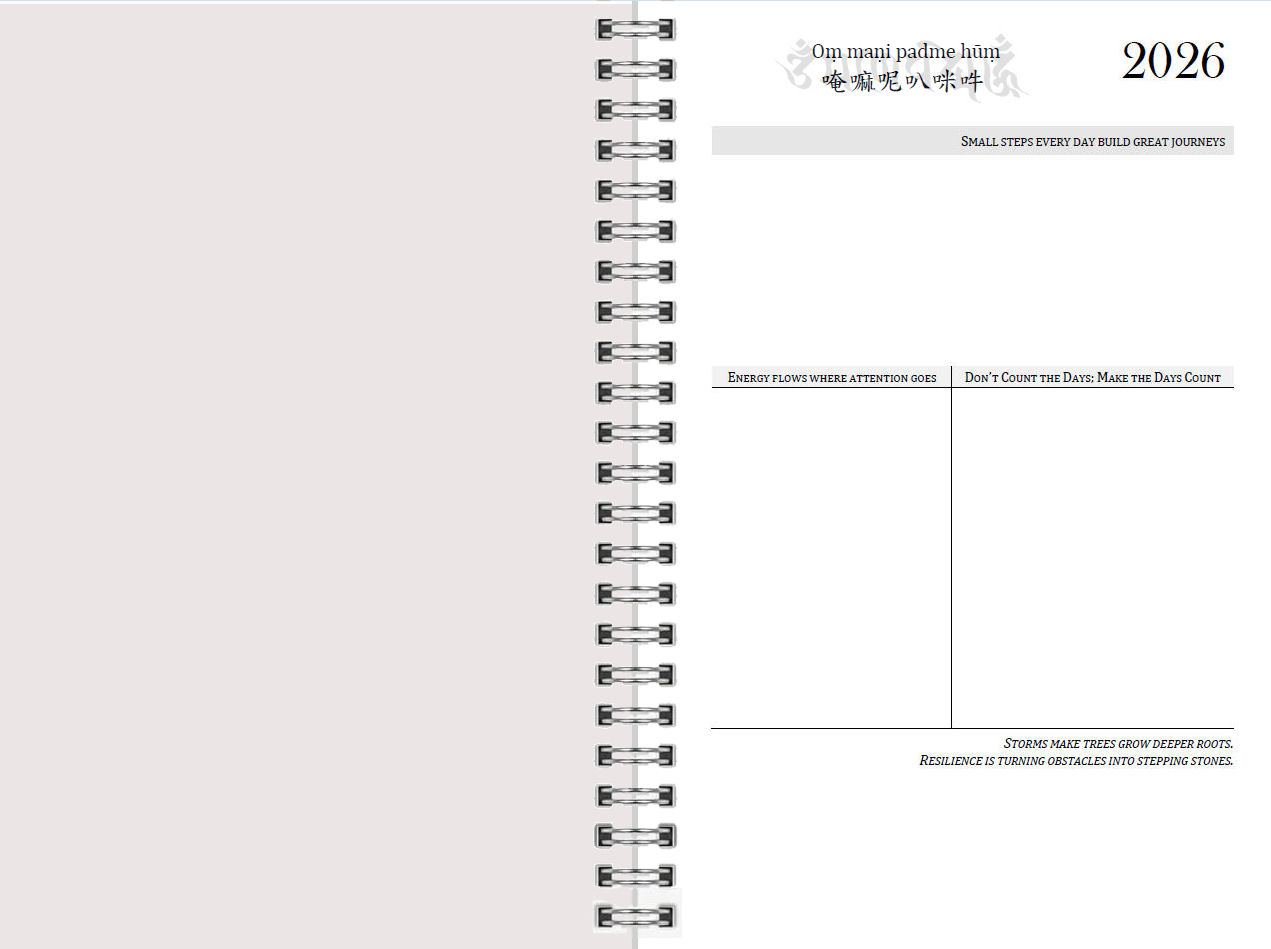
The Metaphysician’s Day Planner (MDP) is going to continue, at least for another year, though for 2026, as a “Lite” scaled back offering. It’s $17 for the personalized day planner customized with your natal chart and 2026 solar returns chart, e-delivered to your e-mail address as a digital file (PDF). We recommend using Lulu.com (not sponsored) a third-party print-on-demand site to print the physical spiral-bound copy of your MDP.

For a section by section, feature by feature walk-through of the 2026 MDP, CLICK HERE.

Continue reading “2026 Metaphysician’s Day Planner $17”

Create Your Own Metaphysician’s Day Planner: Downloadable Templates

A few weeks ago I announced that we were retiring the annual Metaphysician’s Day Planner offering, after nine consecutive years of making them, each one custom-made to order with your birth chart and that year’s solar return chart. Plus the companion Metaphysician’s Guide that comes with the year ahead’s astrological forecasts, auspicious dates, inauspicious dates, and the dates to notable astrological or astronomical events.

Although we won’t be selling and making them anymore, we also didn’t want to leave you in a lurch, especially since we acknowledge that many of you have come to rely on it year after year. First, thank you so, so very much for your support over so many years. That’s amazing! Second, thank you for your understanding, patience, and sympathies that it’s just no longer feasible for us to be doing this, as our process is entirely manual and “old school” in this new world of everything getting generated instantly by digital automation.

I changed my mind and I am offering a “MDP Lite” version for 2026, which you can learn more about HERE. The layout design for many of the classic sections have been updated, and I will be updating some of the reference content as well.

You can still download the templates for the past day planner design and layout, however.

Continue reading “Create Your Own Metaphysician’s Day Planner: Downloadable Templates”

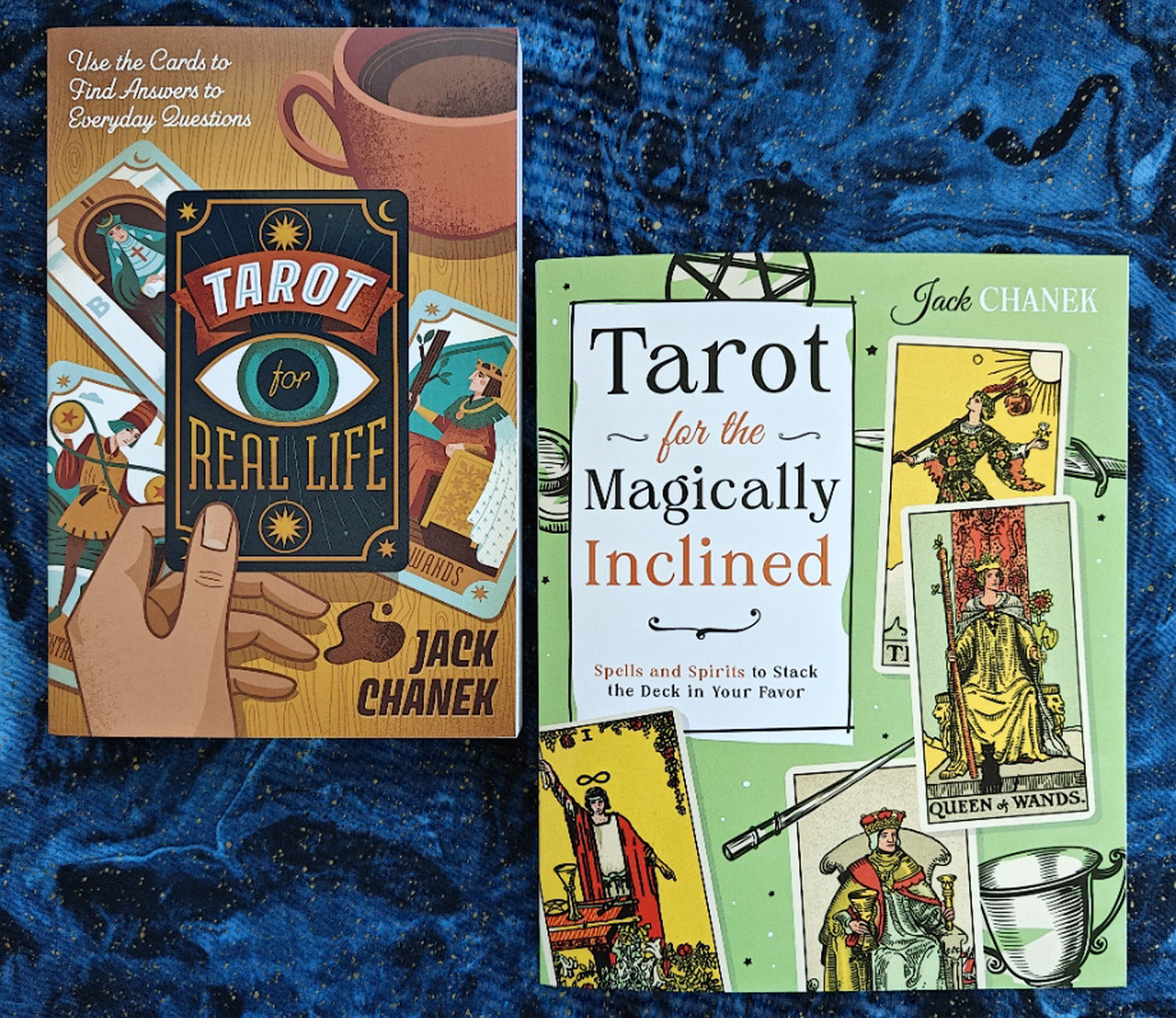
Tarot for the Magically Inclined by Jack Chanek

This is a wonderful sequel to Jack Chanek’s Tarot for Real Life, a down-to-earth primer that de-mystifies the tarot, whereas here in Tarot for the Magically Inclined: Spells and Spirits to Stack the Deck in Your Favor, we delve straight into the mysteries of the tarot.

Continue reading “Tarot for the Magically Inclined by Jack Chanek”

Monetizing Mysticism (Here We Go Again?)

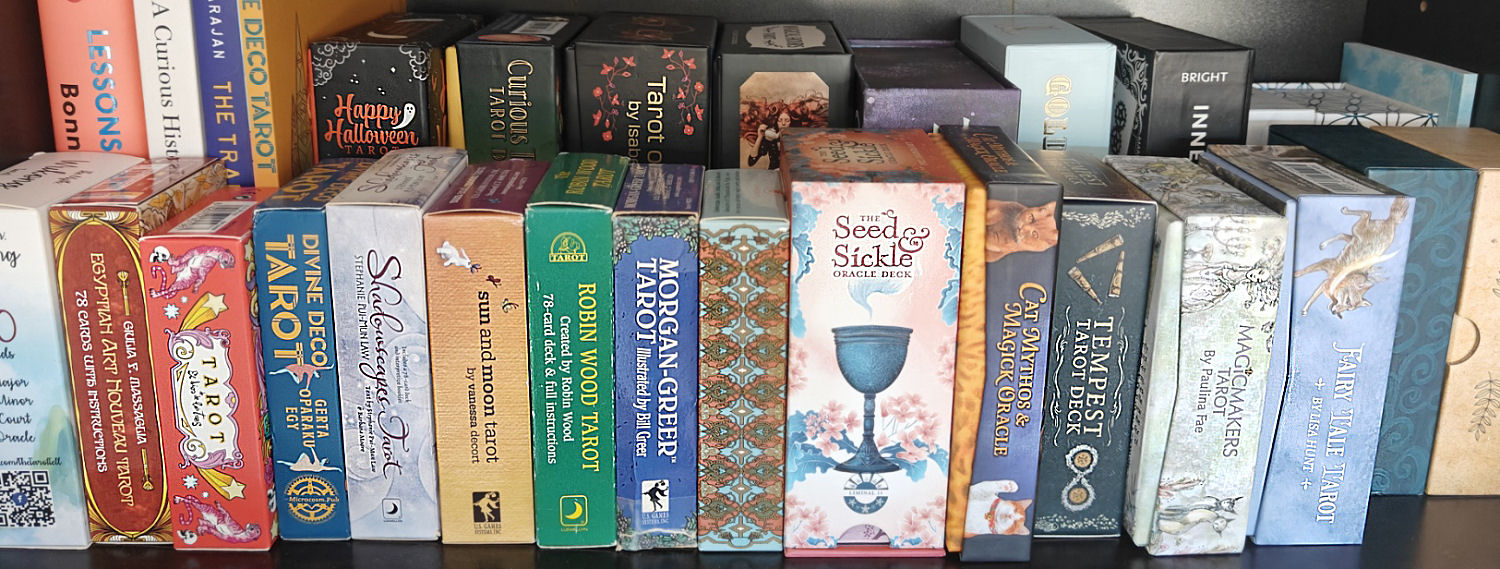
I’ll be sharing random snapshots of my witchy bookshelves just because.

I was listening to the podcast (a great one, by the way) Occultish Behavior: The Unholy Hour with Ivy Corvus and Justin Bennett, Episode 4: The Monetization of Magic where Ivy and Justin share their thoughts on paid endorsements, paywalls, charging for online courses, and so much more. They explore a spectrum of opinions, which I think so many of us can resonate with. These are observations I myself have been grappling with, so it was really fruitful to hear their perspectives.

Tangentially related are other recent thought pieces I’ve been enjoying: Thorn Mooney’s “Reflections on Community” and Kelly-Ann Maddox speaking on “Buying the Witchcraft Aesthetic.”

As a collective we cycle back to this subject for conversation every few years. A year ago that #Occultea tag had lots of pagan and witchy content creators addressing social media witchcraft, grifters, aesthetics, consumerism, and gatekeeping. Consumerism in spirituality comes up frequently in the tarot community, which I’ve previously chimed in on here (Tarot Tube and Classism) two years ago, touching on many of the topics Ivy and Justin cover in this podcast episode, specific to tarot social media spaces, rather than the broader witchy/pagan space.

When we monetize the teaching of sacred knowledge, we complicate and maybe even risk committing sacrilege. But if we don’t meet humans where they are and provide monetary compensation, they’re not going to share their work.

For many holding sincere religious beliefs around how they’ve divinely received the sacred knowledge, trying to put a dollar and cents price tag on the value of that knowledge is intuitively icky. And yet if we don’t value that knowledge — and we demonstrate value by paying for it — then these sacred cultural traditions risk going extinct.

It seems like the majority agree that people should be adequately compensated for their work, but also we judge that at some point it’s just greedy, gross, and profane. We don’t want you to starve, but if you get too popular and start selling your stuff for too much, we’ll knock you off your high horse.

It’s funny how an oft-repeated tenet in the artist/creator community is “charge what you’re worth,” except when you do, you get vilified. If you charge a “grotesque” amount of money for your work, you’re perceived as having an inflated ego, and you’ll get accusingly asked, “What makes you think your work is worth so much.” Which also is a silly question to ask, because if the creator is doing business right, then the clear answer is the marketplace. The marketplace has accepted that their work is worth that much. It’s not ego. It’s capitalism. Okay maybe it’s both.

We all agree that some sort of balanced approach is best, but we disagree on what “balanced approach” means. Where do you draw the line and why do you draw the line there? Is charging $30 for an online course on planetary ritual magic okay? What about charging $300? $3,000? You say it depends on the content of that course, but how do we even apply an objective standard for review?

As an author and educational content creator of topics in mysticism, I struggle a lot with what a “balanced approach” means to me. I want to produce diligently researched, comprehensive, substantive educational videos on YouTube, but it’s a lot of work. It’s time-consuming, and at this point in my life, time is very precious. So if I’m going to invest my time and energy into making free educational videos to increase equitable accessibility to sacred knowledge, then I want to be compensated for that work, but how? Do I want money? Initially I think, no, I don’t need money for it. I just need something in exchange to feel like it’s fair, to feel like my investment sacrifice of time was worth it. But what?

Continue reading “Monetizing Mysticism (Here We Go Again?)”

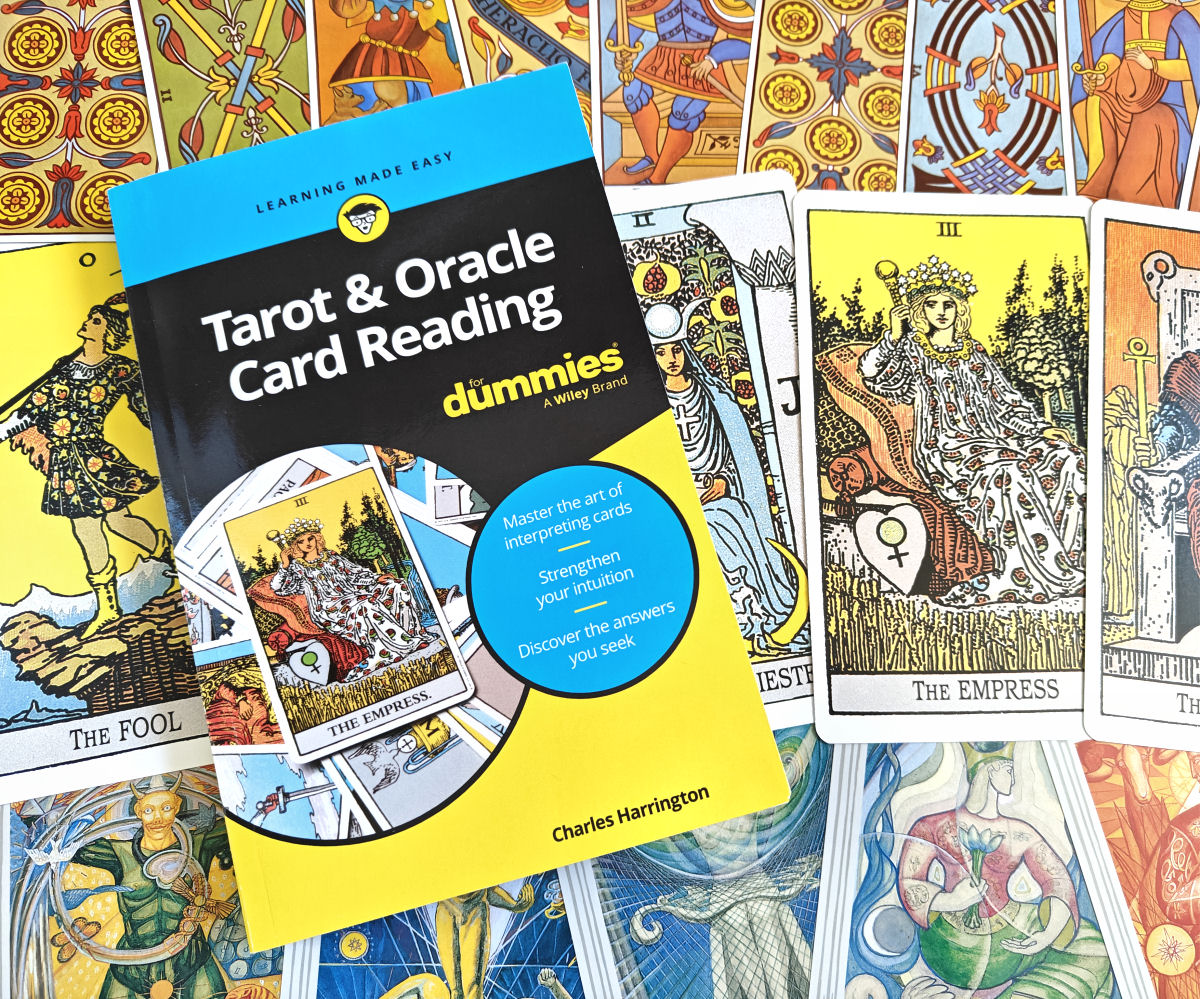
“Tarot and Oracle Card Reading” from the For Dummies Learning Series

You’re probably quite familiar with the “For Dummies” learning series that were popularized in the 90s. The book series published by Wiley & Sons de-mystifies difficult subjects and is known for accessible, easy-to-understand, plainspoken writing. Wiley could not have chosen a better author for the task than my dear friend Charles Harrington.

Although the “For Dummies” series catches a kitschy rep, this is in all seriousness a legit, no-nonsense, superb beginner’s book on tarot and oracle decks — and I love the dual coverage this compact yet comprehensive book packs for you.

Continue reading ““Tarot and Oracle Card Reading” from the For Dummies Learning Series”

Learning the Opening of the Key (OOTK) – Course is Now Free

Opening of the Four Worlds

Just a note for those who might be interested: the “Learning the Opening of the Key” video and workbook course from 9 years ago is now freely available.

You’ll first want to click onto the below hyperlinked page to download the workbook PDF and all supplemental materials:

Learning the Opening of the Key (Online Course)

Continue reading “Learning the Opening of the Key (OOTK) – Course is Now Free”

Why the Tarot Community is Facing a Cultural Reckoning

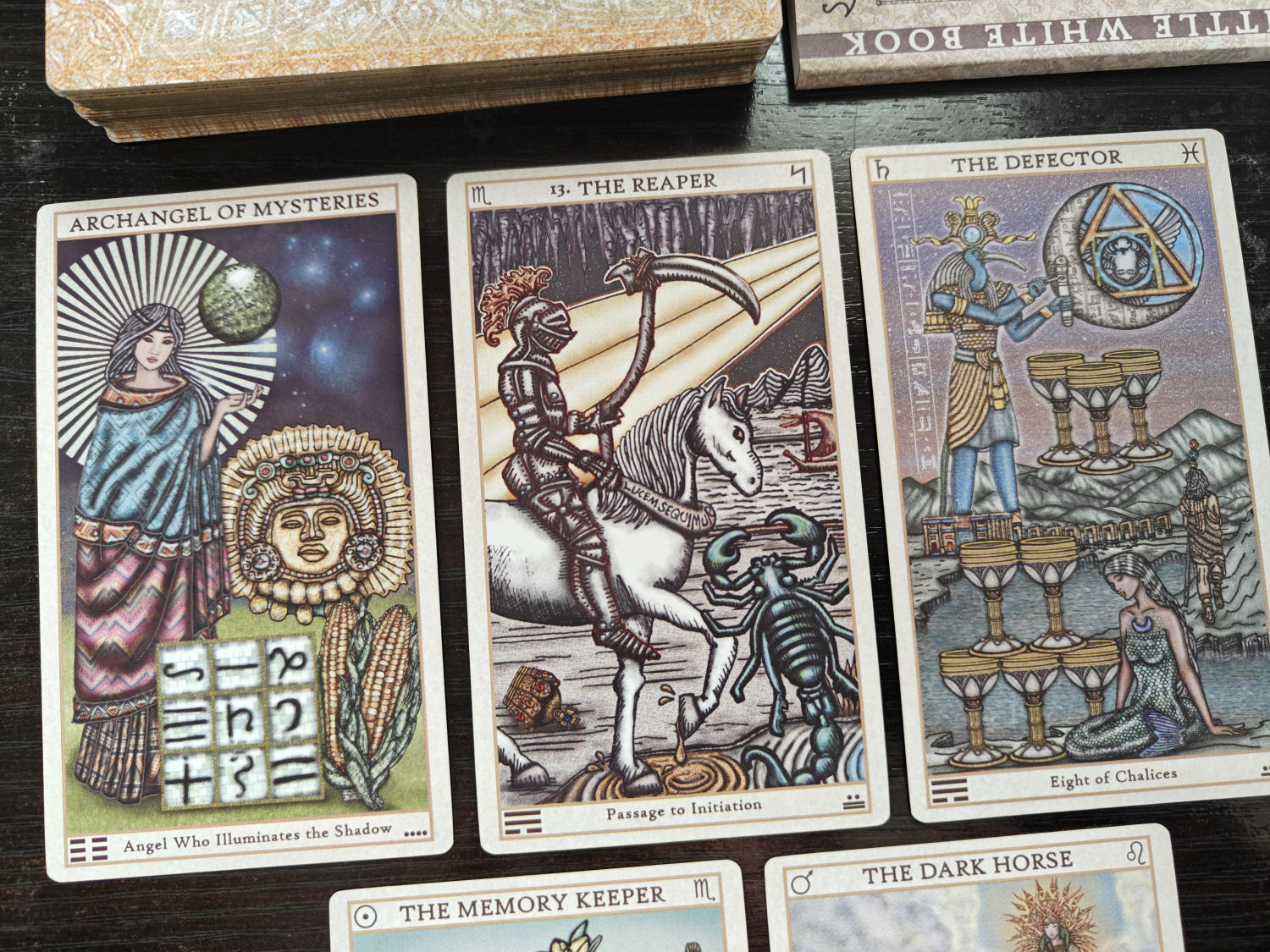
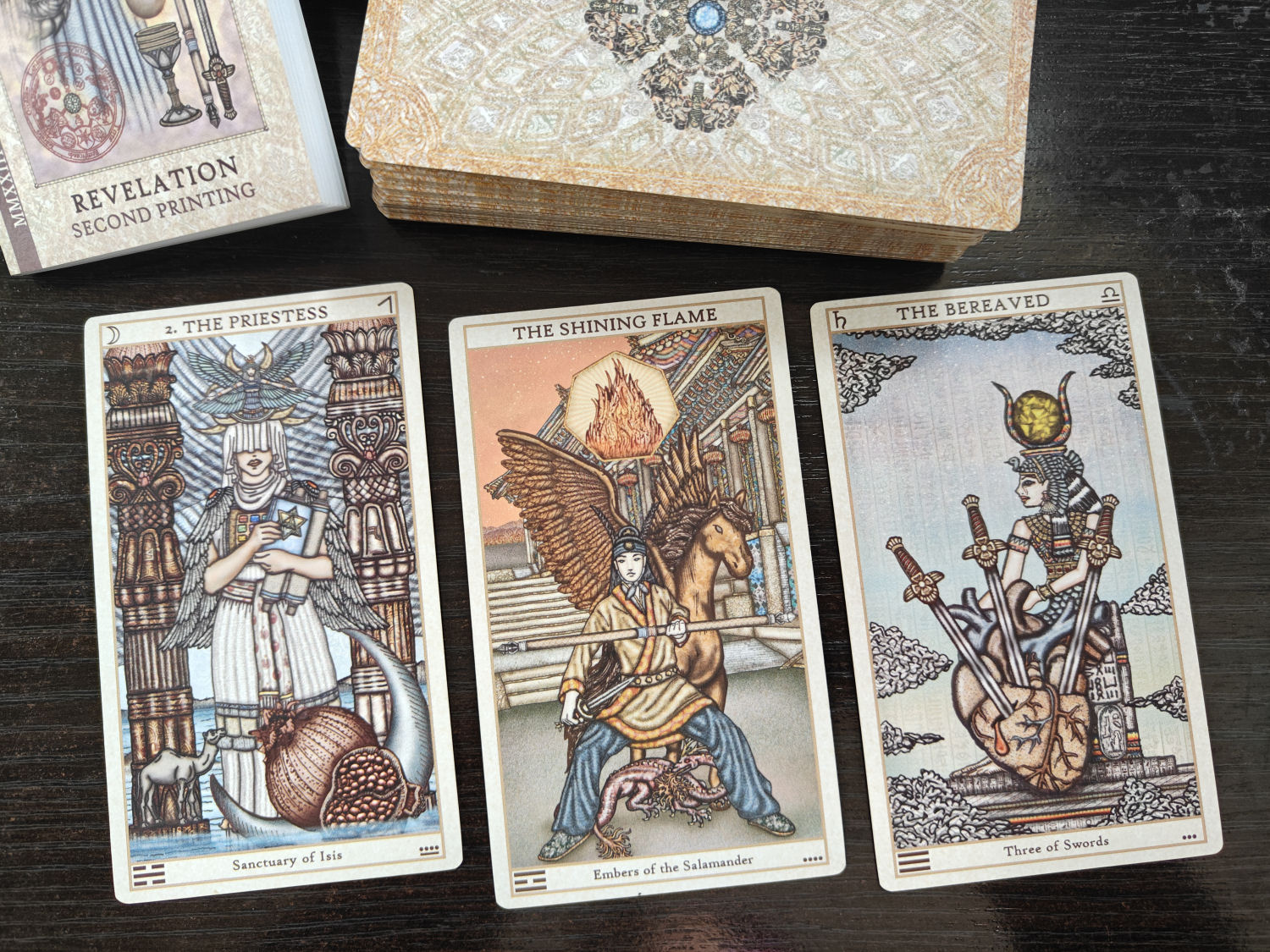
Random photos of my Spirit Keeper’s Tarot deck, Revelation Edition, because I didn’t know what else to use as images for this blogged reflection…

I think it was in 2022 that I first realized what it is I was witnessing: the tarot community as I’ve come to know it was dying, though it was also making way for the rise of something else.

Archangel of Mysteries, Key 13: The Reaper, and The Defector (Eight of Chalices) from the Spirit Keeper’s Tarot, Revelation Edition

The “Dying Internet” Theory

First, tarot trends don’t happen in a vacuum, immune to sociopolitical movements. In fact, we can often tie tarot trends to exactly what’s happening in the global mainstream society. Which is why we’ll start by laying the foundation and address the trending theory of a “dying internet.”

There’s this speculative idea that’s been whispered (or maybe more than whispered as of late) in tech circles here in Silicon Valley about how an organic, people-driven internet that echoes physical society is being replaced by manufactured template content and occupied by bots, more and more being generated by AI rather than written from scratch by a human, resulting in decaying authenticity and homogenization. As they put it, “the internet is dying.” It’s a slow, systemic collapse of feral, original human-authored (can’t even believe we now have to clarify) content being outrun by outsourced content mills, ad-driven clickbait drowning out the authentic individualized voices, monoculture, fake engagement, faked popularity, and more and more paywalls.

The theory isn’t so much saying the internet is dying dying, but rather, the internet as Gen Xers and Millennials have become familiar with is quietly fading away and morphing into something that will be unrecognizable to us. What was refreshingly democratizing about the world wide web is what’s dying.

A “Dying” Niche Tarot Community

I think I need to explain myself here. It’s not that I think the tarot, as a niche interest and esoteric study, is dying or will ever die. That will always reinvent itself and persist. It’s the form of the niche tarot community as those of my generation have known it that’s dying and soon to reincarnate into something we may find unrecognizable.

When the tarot first went online (at least as I recall and per my personal participation) back in the 90s, it was almost entirely conversational. We were discussing tarot, and often in a very nerdy, niche way. We were engaging in dialogue, debating, debunking, sharing, and not merely broadcasting canned information about it.

I feel like discourse used to be more in-depth, whereas now, online content about tarot is keyed to quick consumer consumption, because if you don’t, then your content doesn’t generate high engagement, whereas when you do play the SEO game, your content rises to the top. We’re rewarding homogenization.

And again, this isn’t something that shifted overnight. Any of us who’ve been here a bit have watched it happen right under our noses. Many have griped about it, especially back when the online tarot community was still more conversational. Nowadays there’s no more griping or controversial “drama,” no more raw TMI personal ramblings, because it’s all highly-edited strategically produced vanilla content keyed to generate ad revenue, rather than for sincere interpersonal discourse. The disintegration and morphing into the (to me) unrecognizable didn’t happen like a Tower moment; oh no, it’s been slow, gradual, in a normal wear-and-tear sort of way.

Continue reading “Why the Tarot Community is Facing a Cultural Reckoning”

MBTi Archetypes for Tarot and Animal Lovers: The Oneful Tarot by Maggie Man Sin Lee, Ph.D.

The Oneful Tarot is inspired by MBTI (Myers-Briggs Type Indicator) personality archetypes and using the tarot to recognize our personality patterns. It was created by Dr. Maggie Man Sin Lee, a Hong Kong-based academic researcher, caregiver advocate, naturopath, and corporate wellness consultant, and brought vividly to life by illustrator Chinkal Pareek.

NOTE: If you’d like to download my personal notes on the MBTi personality profiles for the tarot court cards, which I use as reference in tandem when working with the Oneful Tarot, scroll down to the end of the deck review.

Continue reading “MBTi Archetypes for Tarot and Animal Lovers: The Oneful Tarot by Maggie Man Sin Lee, Ph.D.”

Asking Smarter Questions in Divination

Botanical Dreams Oracle by Lynn Araujo and Catrin Welz-Stein

I partook in this thought leadership workshop and learned about the five categories of questions to ask for more effective, strategic decision-making. Being me and having the interests I do, of course I immediately connected these learnings to tarot, I Ching, and in general divinatory readings.

Teachers in nearly every divinatory tradition or system talk at length about the importance of how you ask and frame questions for divination. The quality of answers you receive — be that in strategic leadership, personal development, or divination – is directly influenced by the clarity, precision, and intention behind the questions you’re asking.

Apothecary Spirits Oracle by Eric Maille, Michael Anthony, and Thomas Witholt

A well-framed question acts like a lens. It brings your focus to what truly matters, and in the case of readings, hones the focus narrowly on what it is you most want or need to know. The better your question, the more noise will get filtered out of the reading result, enhancing meaningful insight.

Thinking about how to frame questions through the principles of these five categories is really helpful, I think. Hence, this share.

Continue reading “Asking Smarter Questions in Divination”