Are Authors and Content Creators Obligated to Engage?

Recently I came across this video essay by a fellow community content creator on YouTube who had some candid critiques of authors, influencers, and content creators from our mutual community. She shared frustrations about seeing a growing disconnect between those who create content and those who consume content, i.e., the audience that supports an author or content creator.

She had a lot of very legit criticism of the present day online creator ecosystem. Bots and AI-generated responses, monetizing parasocial relationships in a way that feels exploitative, the end of peer to peer communications and the rise of transactional relationships, alienating many socioeconomic classes with paywalls, and having assistants manage community spaces rather than the big-name content creator themselves engaging in those community spaces — I hear you. All valid points speaking truth to power. Also, her concerns speak to something deeper– the loneliness and disconnection many of us feel online these days. Where has that sense of fellowship gone?

Though as someone who also writes, publishes, and maintains an online presence, I have some strong feelings about these points, particularly around community engagement and the unrealistic expectations that get imposed on authors and content creators.

I’d like to unpack some of those critiques, not just from that one YouTuber or from that particular video essay, but because what she said reflects a majority view currently held against content creators when they’re not being responsive in their comments section. I want to offer my perspective. But this isn’t a response to that video, no. These are just my reflections on the realities of engagement, from a content creator’s perspective, inspired by the points she raised in that video.

Continue reading “Are Authors and Content Creators Obligated to Engage?”

Learning the Opening of the Key (OOTK) – Course is Now Free

Opening of the Four Worlds

Just a note for those who might be interested: the “Learning the Opening of the Key” video and workbook course from 9 years ago is now freely available.

You’ll first want to click onto the below hyperlinked page to download the workbook PDF and all supplemental materials:

Learning the Opening of the Key (Online Course)

Continue reading “Learning the Opening of the Key (OOTK) – Course is Now Free”

Why the Tarot Community is Facing a Cultural Reckoning

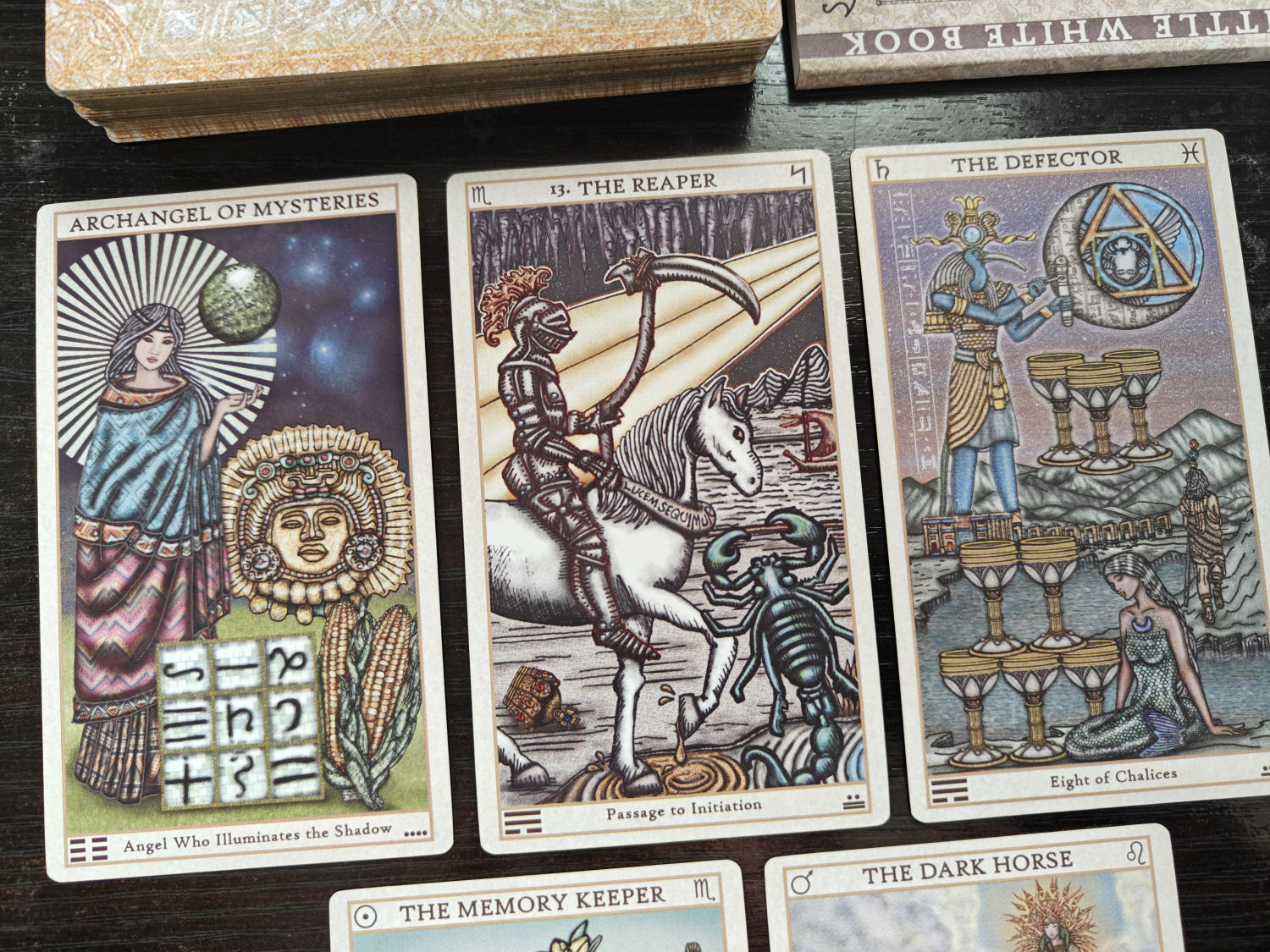
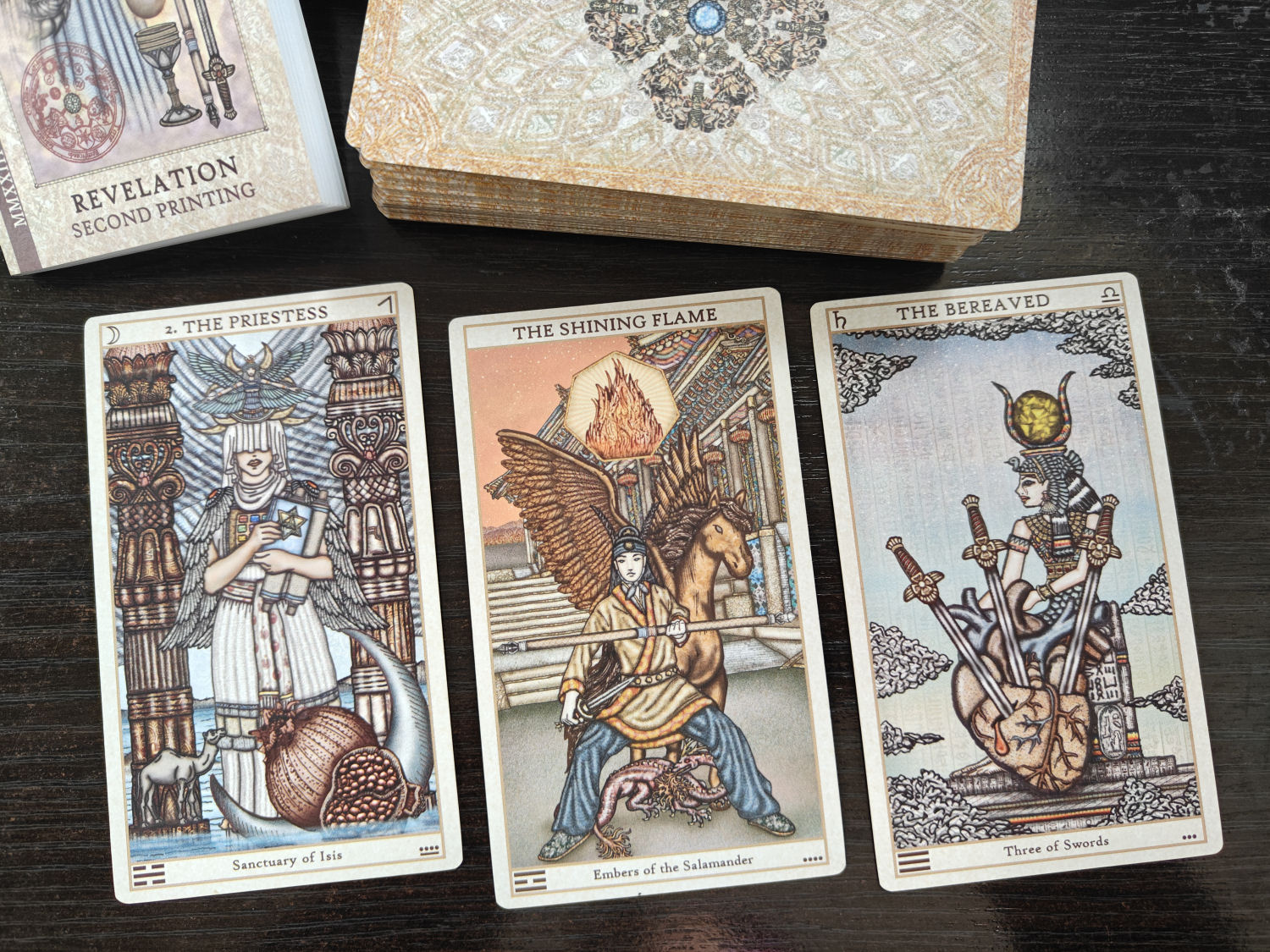
Random photos of my Spirit Keeper’s Tarot deck, Revelation Edition, because I didn’t know what else to use as images for this blogged reflection…

I think it was in 2022 that I first realized what it is I was witnessing: the tarot community as I’ve come to know it was dying, though it was also making way for the rise of something else.

Archangel of Mysteries, Key 13: The Reaper, and The Defector (Eight of Chalices) from the Spirit Keeper’s Tarot, Revelation Edition

The “Dying Internet” Theory

First, tarot trends don’t happen in a vacuum, immune to sociopolitical movements. In fact, we can often tie tarot trends to exactly what’s happening in the global mainstream society. Which is why we’ll start by laying the foundation and address the trending theory of a “dying internet.”

There’s this speculative idea that’s been whispered (or maybe more than whispered as of late) in tech circles here in Silicon Valley about how an organic, people-driven internet that echoes physical society is being replaced by manufactured template content and occupied by bots, more and more being generated by AI rather than written from scratch by a human, resulting in decaying authenticity and homogenization. As they put it, “the internet is dying.” It’s a slow, systemic collapse of feral, original human-authored (can’t even believe we now have to clarify) content being outrun by outsourced content mills, ad-driven clickbait drowning out the authentic individualized voices, monoculture, fake engagement, faked popularity, and more and more paywalls.

The theory isn’t so much saying the internet is dying dying, but rather, the internet as Gen Xers and Millennials have become familiar with is quietly fading away and morphing into something that will be unrecognizable to us. What was refreshingly democratizing about the world wide web is what’s dying.

A “Dying” Niche Tarot Community

I think I need to explain myself here. It’s not that I think the tarot, as a niche interest and esoteric study, is dying or will ever die. That will always reinvent itself and persist. It’s the form of the niche tarot community as those of my generation have known it that’s dying and soon to reincarnate into something we may find unrecognizable.

When the tarot first went online (at least as I recall and per my personal participation) back in the 90s, it was almost entirely conversational. We were discussing tarot, and often in a very nerdy, niche way. We were engaging in dialogue, debating, debunking, sharing, and not merely broadcasting canned information about it.

I feel like discourse used to be more in-depth, whereas now, online content about tarot is keyed to quick consumer consumption, because if you don’t, then your content doesn’t generate high engagement, whereas when you do play the SEO game, your content rises to the top. We’re rewarding homogenization.

And again, this isn’t something that shifted overnight. Any of us who’ve been here a bit have watched it happen right under our noses. Many have griped about it, especially back when the online tarot community was still more conversational. Nowadays there’s no more griping or controversial “drama,” no more raw TMI personal ramblings, because it’s all highly-edited strategically produced vanilla content keyed to generate ad revenue, rather than for sincere interpersonal discourse. The disintegration and morphing into the (to me) unrecognizable didn’t happen like a Tower moment; oh no, it’s been slow, gradual, in a normal wear-and-tear sort of way.

Continue reading “Why the Tarot Community is Facing a Cultural Reckoning”

Asking Smarter Questions in Divination

Botanical Dreams Oracle by Lynn Araujo and Catrin Welz-Stein

I partook in this thought leadership workshop and learned about the five categories of questions to ask for more effective, strategic decision-making. Being me and having the interests I do, of course I immediately connected these learnings to tarot, I Ching, and in general divinatory readings.

Teachers in nearly every divinatory tradition or system talk at length about the importance of how you ask and frame questions for divination. The quality of answers you receive — be that in strategic leadership, personal development, or divination – is directly influenced by the clarity, precision, and intention behind the questions you’re asking.

Apothecary Spirits Oracle by Eric Maille, Michael Anthony, and Thomas Witholt

A well-framed question acts like a lens. It brings your focus to what truly matters, and in the case of readings, hones the focus narrowly on what it is you most want or need to know. The better your question, the more noise will get filtered out of the reading result, enhancing meaningful insight.

Thinking about how to frame questions through the principles of these five categories is really helpful, I think. Hence, this share.

Continue reading “Asking Smarter Questions in Divination”

Trademark Registration DIY (USPTO)

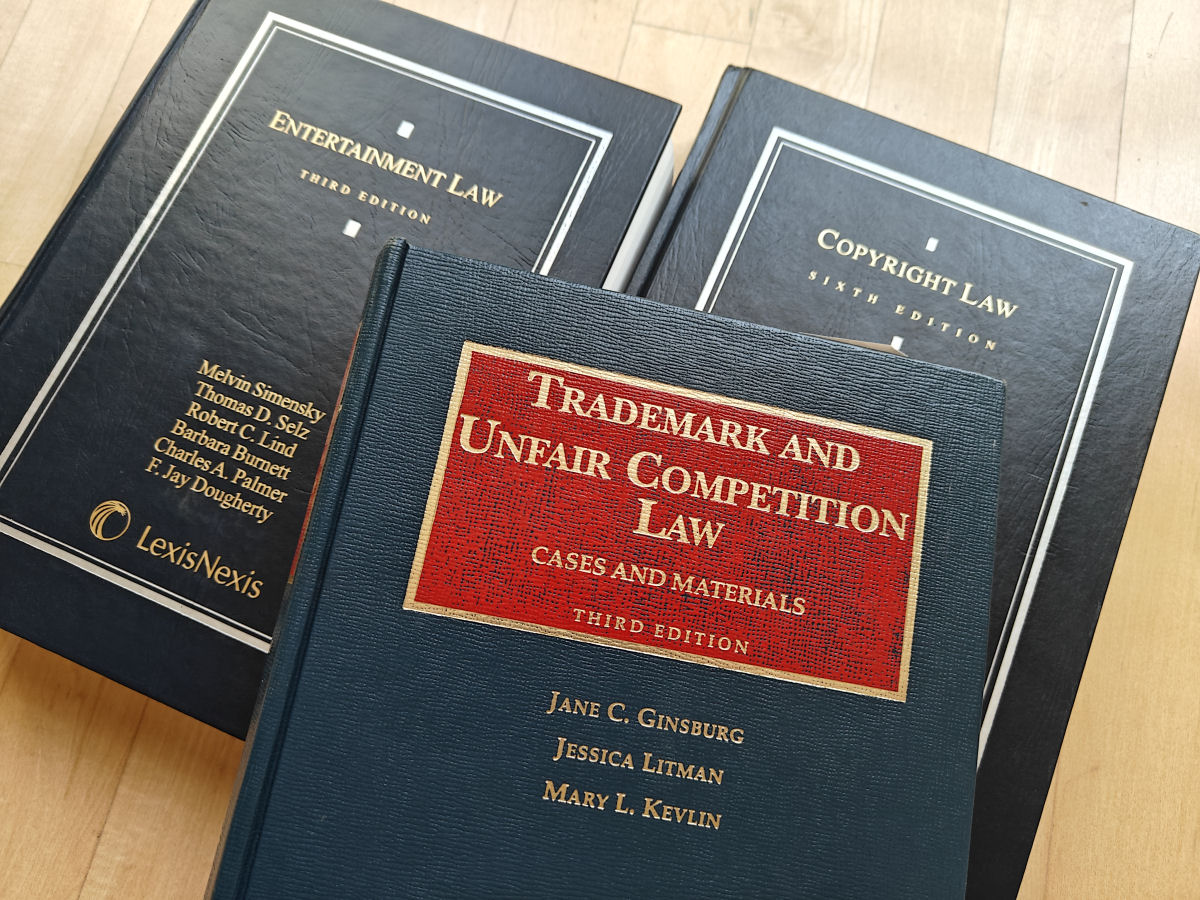
If you’re not a very disciplined, organized, love-to-do-research, always-did-your-homework Type A personality with strong Virgo vibes, then skip this blog post entirely and do not try to DIY intellectual property law. Hire an attorney.

Even if you are all that, this is not legal advice. I am not your attorney. This is a free-for-all blog post you came across on the internet, on a website about fruity-tutti metaphysical arts no less, so if you leave with even a few nuggets of insight to get you started on the right track, call it a win. Which is to say, do not blissfully rely on what I’ve said here. Apply critical thinking.

But… For an attorney to do the due diligence, put together the application, and steer your trademark through registration with the USPTO, it can cost around $2,500 if it’s a simple, un-problematic trademark. And if you’ve got unique circumstances or someone ends up challenging your mark, then the fees will skyrocket out of control.

If that sounds like way more than you’re willing to spend, well the good news is technically you can file a trademark without a lawyer. Yes, technically it can be DIY, though that comes with quite a bit of risk. If you do it wrong, your application will get rejected, you won’t get your trademark registered, and you will be out of pocket the $250 or $350 you paid for the filing fee (no refunds).

Nevertheless, I’ve always been a do-it-yourself (DIY) type and if you’re kinda like that too, and you are willing to roll up your sleeves and do a lot of research, homework, and study yourself, and you accept the risks of DIY trademark registration, then maybe you don’t need to hire a lawyer or take your chances with one of those discount run-of-the-mill legal services websites. Maybe you can shoot your shot and try to register your trademark on your own.

Here are the basics.

Continue reading “Trademark Registration DIY (USPTO)”

Are Personal Branding Pressures on Authors Resulting in Bad Books?

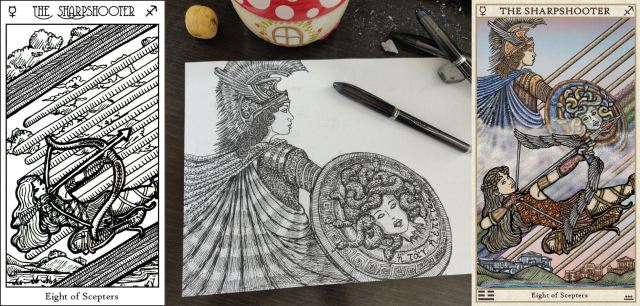
As a tarot deck creator, it’s not enough to just do the art; you have to create social media content with your works-in-progress to keep up engagement….. Otherwise, how will you get people to buy your deck once you’re done with it?….

I saw an editor friend’s repost of this Vox article, “Everyone’s a sellout now: So you want to be an artist. Do you have to start a TikTok?” by Rebecca Jennings. It’s about the pressure on authors today to have a preexisting popular platform before publishing a book, or any creative work product for that matter. How well a book sells is determined by how well the author self-promotes. Pertinent to the circles I run in, let’s talk about tarot and witchy books.

Social media influencers have democratized culture, but perhaps have also diluted specialty creative industries. Instead of an experienced, established industry expert who is the gatekeeper of what ought to get published, the consuming public is now collectively the “gatekeeper” determining who The Algorithm will favor. Publishers are yielding to the consumer public opinion, via numbers, on who ought to be published.

Top selling books are not necessarily by the most knowledgeable virtuoso in that field but rather, are by whichever charismatic personality has the most followers on YouTube and TikTok. Therefore, to be a top selling author, you need to cater to that consuming public. It’s not about your resume, curriculum vitae, or credentials; it’s about your personal brand.

Inspired by that article, I thought I’d share my experiences on having to navigate social media, personal branding, and platform building as an author.

Continue reading “Are Personal Branding Pressures on Authors Resulting in Bad Books?”

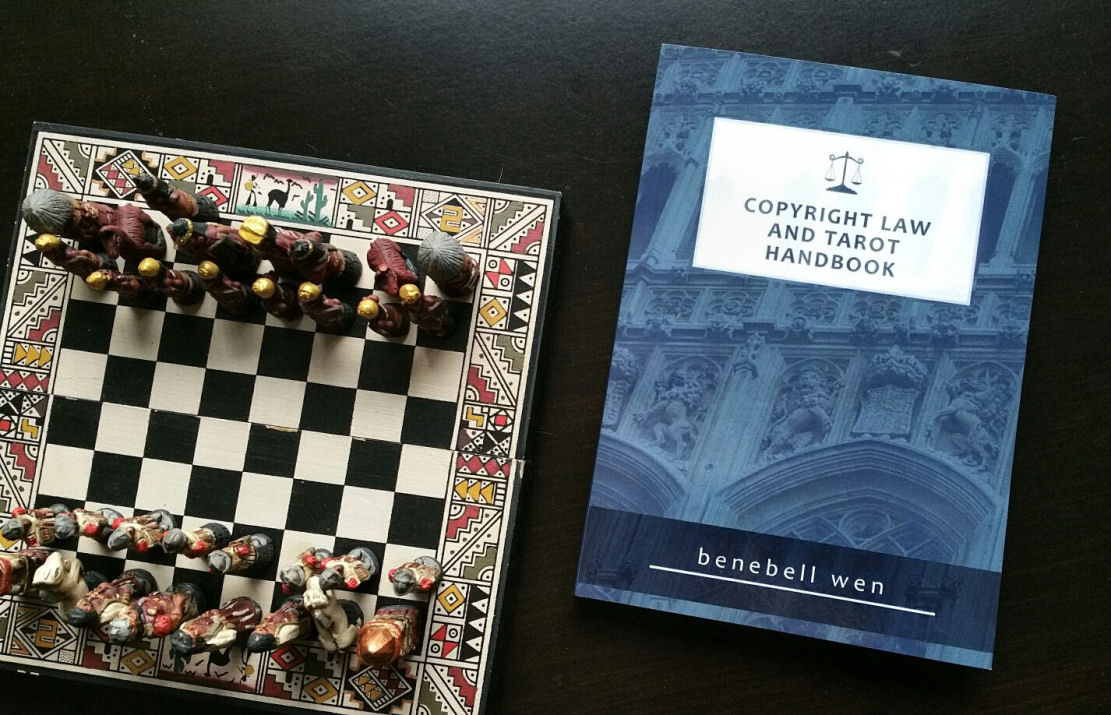
Copyright Law and Tarot: Handbook Download

Last Updated 2023 Dec. 29

You might find this free handbook helpful.

Here’s some of what you’ll find in the downloadable PDF and DOCX:

  • Copyright law basics, from what is a copyright, to what constitutes infringement, and defenses against infringement
  • Group Registration of Unpublished Works (GRUW)
  • The DMCA and template DMCA take-down notices; how to look up an ISP’s DMCA Designated Agent
  • Template cease-and-desist demand letters to send to an infringer
  • Template letters to defend against a cease-and-desist demand letter
  • Sending cease-and-desist demand letters to stores selling knock-offs
  • Actionable solutions for the independent artist to deal with counterfeits
  • How copyright law applies in various tarot professional specific scenarios
  • AI technology, web scraping, copyright, and tarot
  • How copyrights compare to trademarks and patents; design patents and how they might be pertinent in the world of tarot

Continue reading “Copyright Law and Tarot: Handbook Download”

Addendum Blog Post Response to “How to Spot a Fake Tarot Reader”

There was a TikTok video that kinda sorta went viral among tarot people. All my tarot friends were chattering about those “six ways” and so many feels got riled up. Heck, the fact I made my VR two weeks ago and am still talking about it right now with an addendum blog post shows I got a little riled up, too.

In my (probably misplaced) priority of trying to keep videos short and succinct, I didn’t flesh out the thoughts I had wanted to share. And then many tarot colleagues continued and extended the discussion, so now I have even more thoughts. =)

This is a follow-up or written sequel to my VR.

Continue reading “Addendum Blog Post Response to “How to Spot a Fake Tarot Reader””

My Thoughts on the FTC Disclosure Guidelines for Social Media Influencers (Specifically, Tarot Content Creators)

Random old photo to accompany the commentary. I’m holding the Tarot of the Holy Light by Christine Payne-Towler, which at some point long, long ago I received for free. Do I need to disclose that?

Psst… I have a “TL;DR Short Summary for the Not-Readers” that summarizes this otherwise very long blog post. So if you don’t have the time or you’re only a little bit interested and not that interested, then scroll all the way down to the end for the TL;DR Short Summary.

I’m reviving and sharing a blog post I drafted in 2019 that has sat in my WordPress saved file for the last 3+ years. It’s about FTC-issued disclosure guidelines (“Rules”) for social media influencers, and key takeaways to glean from the Rules if you’re creating content in the Mind, Body, Spirit spheres. I never got around to finishing and posting that 2019 draft, back when the FTC disclosure guidelines first gained traction, but I think now is a good time to reopen the discussion.

What’s of note to me is how the legal minds who are often the ones drafting these Rules seem to be people who have no personal experiences or insights into the communities they’re drafting the guidelines for. Even when they employ subject matter experts, those SMEs tend to be biased, or come from a very particularized segment of the community, and therefore do not fairly represent all interested parties.

There’s consumer protection, which nobody’s against. But then there’s untenable rules of compliance that aren’t clear enough for practical application by the people the rules are demanding compliance from.

By the way, none of this is my legal opinion, and do not rely on it as such. All of this is personal commentary in reaction to the FTC disclosure guidelines as someone who considers herself a deck reviewer but who could potentially be categorized as an “influencer.”

Continue reading “My Thoughts on the FTC Disclosure Guidelines for Social Media Influencers (Specifically, Tarot Content Creators)”

NWTS 2022 (the Northwest Tarot Symposium) Recap

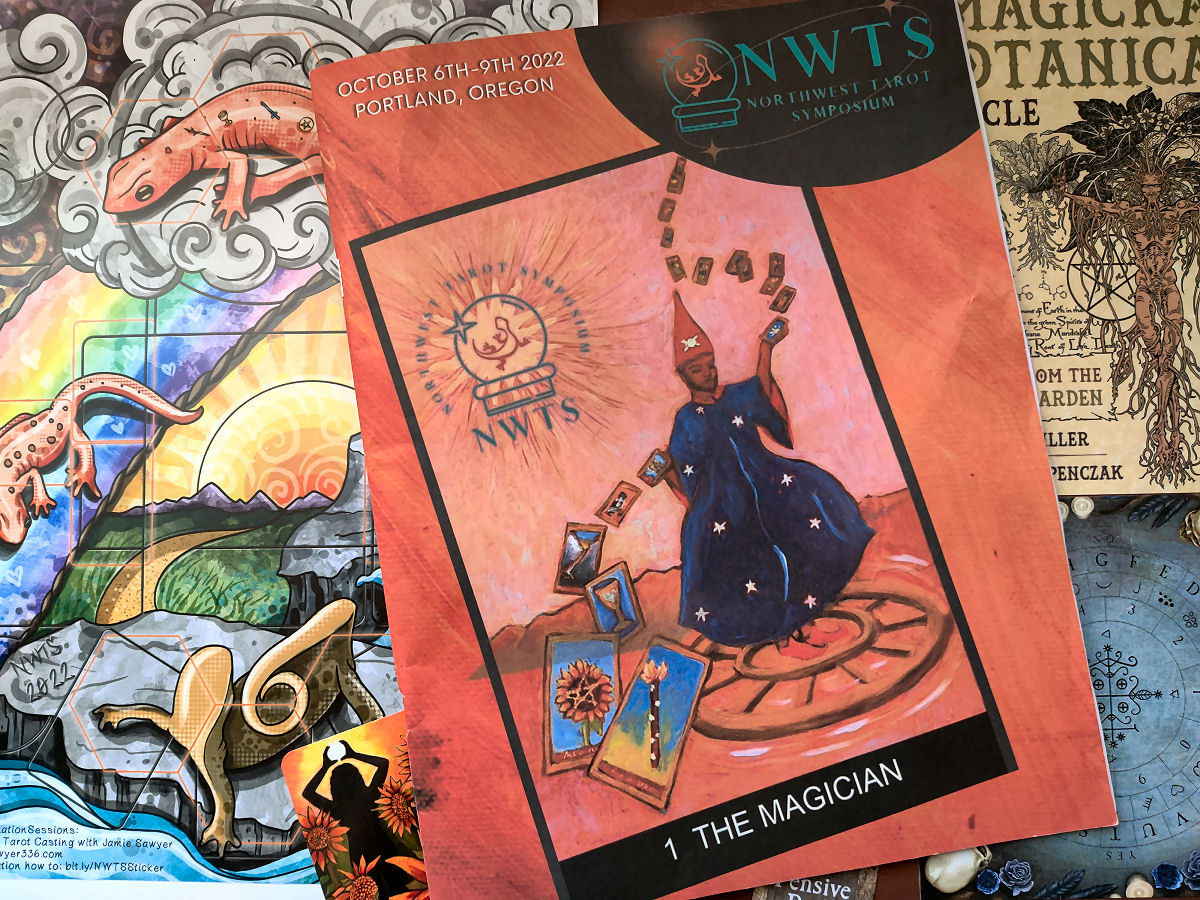
Whew! NWTS 2022 was a blast! This was Michelle and Roger of SoulTopia’s inaugural year as the organizers of NWTS, the Northwest Tarot Symposium in Portland, Oregon. And wow, what a comeback for NWTS, thanks to SoulTopia’s tireless efforts, persistence, and stewardship. This year, the tarot community really showed up for an impressive turnout, to the point where we might’ve outgrown the Monarch Hotel! Time for a bigger even more spacious venue? =)

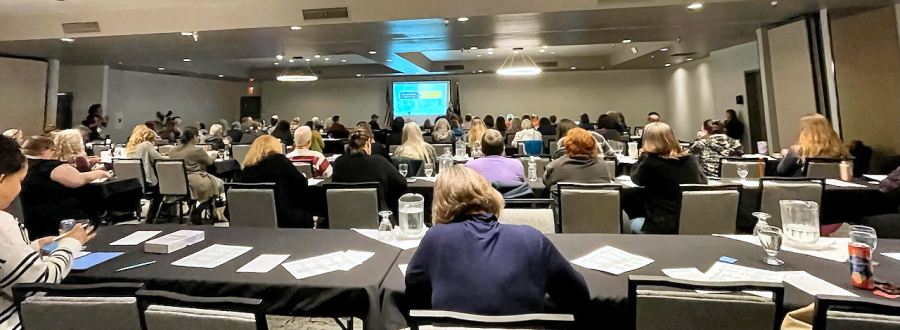
Anyway, this is a casual recap of the event from my vantage point.

Continue reading “NWTS 2022 (the Northwest Tarot Symposium) Recap”