
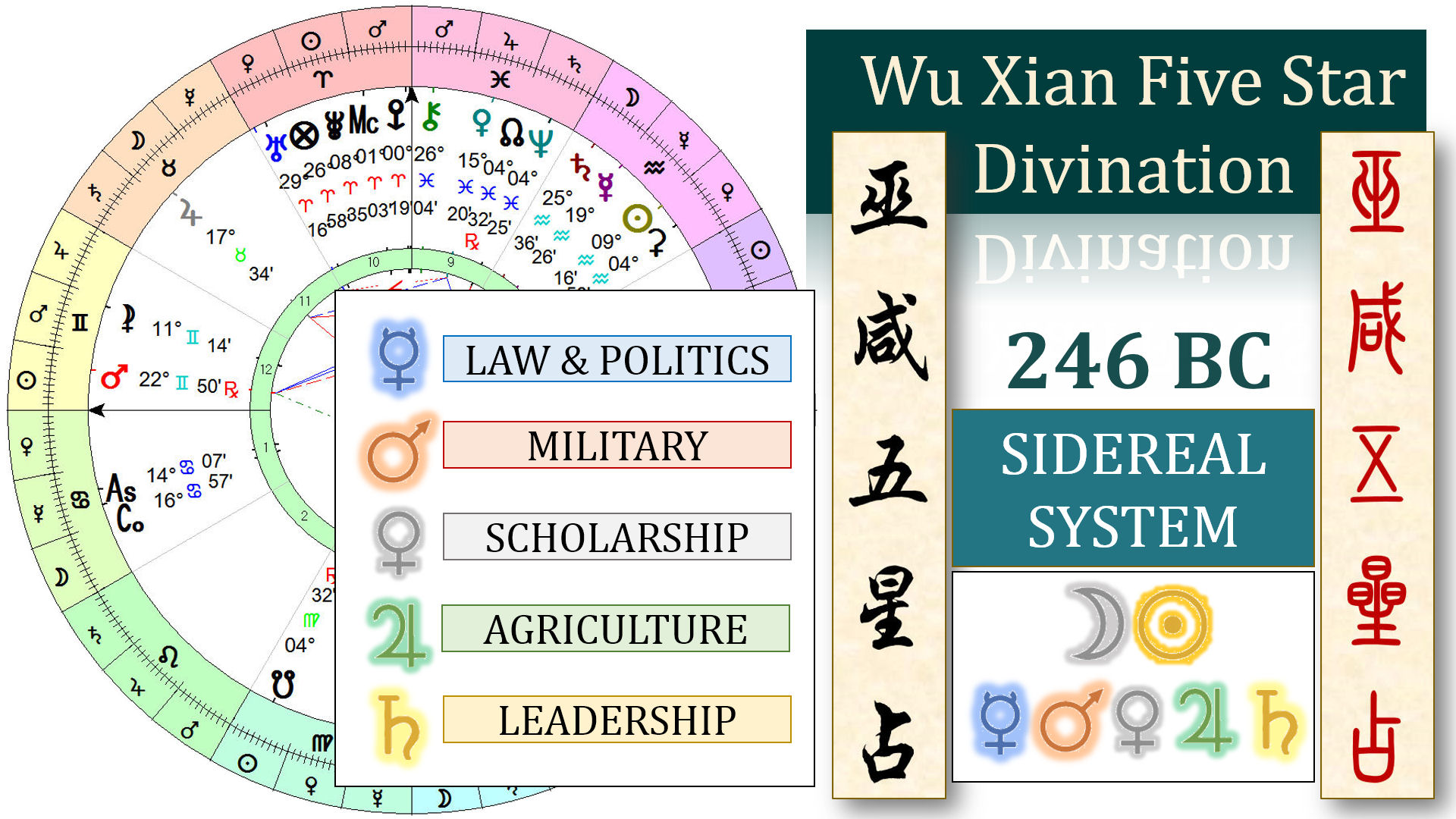
Wuxian’s Five Star Divination 巫咸五星占 is a system of astrology that dates back to the Qin dynasty, around 246 BC during Qin Shihuang’s reign, documented in a manuscript from that era titled Five Star Divination 五星占, the “five stars” being Mercury (Water), Venus (Metal), Mars (Fire), Jupiter (Wood), and Saturn (Earth). The astrological text is attributed to Wuxian 巫咸, and so this system of astrology became known as Wuxian’s Five Star Divination.
Wuxian 巫咸 (also referred to as Xian Wu, 咸巫) is the ancestor god and ascended master of the Wu 巫 shamans. Venerated as the first and most masterful Wu 巫 and thus every Wu 巫’s primordial ancestor, he may or may not have been an actual historical figure; either way, Wuxian is a fixture in Chinese lore and deified as a patron god to shamans, healers, and, in particular, diviners and astrologers. In this video lecture, “Shamanism Meets Taoism: The Hidden Link in 3,000 Years of Magic and Mysticism,” we talk about Wuxian 巫咸, the primordial ancestor of all Wu 巫 shamans, at timestamp 12:35.
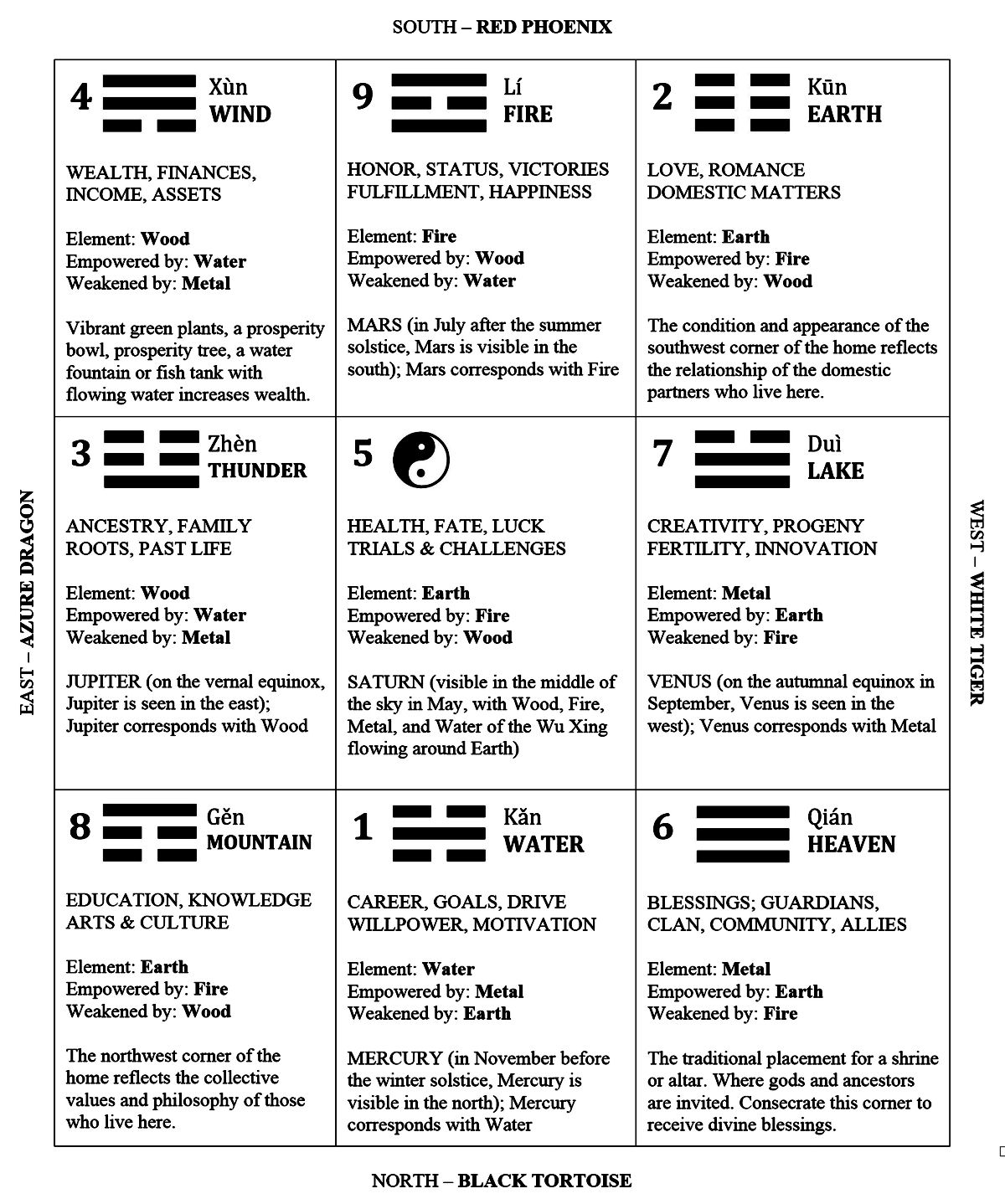
In Five Star Divination, the horoscopic chart is the nine-sector Lo Shu magic square. The correspondences for each of the nine sectors mirror the feng shui correspondences of the Lo Shu we still use today.
By the way, just like in Western astrological house and sign systems, there’s a broad range of interpretations that can be had of any of the nine sectors. So please keep in mind that my pithy keywords don’t do it justice. While there are probably unanimously agreed “end points” and limitations to how each sector is interpreted, that whole in-between range is quite varied.

The Lo Shu 洛書 is a foundational cosmological diagram that has this whole mythic explanation for how humanity received this divine revelation of the secrets of the universe. I say “secrets of the universe” because purportedly, the Lo Shu teaches us everything we need to know about how to control the forces in this universe, regulate chaos, and how to advance the human civilization.
It is a nine-sector diagram that bears correspondences into every other metaphysical system in Chinese and Taoist thought, from the I Ching and various divination practices, feng shui, astrology, alchemy, talismanic magic, ceremonial magic, pacing rituals, I mean, I can’t think of something in Taoist metaphysics and mysticism that doesn’t touch in to the Lo Shu. The I Ching Book of Changes specifically calls out the Lo Shu as the foundational structure upon which all systems of Change rests.

You also read the sun and the moon’s positioning, triangulated with the five stars. The sun’s placement represents the nature of yang energy, whereas the moon’s placement represents the nature of yin energy. The positioning of each of the five stars is read in consideration of the positioning of both the sun and moon, i.e., a triangulation between the star in question (Venus, Jupiter, etc.), the sun, and the moon.
So, for example, Mercury, which corresponds with the Wu Xing element Water, is interpreted twice: first triangulated with the placement of the sun for Yang Water implications and then triangulated with the placement of the moon for Yin Water implications.

Here’s a rundown of the planetary correspondences (note in what ways they are similar to Western astrology, and in what ways they differ):
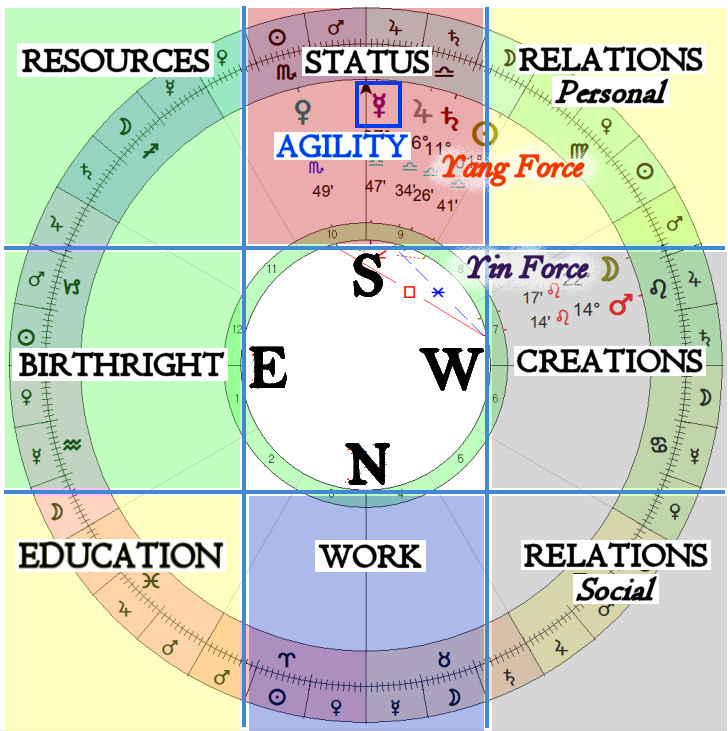
Mercury 水星, which corresponds with Water, indicates matters pertaining to law and politics or one’s career matters. It rules over the mind, wisdom, and governs one’s adaptability, intelligence, and intuition. Like Western astrology, it’s also associated with communication and rhetoric. Beyond Western astrology, Mercury is also interpreted primarily for auspices related to statecraft and politics. It rules over the Boar (Pig) and Rat, in terms of zodiac signs/animals. In terms of the yin-yang dichotomy, Mercury is considered yin.
Mercury implications are bolstered when it appears in the west or northwest, but in the southwest, there are challenges to the political climate or one’s inner mental state, which can negatively affect dissemination of information, media, messaging, education, or limitations or blocks to truth and knowledge. Mercury at the zenith point casts an aura of high intellect and an agile mind, but it doesn’t necessarily translate to public praise or conventional success (compare: Mercury conjunct midheaven interpretation).
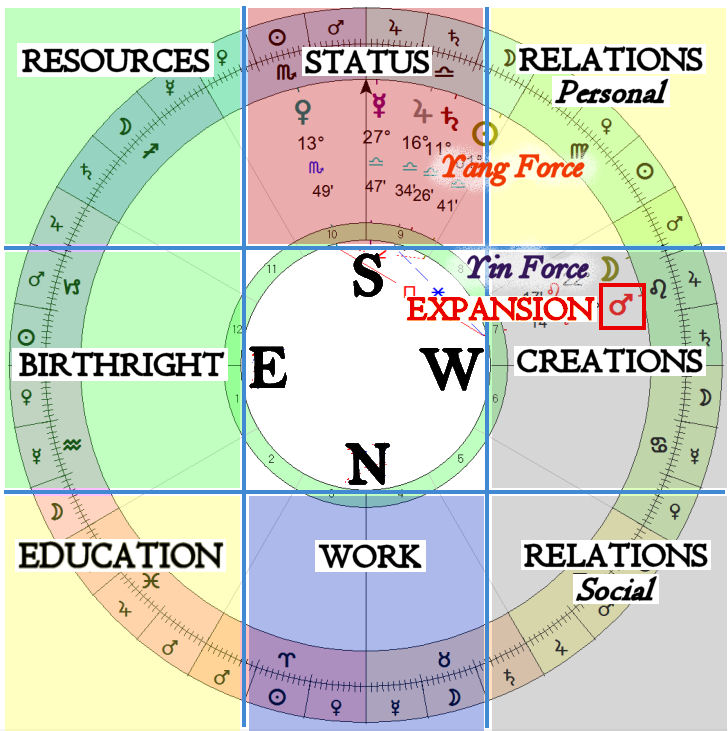
Mars 火星, corresponding with Fire, indicates matters pertaining to the military or to one’s ambitions and future conquests. Mars is yang and rules over the zodiac signs Horse and Snake. Your ambitions, honors, prestige, level of enthusiasm, and both military and social strategy or acumen are determined by Mars’ positioning.
Mars implications are supported when in the east or southeast. In the southwest of a chart, it boosts luck in areas of life corresponding with this Lo Shu sector.
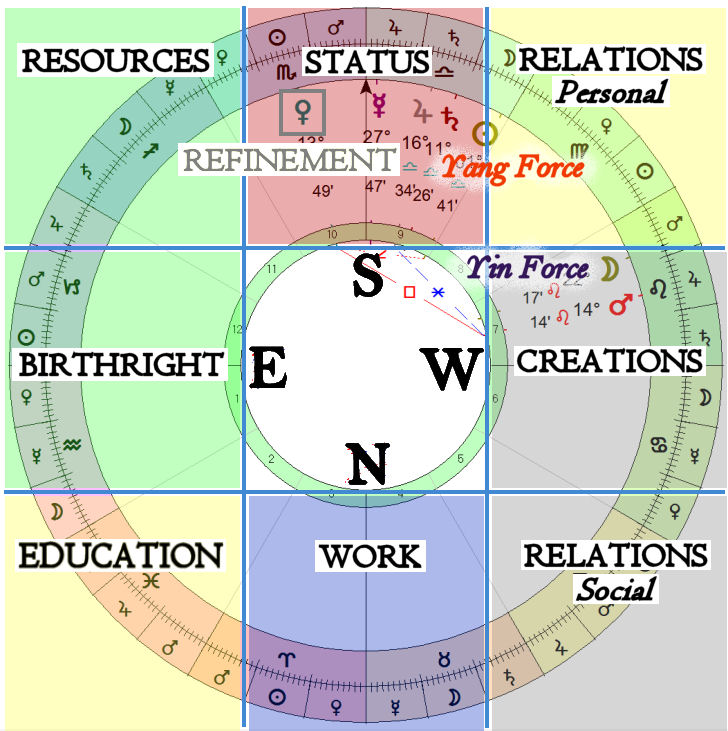
Venus 金星 corresponds with Metal and indicates matters pertaining to education, scholarship, literature, and the sciences. It rules over the Monkey and Rooster, and is associated with virtue, truth-seeking, refinement, and knowledge-seeking, i.e., cutting away of ignorance. By nature it is considered yin.
Venus implications are supported in the southwest and northeast. Here’s something that’s a bit different from Western astrology: A Venus rising placement per this Five Star system is not considered good luck; whereas in Western astrology, Venus rising tends to be interpreted positively.
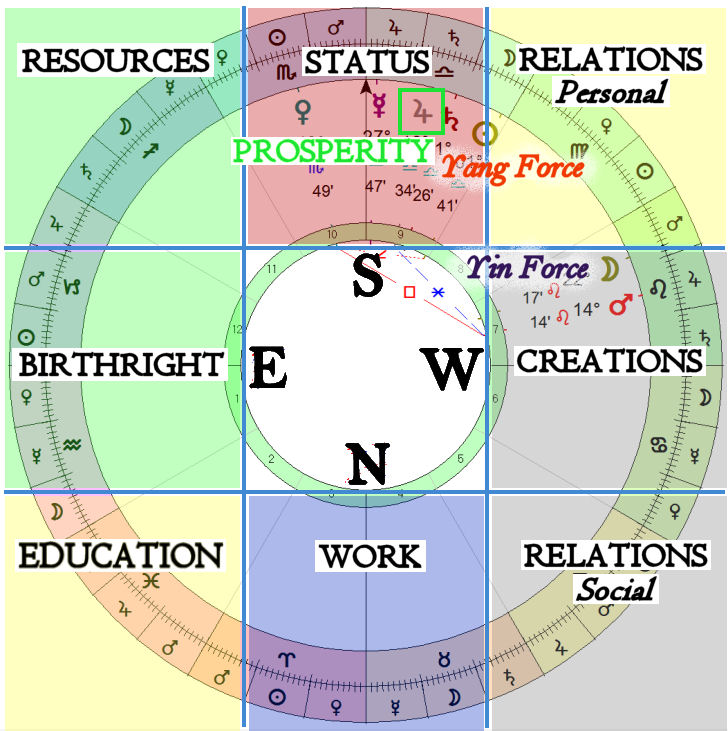
Jupiter 木星 corresponds with Wood and indicates matters pertaining to agriculture and thus by extension prosperity and resources. It is associated with luck, prosperity, fertility, vitality, and growth. Jupiter rules over the Tiger and Rabbit, and is considered yang.
Jupiter at the zenith point is considered good luck, especially for social status and public standing. Jupiter implications are also amplified in the north, but in the northwest and western sectors, can present challenges to prosperity, fertility, and access to resources.
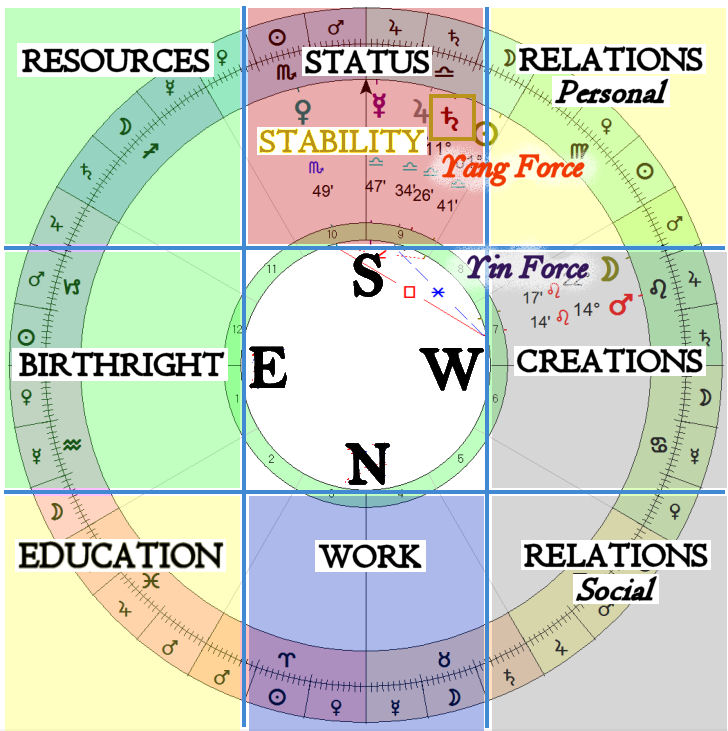
Saturn 土星 corresponds with Earth and indicates matters pertaining to leadership, sovereignty, land and territories, the kingdom, stability, and judgment. It can also indicate matters pertaining to marriage, heirs, and/or political alliances. Saturn determines how stable and grounded we are; it rules over harmonious marriages, but also sovereignty and the stability of nations. It’s marital relationship just as it is the relationship between ruler and people. Rather than being definitively yin or yang, Saturn is considered a balance of yin and yang, containing both simultaneously. It rules over the zodiac signs Dog, Dragon, Ox, and Sheep.
Saturn implications at the zenith point are at their peak. Saturn rising is often the sign of having to start a new cycle, going through growing pains, or challenges at the beginning. Saturn in the southeast, same.

The Sun is primordial yang, strengthened by both Fire and Wood. It drives vitality, sovereignty and authority, helps to rejuvenate, provides growth and expansion, governance, discipline, and communion with the celestial realm. It governs active forces.
The Moon is primordial yin, strengthened by both Water and Metal. This is knowledge of the spirit realm, of the esoteric and occult. It is communion with ancestors and the underworld. The Moon governs receptive forces, depth, shadow, the light in shadow, and that which nurtures or preserves.
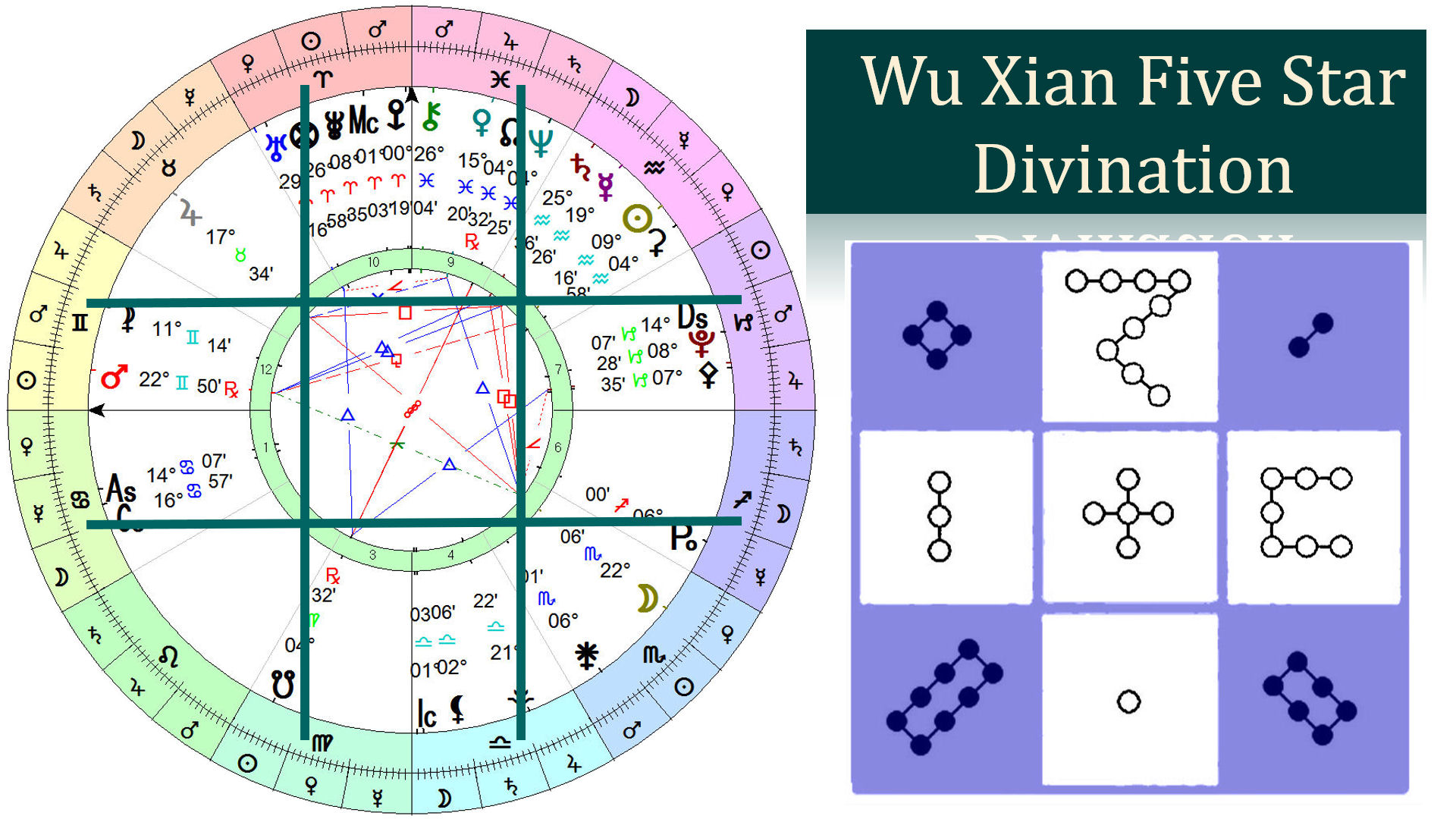
Note also that Wuxian Five Star Divination is based on a sidereal chart, i.e., calculating the actual positions of Venus, Jupiter, Mercury, Mars, and Saturn relative to fixed stars in the sky, e.g., Polaris (the North Star; Ursa Minor), Sirius (Canis Major), Spica (Virgo), Arcturus, Vega (in Chinese known as the Weaver Maiden), Betelgeuse and Rigel (in Orion).
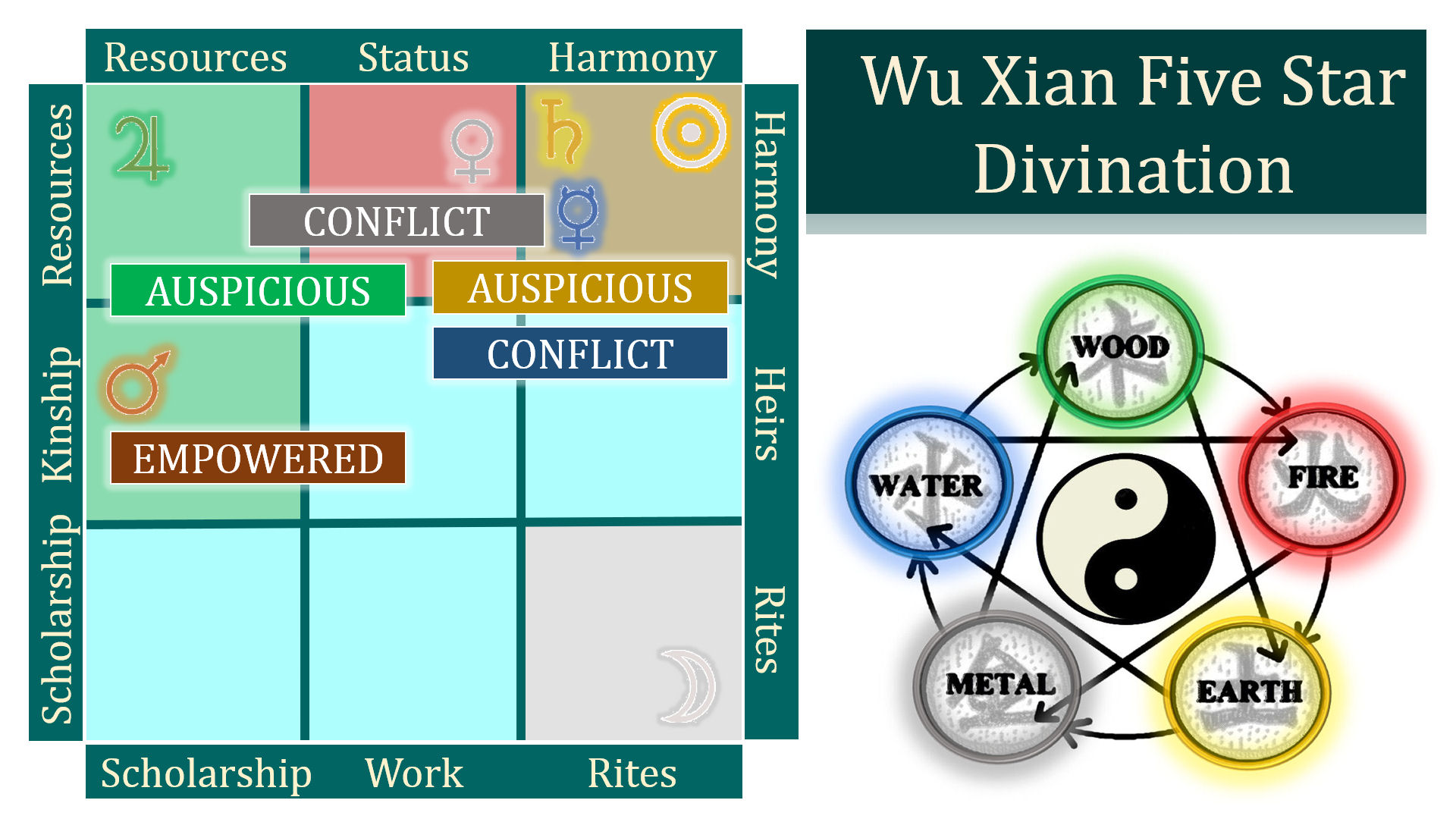
Within each of the nine sectors (the Lo Shu), one of the five Wu Xing elements is considered dominant. Each of the five planets is also assigned a Wu Xing elemental dominance. Then the alchemical interaction between the elemental trait of the sector (the “astrological house”) and the planet determines the interpretation. So it’s really similar to Western astrology!
For example, Mars (Fire) in the eastern sector (Wood) is empowered because Wood amplifies the forces of Fire.
When Jupiter (Wood) is in the southeastern sector (also Wood), it is auspicious because it’s Wood on Wood, i.e., there is elemental resonance.
When Venus (Metal) is in the southern sector (Fire), it is debilitated or ill-dignified, because Fire defeats Metal.
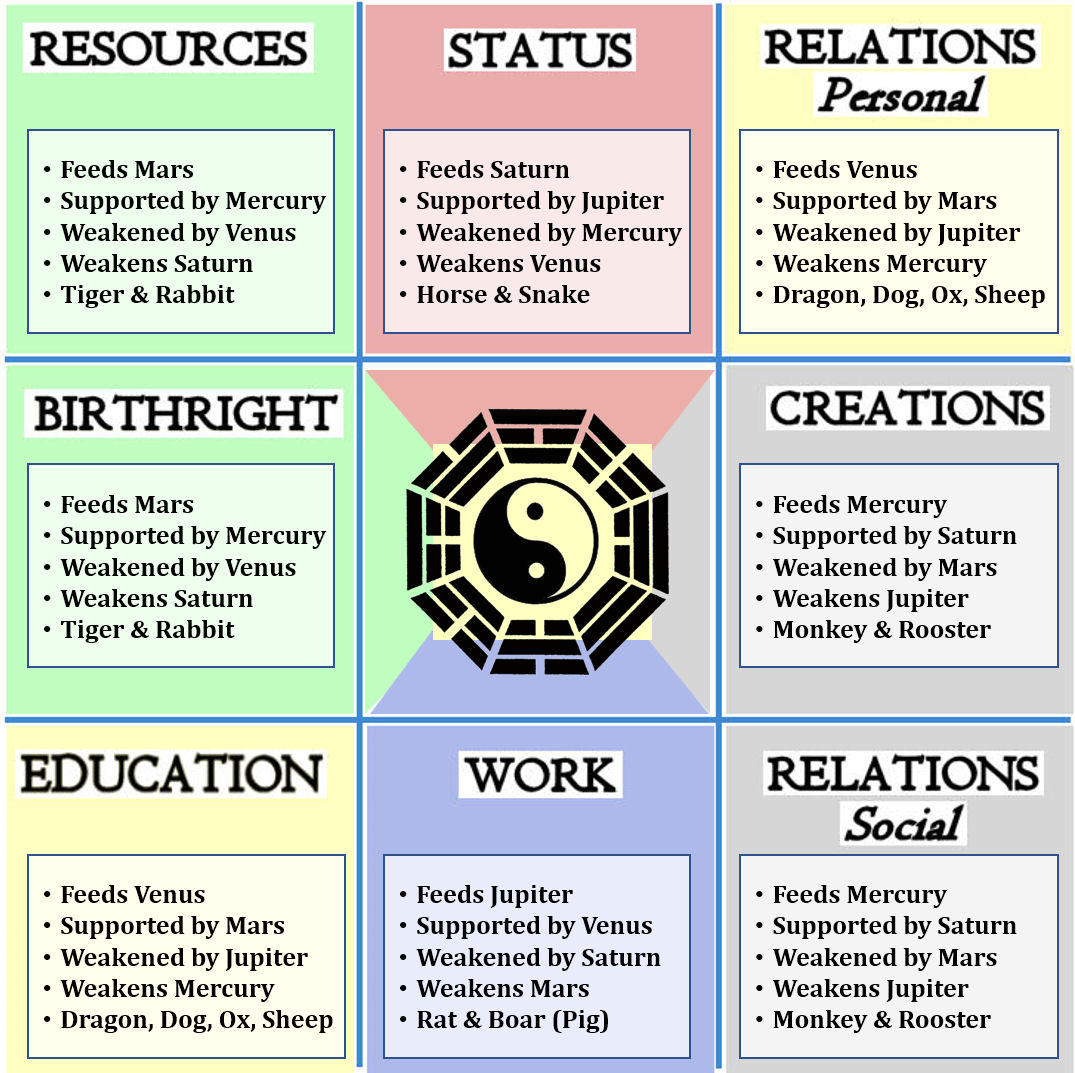
What each of the nine astrological houses indicates in terms of areas of life, in philosophy and approach, is in alignment with general Lo Shu correspondences. which you find in feng shui.
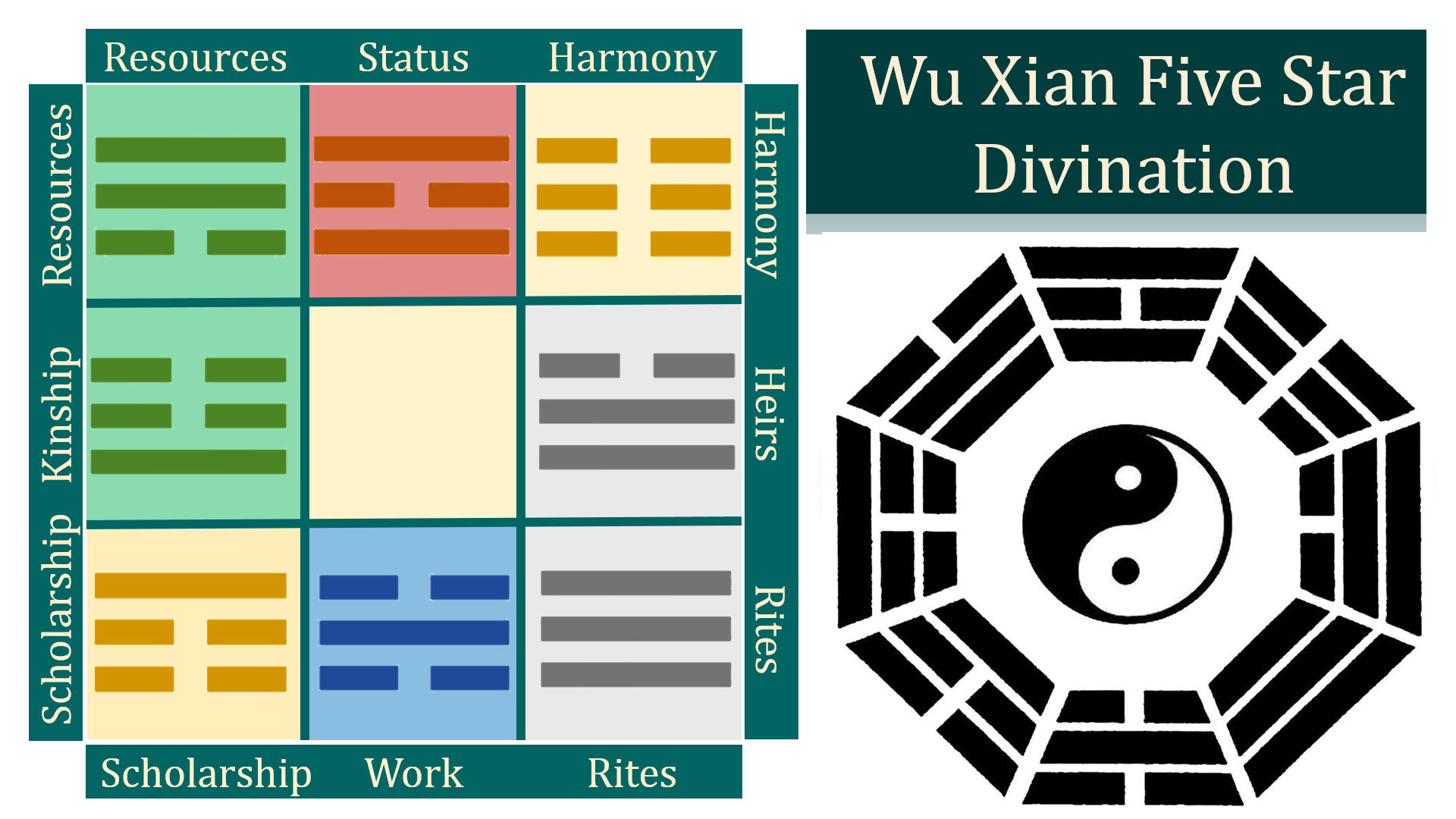
The I Ching’s Ba Gua or eight trigrams and their correspondences are also taken into account.
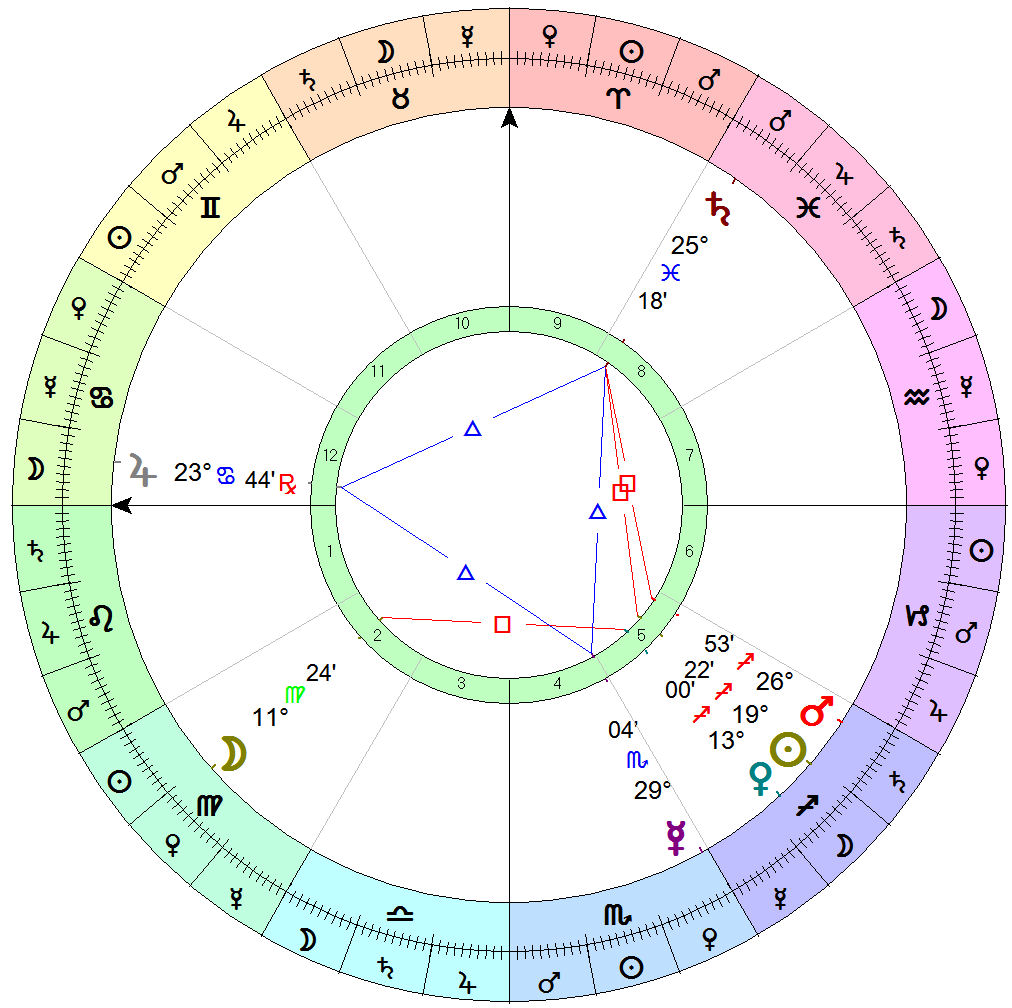
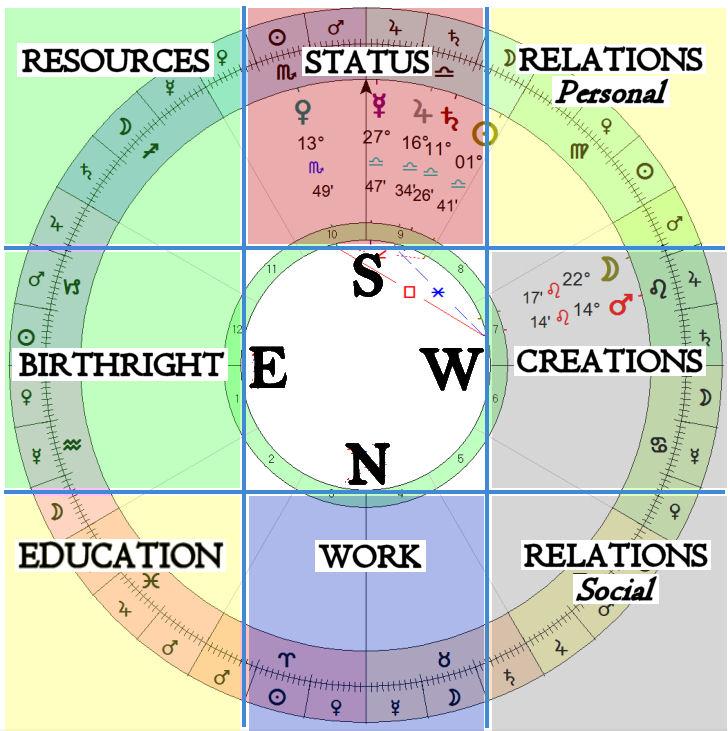
Now here’s the fun part. You can use modern Western astrology software to cast a sidereal chart and then use that sidereal chart to do a reading using ancient Wu Xian Five Star astrology. Set the software to show only the Sacred Seven.
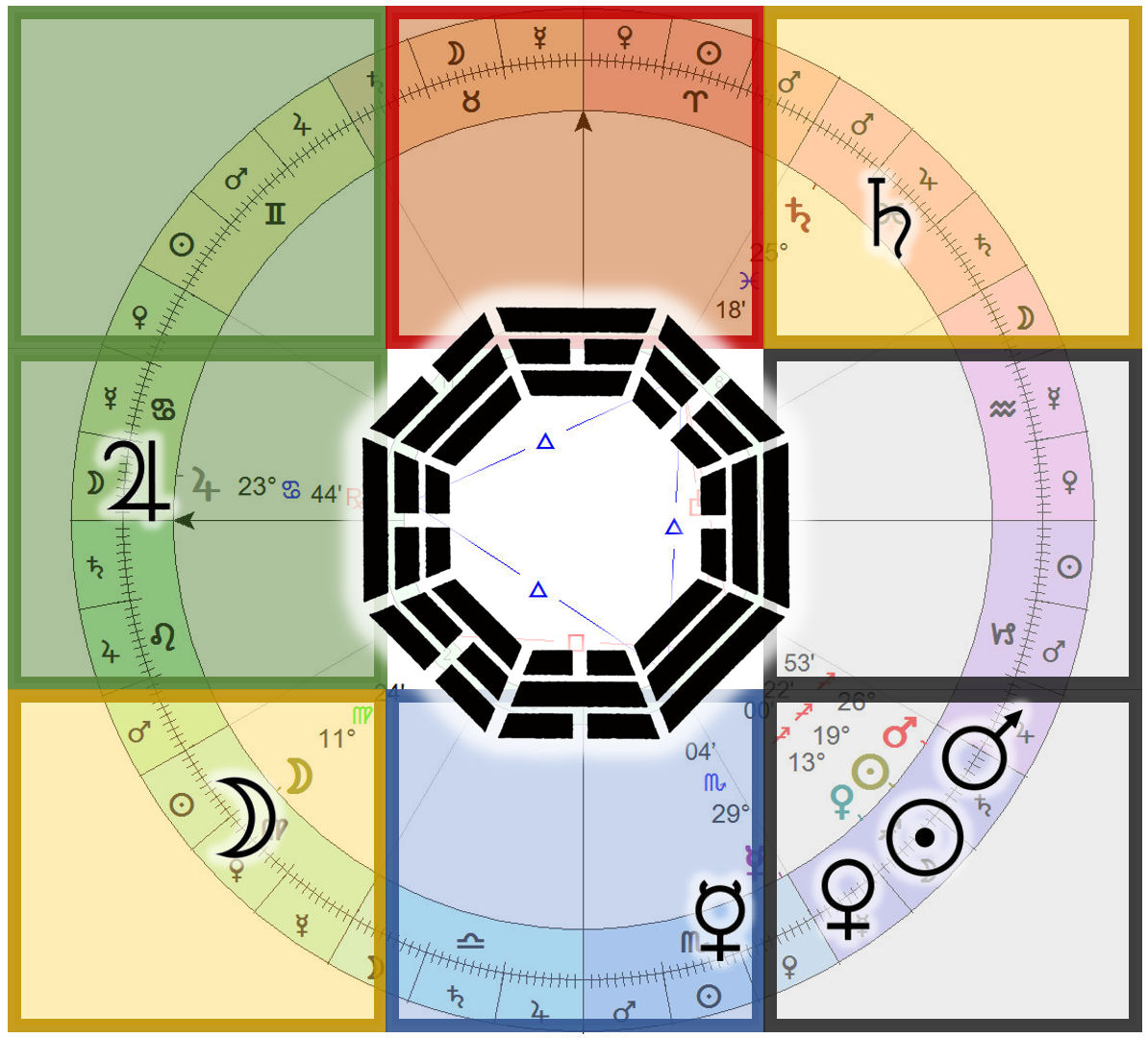
Draw a nine-sector Lo Shu grid over the modern chart. The above is an approximation only, for illustrative purposes. A true astrologer is going to get a lot more specific and accurate to the degree for positioning. But in terms of reading for the purposes of elemental dignities, this will suffice.
Let’s start with Jupiter, which corresponds with Wood, and according to the chart above, is empowered in a Wood sector of the Lo Shu, and it’s ascending, so by all accounts, this is very auspicious right out of the gate.
Now here’s where your creativity and ingenuity as an individual astrologer must come into play. According to the Mawangdui source text, you’ll interpret Jupiter through the combined consideration of the sun and moon’s positioning. And so we can assume moon phase matters, season of the year matters, and time of day matters, but then beyond that, how exactly do you triangulate Jupiter with the sun and moon for an astrological interpretation of one’s luck, fortunes, and prosperity? I’m no more an expert than you here.
Mercury, which is the “Water Star,” is positioned in a Water sector, so again, yet another indicator of a very auspicious chart reading. Dang, likewise with Venus the “Metal Star” in a Metal house, and Saturn the “Earth Star” in an Earth house, though Mars “Fire” here in a Metal house is something to talk about. Fire subdues Metal per Wu Xing elemental dignities. Anything Metal is submissive to Fire under this theory, so actually, Mars here empowers Mars, but now suddenly it’s weakening Venus’s associated areas. This is ambition and enthusiasm becoming reckless, and not following scholarship, logic, truth-seeking, virtue, or refinement. The yang Sun here further amplifies the craziness of Mars.
Which is to say this could have been a very auspicious indication for Venus’s correspondences, but thanks to Mars’s positioning, Venus just got sidelined.
And here’s a different chart example to illustrate how you triangulate Jupiter:
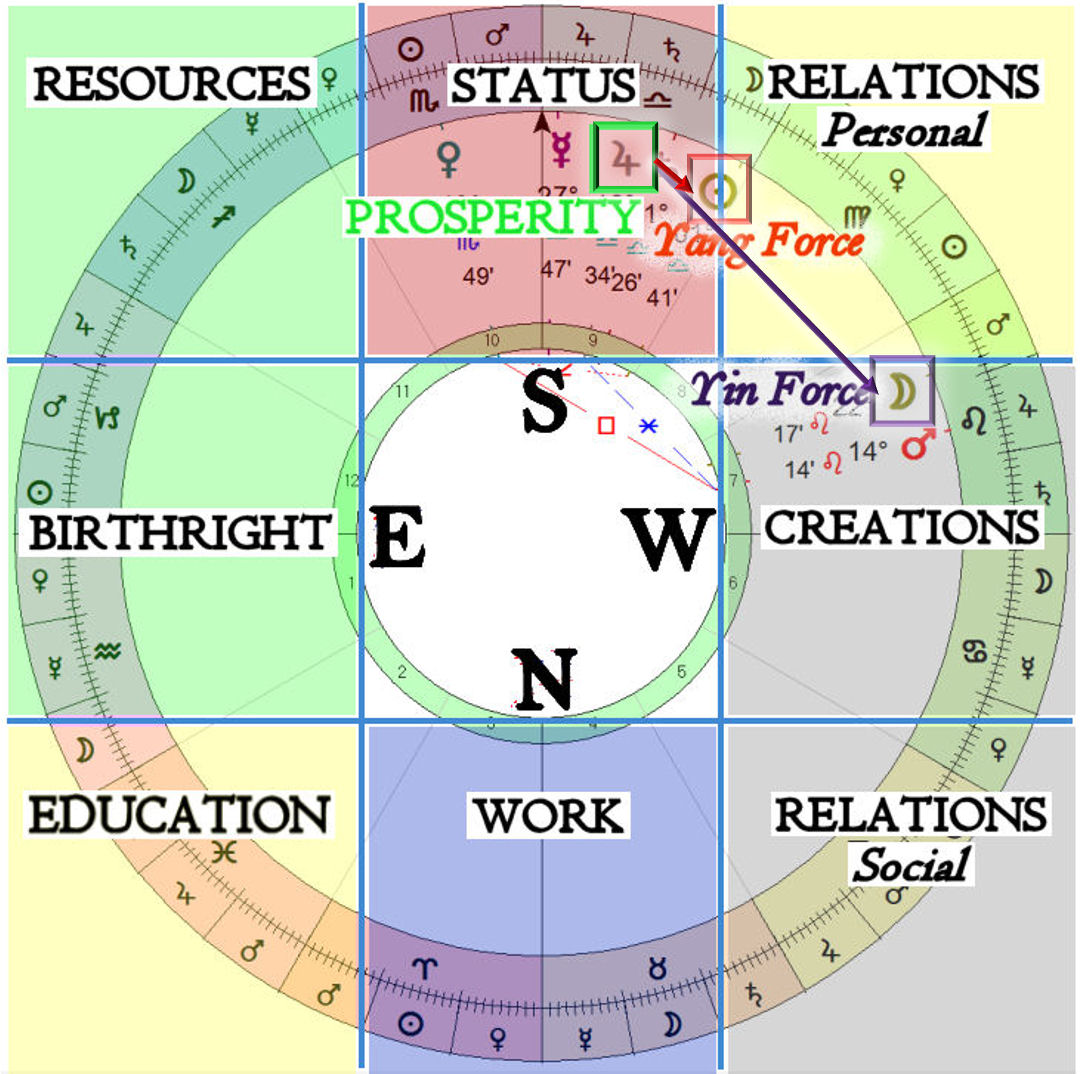
In addition to assessing the elemental dignities between Jupiter’s innate qualities and the Lo Shu sector it’s in, similar to angular aspects analysis in Western astrology, here in Five Star astrology, you assess the position of Jupiter in relation to the position of the Sun for how active, heated yang forces influence Jupiter, and in relation to the Moon for how receptive, cool yin forces influence Jupiter.
Electional Astrology: Personally, I think this particular astrological system is most useful for choosing auspicious dates for events. Make sure the planets corresponding with the key theme of the event are auspiciously placed, and with only five planets plus, basically, the moon phase (angular relation between the sun and moon), it’s a fairly hassle-free way to solve for the problem.
Mundane Astrology: Second in line for most effective and impactful use of this system, in my opinion, is chart casting for nations. Heck, that’s what this system was primarily used for back in the day, and the early copies of the book we’re sourcing Wuxian Five Star Astrology from were found in imperial tombs.
Natal Astrology: Of course it can be used for natal astrology and applying this system to compose a personality and character profile for someone. Funny enough, once you try this system out, it comes across way more “predictive fortune-telling” than its Western astrological counterparts.
Anyway there you have it, some basic fundamentals to this ancient system of Chinese astrology that was already considered “ancient” in 246 BC.
The best part for us today is you can still totally use today this system in tandem with modern astrological chart casting. For those of you with proficiency in astrology, give this a shot! See how it feels and compares to your go-to astrological system.

Open License to Use or Adapt
The content, text, and images from this blog post are released under a fully permissive use license. That means you are free to download, copy, share, reproduce, adapt, modify, make your own versions of, republish, distribute, or otherwise reuse this content or any of these images in any form or medium, for any purpose whatsoever, including personal, educational, or commercial use. No permission required, though attribution and credit is welcomed and always appreciated. But in your own work, please do not imply my endorsement or affiliation with what you’ve provided, and make it super clear you’re doing your own thing. =)
 benebell wen
Benebell, you are constantly blowing my mind, and I love it! Thank you for your scholarship and generosity. ❤ 🙂
LikeLiked by 3 people
Wow!! So much information! Thank you for being so generous with your knowledge!!
LikeLiked by 1 person