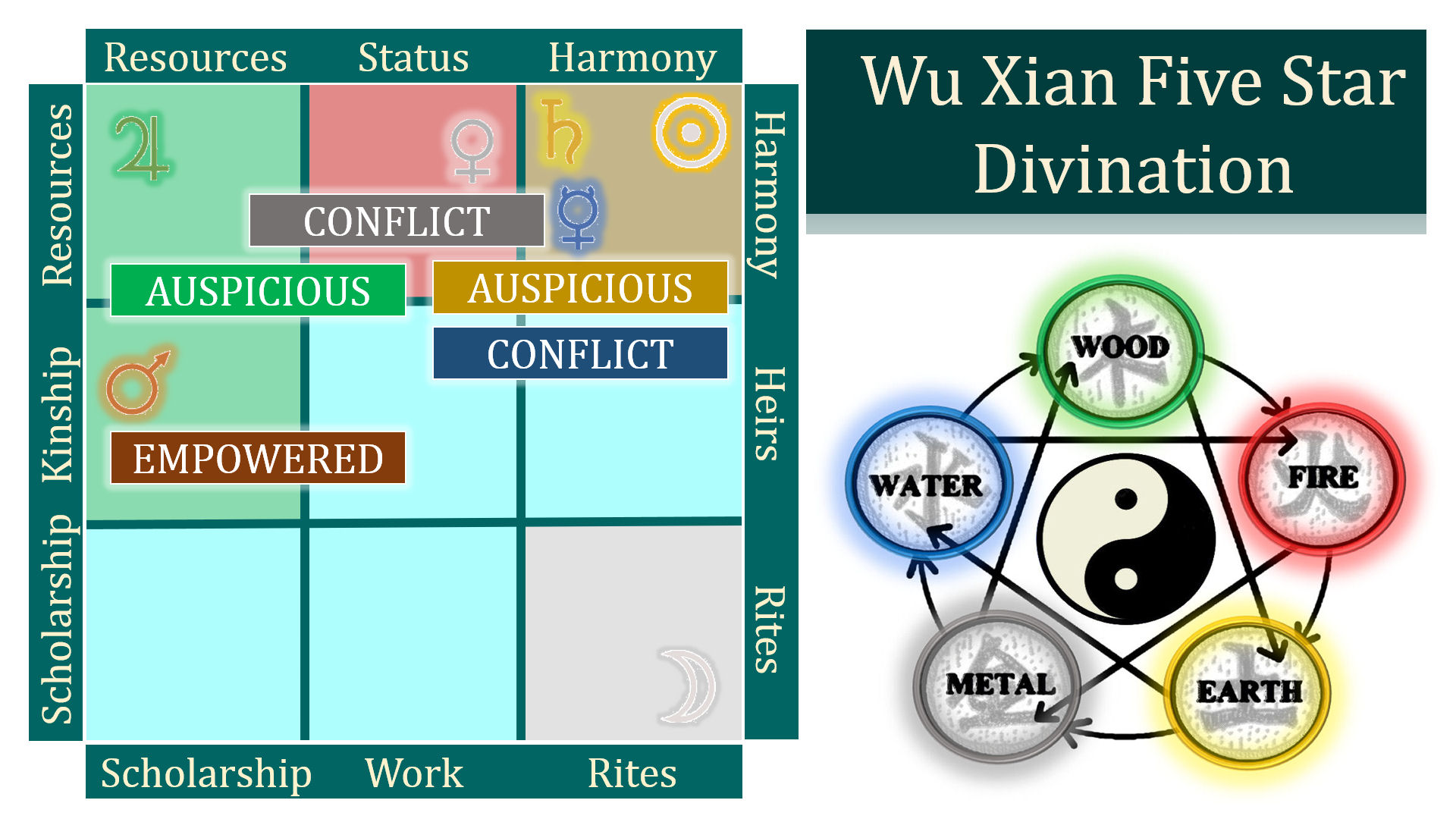
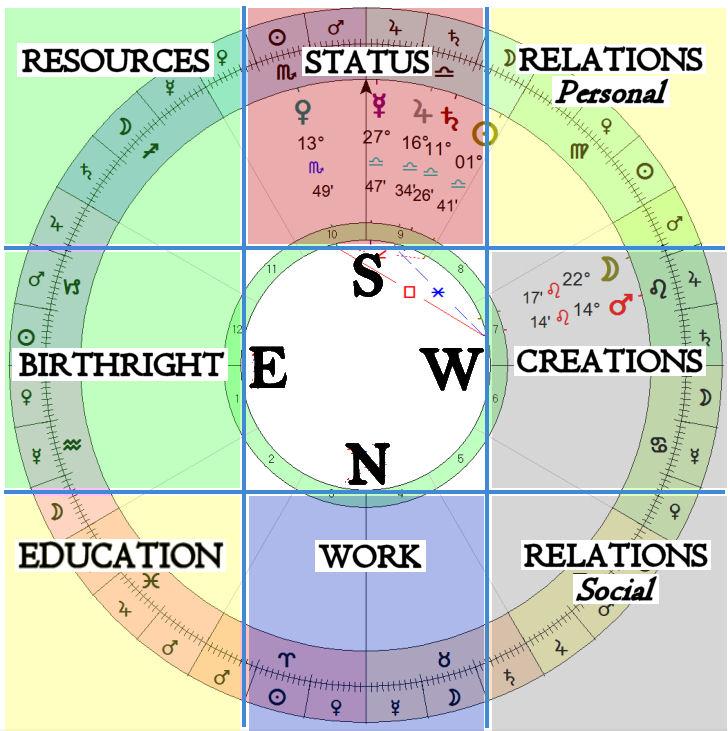
Wuxian’s Five Star Divination 巫咸五星占 is a system of astrology that dates back to the Qin dynasty, around 246 BC during Qin Shihuang’s reign, documented in a manuscript from that era titled Five Star Divination 五星占, the “five stars” being Mercury (Water), Venus (Metal), Mars (Fire), Jupiter (Wood), and Saturn (Earth). The astrological text is attributed to Wuxian 巫咸, and so this system of astrology became known as Wuxian’s Five Star Divination.
Wuxian 巫咸 (also referred to as Xian Wu, 咸巫) is the ancestor god and ascended master of the Wu 巫 shamans. Venerated as the first and most masterful Wu 巫 and thus every Wu 巫’s primordial ancestor, he may or may not have been an actual historical figure; either way, Wuxian is a fixture in Chinese lore and deified as a patron god to shamans, healers, and, in particular, diviners and astrologers. In this video lecture, “Shamanism Meets Taoism: The Hidden Link in 3,000 Years of Magic and Mysticism,” we talk about Wuxian 巫咸, the primordial ancestor of all Wu 巫 shamans, at timestamp 12:35.
Continue reading “Chinese Astrology circa 246 BC: Wuxian Five Star Divination”
 benebell wen