
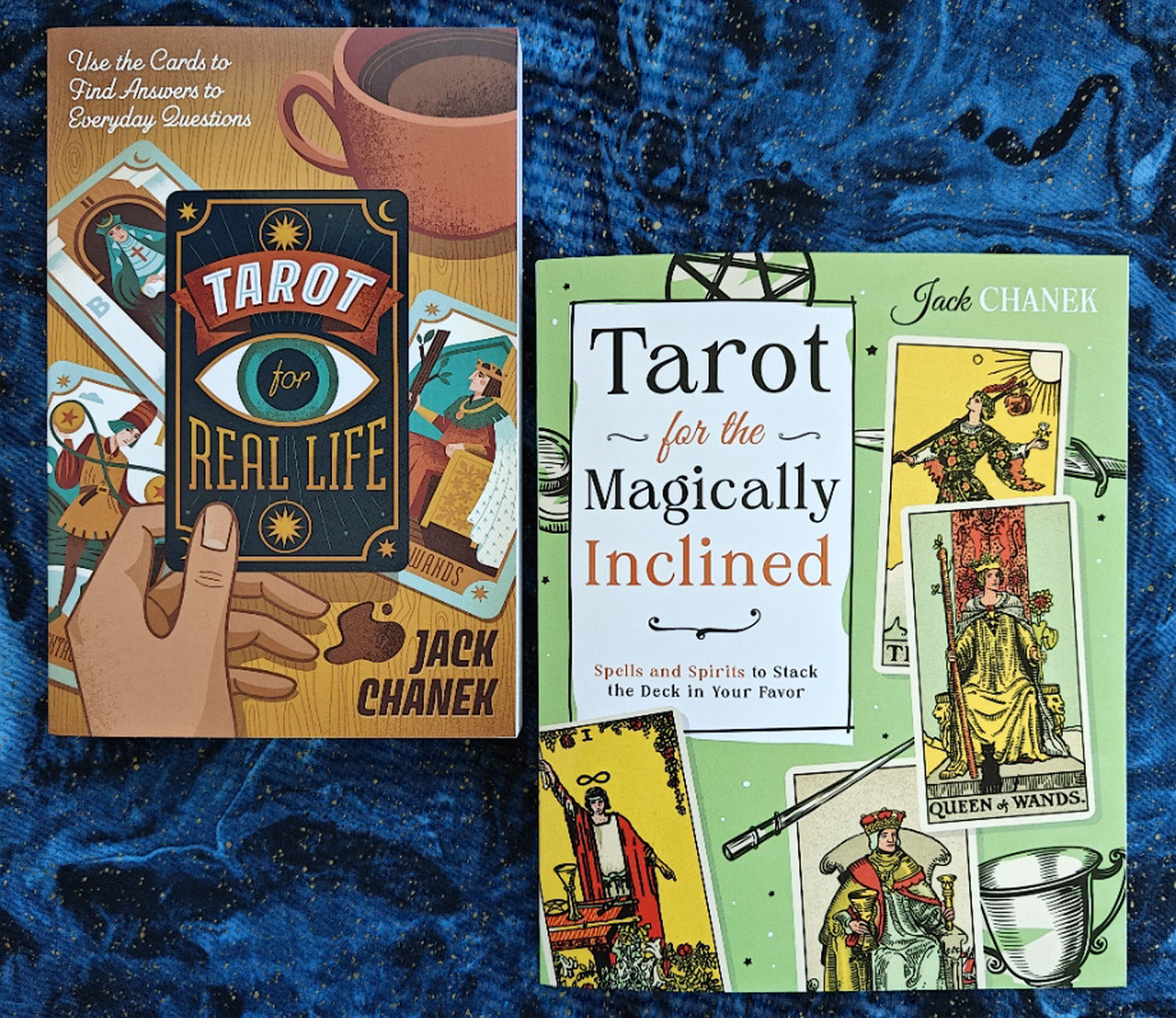
This is a wonderful sequel to Jack Chanek’s Tarot for Real Life, a down-to-earth primer that de-mystifies the tarot, whereas here in Tarot for the Magically Inclined: Spells and Spirits to Stack the Deck in Your Favor, we delve straight into the mysteries of the tarot.

Chanek guides us in the exploration of tarot and magic, how to go beyond predicting the future to create your future. The book covers guided meditations, tarot talismans, ritual tools, rituals, tarot spells, working with angels and demons with the tarot, Major Arcana spirits, and a very cool technique where you’re using the deck itself as a magical tool, which Chanek calls “stacking the deck.”
“Where divination is passive, magic is active,” write Chanek. “Magic is about exerting an influence on ourselves or on the world.” There’s a whole chapter in here dedicated to exploring the meaning of magic. Aleister Crowley calls it “the Science and Art of causing Change to occur in conformity with Will.” James Frazer calls it “a failed attempt at science” and “a way people try to control the world around them because they don’t understand the actual causal mechanisms.” Chanek clarifies that it’s the manner of change in accordance with will that defines “magic.” He gives the example of engaging an advertising agency to attract clients– not magic. But anointing a doorframe with a consecrated oil every morning to draw in clients– that’s magic.
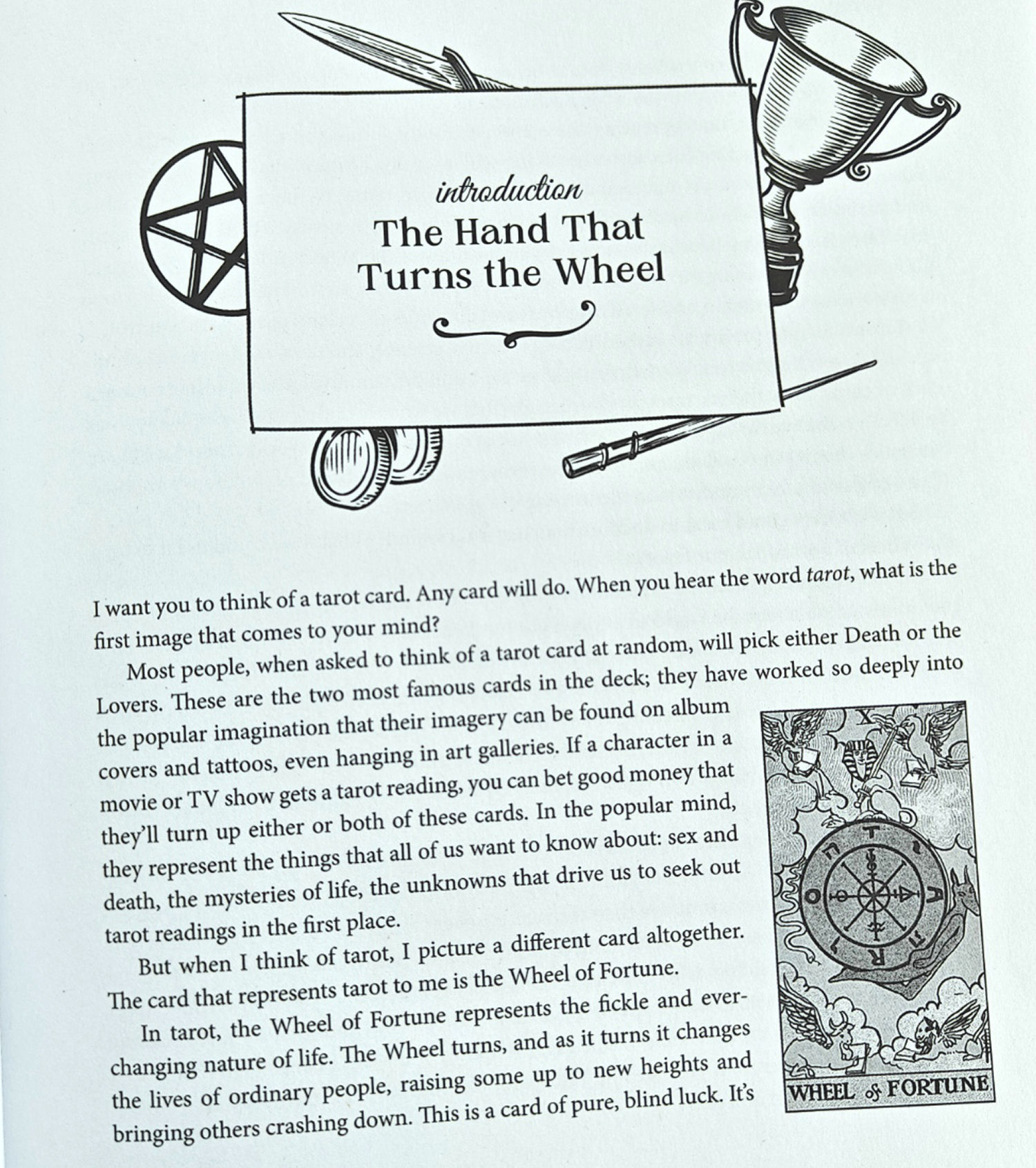
Magic itself can be subdivided into two categories: sympathetic magic, magic that relies on symbolic enactment and intercessional magic, magic that relies on the intervention of an outside power. In sum, it’s “the practice of causing directed change through either sympathetic or intercessional means.”
You may have also heard of the distinction being made as high magic vs. low magic, where high magic is magic that aims for spiritual growth, self-improvement, and connection with the divine (or practitioner’s own higher self), which in Taoist circles we often refer to as inner alchemy (though it is not a perfect parallel equivalent). Whereas low magic is magic that aims to achieve a concrete, material, and practical result. Funny enough in both Eastern and Western magical traditions, this is often what gets pegged as “witchcraft.” Or the distinction between ceremonial magic and folk magic. Or theurgy — goals aligned with high magic — and thaumaturgy — goals aligned with low magic.
Western magical traditions are often premised on the four classical elements — Fire, Water, Air, and Earth — and the tarot deck is architecturally and symbolically structured in alignment with these four elemental forces. So it makes sense that the tarot would be a powerful tool and resource for magic. But how? This book is fantastic at breaking down the mechanics.

Also, there’s a Four Elements Spread in this chapter for decision-making that I love. Five cards: (1) Earth: What would be practical to do, (2) Air: What you think you should do, (3) Water: What you feel like you should do, (4) Fire: What you want to do, and (5) What you ought to do, all things considered.
In my reading with the Four Elements Spread (above), I integrated my SKT deck system in with the spread. So for (3) Water, I drew the Page of Wands, a Herald, so it denotes a direct message from the spirit realm; the subsequent card I drew was Kuan Yin (The Star card). Then for (5), I followed one of the pieces of advice in Chanek’s book, about mixing magic (directing your Will) with divination. I drew the Nine of Swords but then endeavored to intentionally transmute it by turning the rest of my deck face-up, went through the cards to consciously choose one to trump and thus transmute the implications of the Nine of Swords. I went with the Six of Pentacles.
I will say, Chanek comes up with some of the best, most effective and practical tarot reading spreads. I really love all of them in this book.

We then get into astrological correspondences in the tarot (signs and planets), the Qabalistic Tree of Life as used by the Hermetic Order of the Golden Dawn, and how to practically integrate these systems into a tarot card reading. There is a chapter dedicated to guided tarot meditations, pathworking with the tarot, and the construction of an inner astral temple.

My favorite takeaway technique and learning from Tarot for the Magically Inclined is a technique that Chanek calls “Stacking the Deck.” This is a magical practice you can do for yourself. Don’t do this in readings for others, unless it’s clear to them what you’re doing, they know and understand the technique you’re employing and consent; otherwise you run into ethical issues. This is strictly a practice to do for yourself. I’m going to show how I work with Chanek’s instructions, adjusted for my personal purposes.

Here I’m using my own SKT. It goes without saying that you may use any deck for any sort of tarot operation. It should also go without saying that most practitioners will have their preferences. My tarot deck preference would be to work with a tarot deck crafted by an occult practitioner whose work I trust.
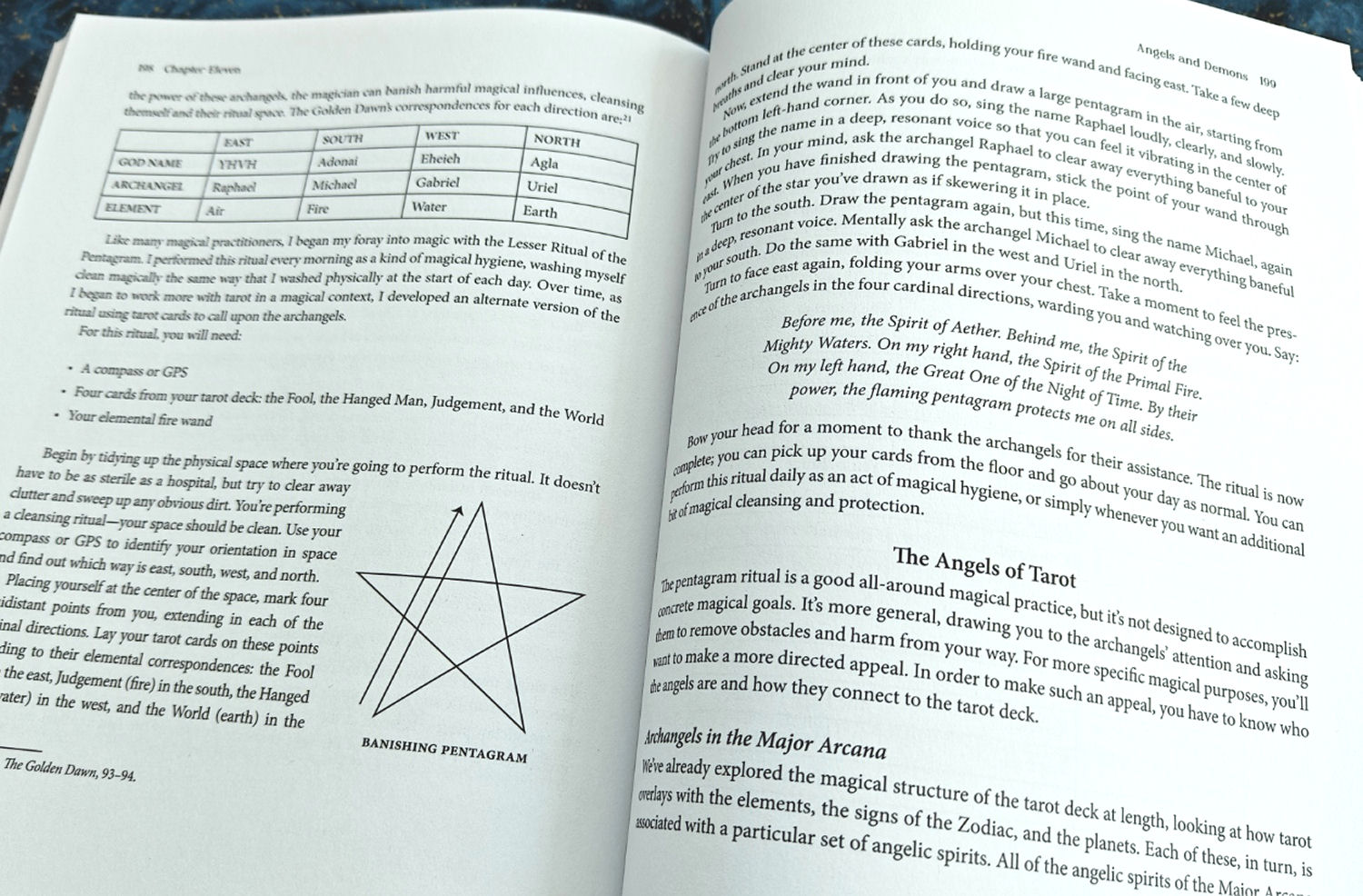
The ritual framework Chanek recommends integrates the four elements: a bowl of soil for Earth, a hand fan for Air, a bowl of water for Water, and a candle for Fire. Like with any recipe, you can always modify to personal taste, though of course any modification or ingredient switch is going to affect the outcome. So swap mindfully, be that cooking or spellcrafting. In any event, with the SKT, I might work with the four Pages, since they are the direct messengers to the gods, in lieu of the soil, fan, water, and candle.

Or with the four Kings, titled Archangels in my deck, since they are the reigning guardians of the four elemental realms. Then follow the instructions in the book, adjusted to accommodate any custom modifications you’re making.
After you’ve called in the four elements “to bear witness to the magic that is about to be performed here. Bless this tool of fate, that I may shape my own destiny. In this place and time, I choose the future of…” (recitation instructions from the book).
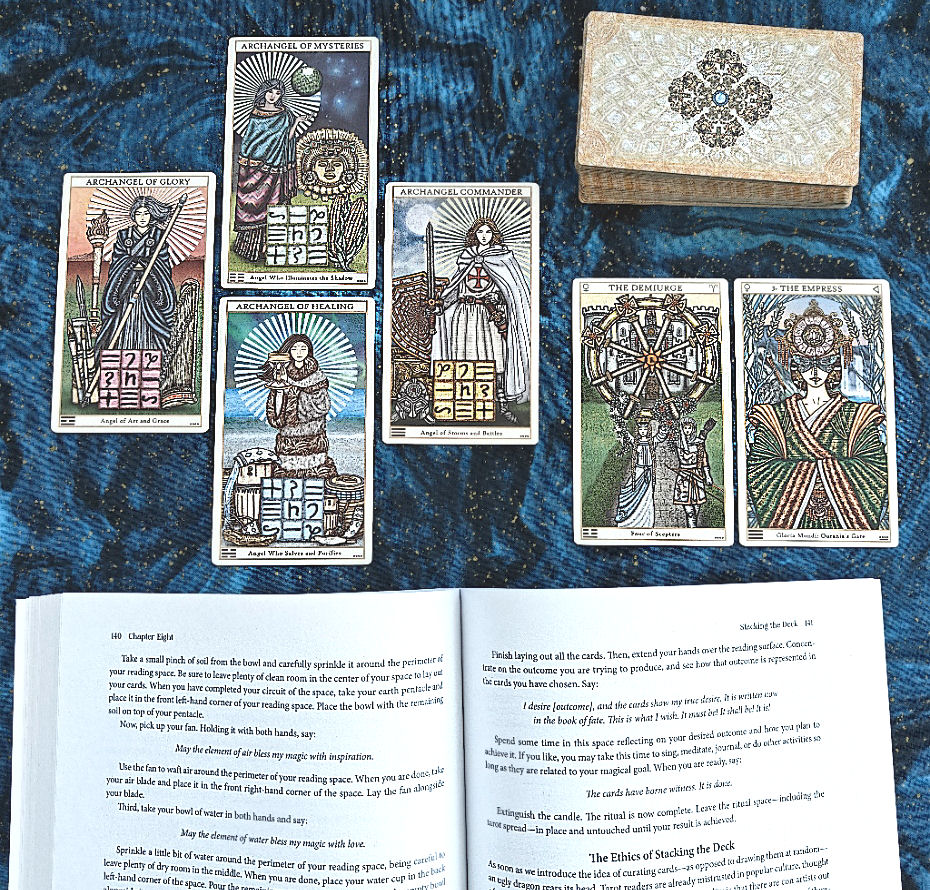
Oh, sorry, forgot to mention. Prior to starting the ritual, you should have intentionally picked out exactly which cards should be coming up for which positions in your reading spread. So, for example, if you were using the Celtic Cross, instead of just doing a reading where you draw the cards at random, start with what you want the future outcome to be, and then reverse engineer with which cards in the deck would have to come up in a Celtic Cross spread to designate that future outcome. Pull out those cards and place it at the top of the deck so when you go to do the reading, you’ve predetermined what cards will come up for which positions.
In the above reading I did for myself, I went with a two-card paired reading, drawn in sequence right to left, so that I could also integrate the I Ching. The lower trigram Heaven assigned to Key 3: The Empress (card 1) and the upper trigram Thunder assigned to the Four of Wands (card 2) form Hexagram 34: Great Power.

As you place each card down, name the card aloud and declare its significance. For the actual ritual itself, I drew each of the two cards for my two-card reading one by one, a recitation accompanying each drawn card, and set it into an encircled space surrounded by the four elemental guardian cards (the four elemental Archangels).
You then leave this arrangement of cards out until the future outcome manifests. This is such a powerhouse way of working with the cards. I highly recommend you snag a copy of this book and try these methods out for yourself.
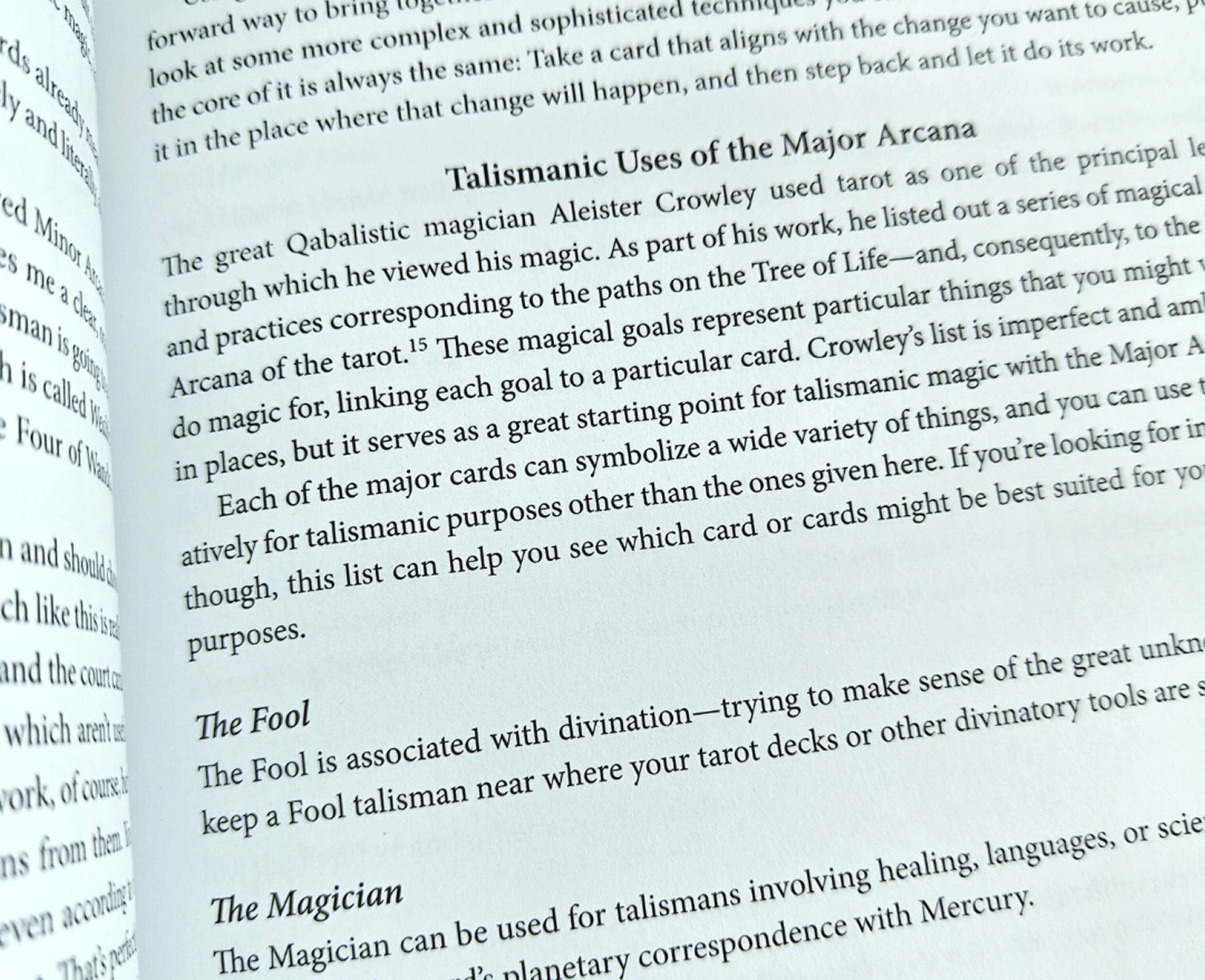
A standout contribution of this book is its utility as a reference for working with the Major Arcana in talismanic magic. Chanek provides practical insights into each card’s magical attributions, such as using The Magician as a talisman for healing, language acquisition, or scientific study, due to its association with Mercury.
The book also introduces readers to using epithetical titles for the cards, drawing from Golden Dawn traditions, which deepen the symbolic resonance of each tarot archetype. For example, The Magician is The Magus of Power, or the High Priestess is The Priestess of the Silver Star. Epithets invite practitioners to engage with the cards as more than just pictorial keys, but as entities, forces, magical intelligences that you can invoke and work with.

Where the book really shines is in its progressive layering of magical instruction. Chanek begins with accessible philosophical discussions on the nature of magic and the structure of the tarot, then methodically guides the reader through the elements, astrological associations, and Qabalistic principles. This gradual intensification of material culminates in advanced topics such as constructing spells using magic squares, creating tarot talismans, and even working with angels and demons through tarot-based ritual frameworks.
Tarot for the Magically Inclined explores tarot as both a divinatory and magical tool, and also imparts you with a fantastic portfolio of spreads. You’re getting a cohesive and well-written, deftly organized handbook on both the theories and practical applications of magic with the tarot.

Altogether, Chanek delivers a comprehensive and engaging guide that honors the tarot’s magical lineage while making it accessible for contemporary readers. Whether you’re just beginning to see the magical possibilities of the tarot or you’re ready to incorporate it into deeper spellcraft and ritual work, this book serves as both a primer and a progression into serious magical study.

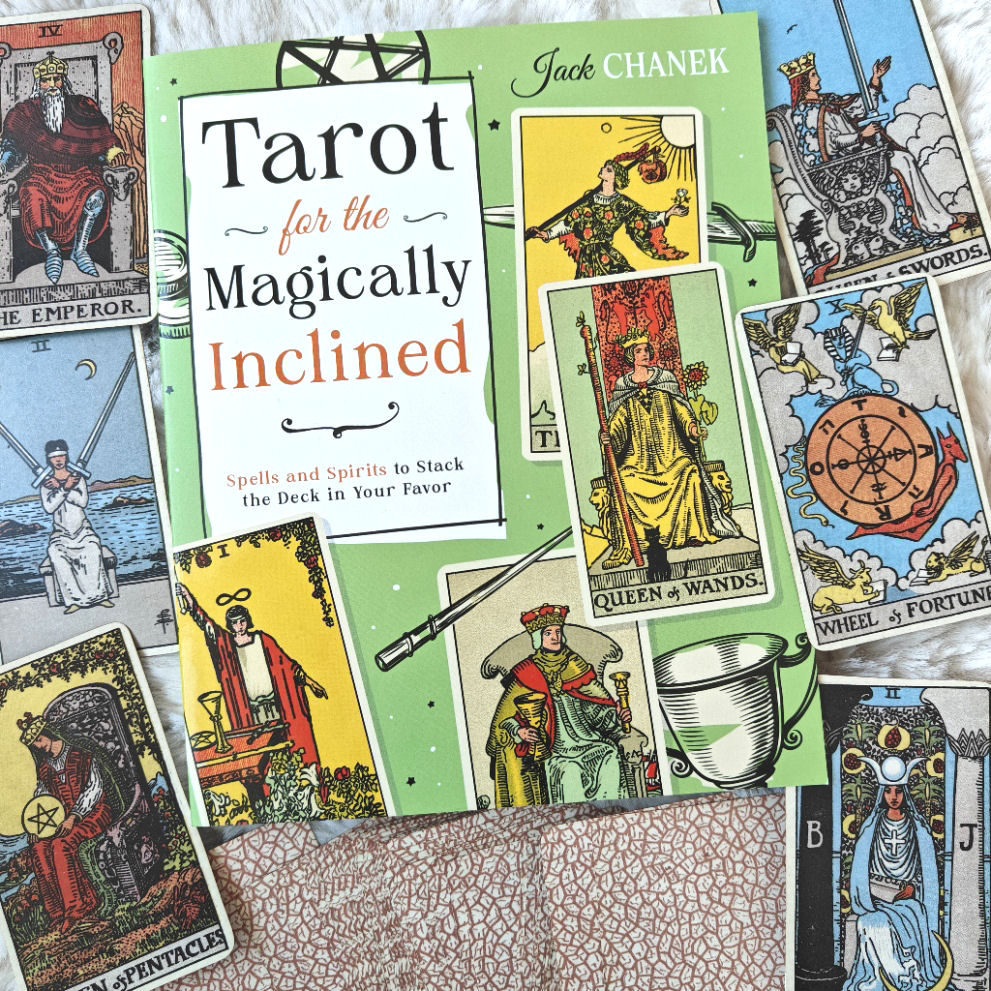
FTC Disclosure: In accordance with Title 16 of the U.S. Code of Federal Regulations Part 255, “Guides Concerning Use of Endorsements and Testimonials in Advertising,” I received a review copy of the book from the publisher for prospective review. Everything I’ve said here is sincere and accurately reflects my opinion of the book.
 benebell wen
Zahvalnost Vidovitoj Zori – ženi koja mi je spasila brak i porodicu
Kada sam bila na ivici da izgubim sve – brak, porodicu, mir u duši – pojavila se Vidovita Zora. U životu me mnogo ljudi razočaralo, prevarili su me dok sam tražila pomoć. Lažna obećanja, prazne reči, a meni je bilo sve teže… Alkohol, kocka, droga – zlo je ušlo u naš dom i razaralo nas iznutra.
Ali Zora je bila drugačija. Njena snaga, njeno znanje i njena iskrena želja da pomogne probudile su nadu u meni. Nije obećavala čuda – ona ih je stvarno uradila. Pomogla mi je da spasim brak, da očistim kuću od negativnosti i da se ponovo okrenemo ljubavi, miru i zdravlju.
Danas smo zahvaljujući njoj jači nego ikada. Porodica mi je ponovo na okupu.
Vidovita Zora nije samo vidovita – ona je moj anđeo čuvar. Hvala ti što postojiš. Nikada ti neću zaboraviti šta si uradila za mene.
LikeLike