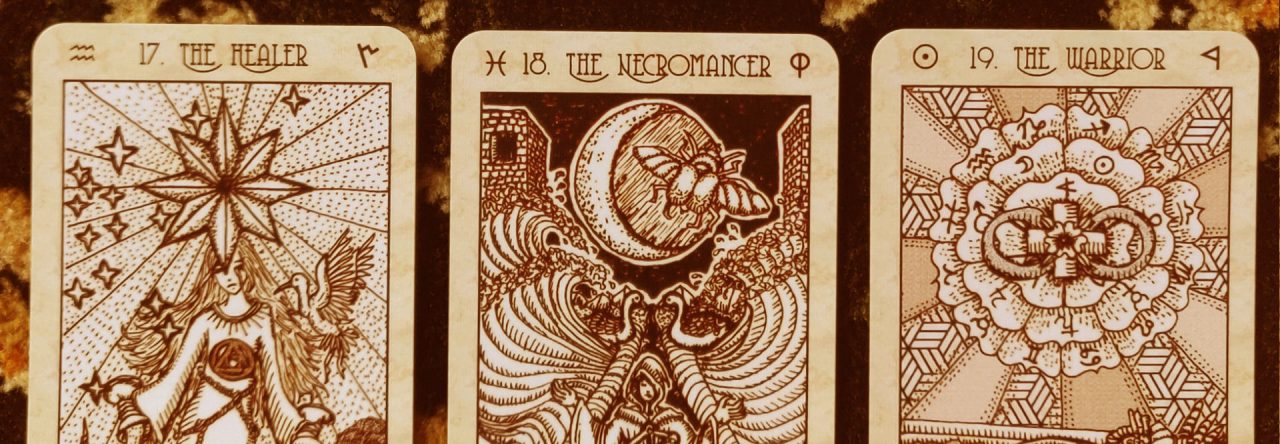

I was listening to the podcast (a great one, by the way) Occultish Behavior: The Unholy Hour with Ivy Corvus and Justin Bennett, Episode 4: The Monetization of Magic where Ivy and Justin share their thoughts on paid endorsements, paywalls, charging for online courses, and so much more. They explore a spectrum of opinions, which I think so many of us can resonate with. These are observations I myself have been grappling with, so it was really fruitful to hear their perspectives.
Tangentially related are other recent thought pieces I’ve been enjoying: Thorn Mooney’s “Reflections on Community” and Kelly-Ann Maddox speaking on “Buying the Witchcraft Aesthetic.”
As a collective we cycle back to this subject for conversation every few years. A year ago that #Occultea tag had lots of pagan and witchy content creators addressing social media witchcraft, grifters, aesthetics, consumerism, and gatekeeping. Consumerism in spirituality comes up frequently in the tarot community, which I’ve previously chimed in on here (Tarot Tube and Classism) two years ago, touching on many of the topics Ivy and Justin cover in this podcast episode, specific to tarot social media spaces, rather than the broader witchy/pagan space.
When we monetize the teaching of sacred knowledge, we complicate and maybe even risk committing sacrilege. But if we don’t meet humans where they are and provide monetary compensation, they’re not going to share their work.
For many holding sincere religious beliefs around how they’ve divinely received the sacred knowledge, trying to put a dollar and cents price tag on the value of that knowledge is intuitively icky. And yet if we don’t value that knowledge — and we demonstrate value by paying for it — then these sacred cultural traditions risk going extinct.
It seems like the majority agree that people should be adequately compensated for their work, but also we judge that at some point it’s just greedy, gross, and profane. We don’t want you to starve, but if you get too popular and start selling your stuff for too much, we’ll knock you off your high horse.
It’s funny how an oft-repeated tenet in the artist/creator community is “charge what you’re worth,” except when you do, you get vilified. If you charge a “grotesque” amount of money for your work, you’re perceived as having an inflated ego, and you’ll get accusingly asked, “What makes you think your work is worth so much.” Which also is a silly question to ask, because if the creator is doing business right, then the clear answer is the marketplace. The marketplace has accepted that their work is worth that much. It’s not ego. It’s capitalism. Okay maybe it’s both.
We all agree that some sort of balanced approach is best, but we disagree on what “balanced approach” means. Where do you draw the line and why do you draw the line there? Is charging $30 for an online course on planetary ritual magic okay? What about charging $300? $3,000? You say it depends on the content of that course, but how do we even apply an objective standard for review?
As an author and educational content creator of topics in mysticism, I struggle a lot with what a “balanced approach” means to me. I want to produce diligently researched, comprehensive, substantive educational videos on YouTube, but it’s a lot of work. It’s time-consuming, and at this point in my life, time is very precious. So if I’m going to invest my time and energy into making free educational videos to increase equitable accessibility to sacred knowledge, then I want to be compensated for that work, but how? Do I want money? Initially I think, no, I don’t need money for it. I just need something in exchange to feel like it’s fair, to feel like my investment sacrifice of time was worth it. But what?
 benebell wen