Social Media Witchcraft: Grifters, Aesthetics, Consumerism, Gatekeeping | #Occultea

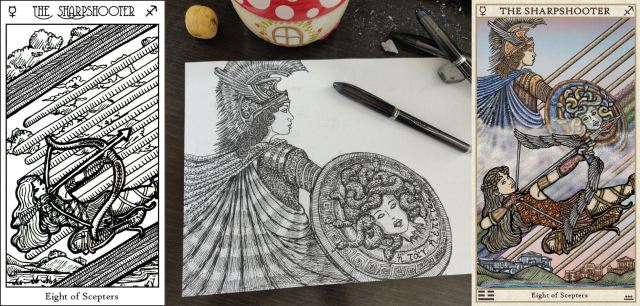
Random photo inserted here because pretty. Don’t hate the player hate the game.

I’m looking forward to many and different voices adding to the discussion “Social Media Witchcraft: A Community Conversation About the Things That Divide Us” via the hashtag #OcculTea. The hosts are kickstarting the conversation off with these videos from Ella Harrison, Polish Folk Witch, and The Redheaded Witch.

“All members of the occult & witchcraft community – not just content creators or big names, but everybody” is invited to participate in this discussion, with the hope that the hosts might later facilitate a live community panel.

It’s a bit of an unanticipated synchronism that just yesterday I posted my commentary on personal branding pressures on authors and social media, and then today I am posting this. Collective thoughts around the same theme often surface at the same time within a community, and I think that’s what’s happening here. Ivy The Occultist had posted “Are Modern Witchcraft Books Failing Modern Witches?” on Feb. 12 and this #Occultea open invite on Social Media Witchcraft went out on Feb. 21. I thought that was kind of cool timing.

Introduce Yourself

If you’re reading my blog in the year 2024, then you probably already know a thing or two about me. But in case you’re new here by way of the hashtag, hi! I’m the author of three books: I Ching, The OracleThe Tao of Craft; and Holistic Tarot. You’ll often find me as a keynote at various tarot and witchy conferences.

By day I am a practicing attorney and my career obligations occupy most of my time. Writing and creating educational videos on topics I’m passionate about and reviewing books and decks to help promote artists and creatives are my hobbies.

I was born and raised in the cultural traditions of both Buddhism and Taoism. I trained in Buddhism, spent nearly every summer month from early childhood until young adulthood at monasteries sweeping floors, doing shaolin (badly), and meditating. There’s this joke among us Asians that you know an Asian kid grew up in Buddhism when they don’t know any of their masters’ names. Because they were all just shi fu to us. =)

Now let’s get started on the prompts.
Continue reading “Social Media Witchcraft: Grifters, Aesthetics, Consumerism, Gatekeeping | #Occultea”

Are Personal Branding Pressures on Authors Resulting in Bad Books?

As a tarot deck creator, it’s not enough to just do the art; you have to create social media content with your works-in-progress to keep up engagement….. Otherwise, how will you get people to buy your deck once you’re done with it?….

I saw an editor friend’s repost of this Vox article, “Everyone’s a sellout now: So you want to be an artist. Do you have to start a TikTok?” by Rebecca Jennings. It’s about the pressure on authors today to have a preexisting popular platform before publishing a book, or any creative work product for that matter. How well a book sells is determined by how well the author self-promotes. Pertinent to the circles I run in, let’s talk about tarot and witchy books.

Social media influencers have democratized culture, but perhaps have also diluted specialty creative industries. Instead of an experienced, established industry expert who is the gatekeeper of what ought to get published, the consuming public is now collectively the “gatekeeper” determining who The Algorithm will favor. Publishers are yielding to the consumer public opinion, via numbers, on who ought to be published.

Top selling books are not necessarily by the most knowledgeable virtuoso in that field but rather, are by whichever charismatic personality has the most followers on YouTube and TikTok. Therefore, to be a top selling author, you need to cater to that consuming public. It’s not about your resume, curriculum vitae, or credentials; it’s about your personal brand.

Inspired by that article, I thought I’d share my experiences on having to navigate social media, personal branding, and platform building as an author.

Continue reading “Are Personal Branding Pressures on Authors Resulting in Bad Books?”

The Guan Yinzi

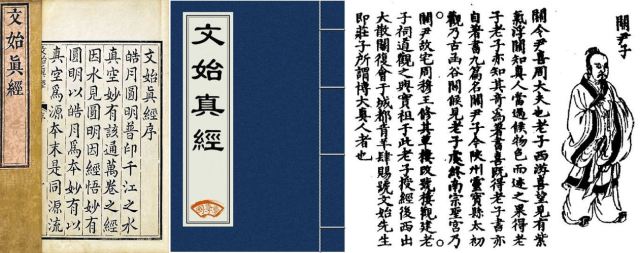
also known as the Wen Shi Zhen Jing: Sutra of Magical Spells and Aphorisms for Attaining Primordial Truth

The more recognized naming convention for the sutra is the Guan Yinzi (闕尹子) or Wen Shi Zhen Jing (文始真經) attributed to the gatekeeper who Laozi encountered.

The Guan Yinzi (or Wen Shi Zhen Jing)

According to lore, the gatekeeper at the Western Pass, named Yinxi 尹喜, later given the name Wenshi (文始), transcribed the teachings of Laozi and that text became the Tao Te Ching (道德經). Alternate tellings have Laozi writing the teachings down into two books himself, which the gatekeeper then receives.

Continue reading “The Guan Yinzi”