
After a series of hard hits and feeling the dooming sense that her world was collapsing around her, Jessi Huntenberg went outside to sit alone in nature and cleared her mind. Once her mind was clear, she heard the universe whisper to her, “Paint.”

And so she did. The Genius Garden Tarot was created from 78 acrylics on canvas paintings, and the first work to be produced was St. Brigid, then a smoldering brush fire, and then a woman in nude. These three visions in succession conveyed the divine message that came to instruct Huntenberg’s creative direction.
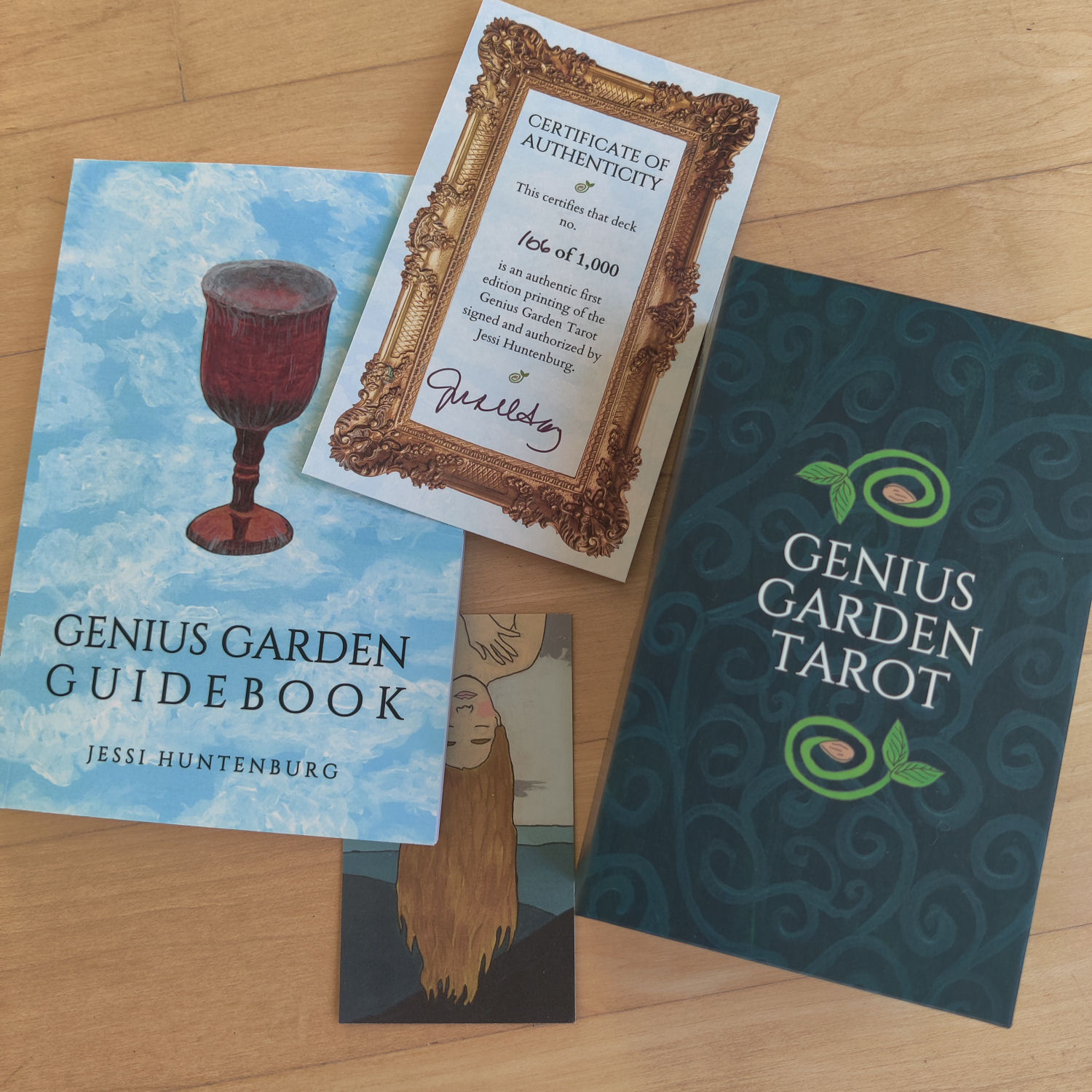
In classical Roman times, genius was an attendant spirit of a particular person or place. Today we perceive genius as an aspect inherent in personality, one associated with exceptional brilliance.
Genius Garden Tarot awakens and channels the genius that is your higher self. A genius garden is thus a starting place with the resources we need for creative expression, for creation.
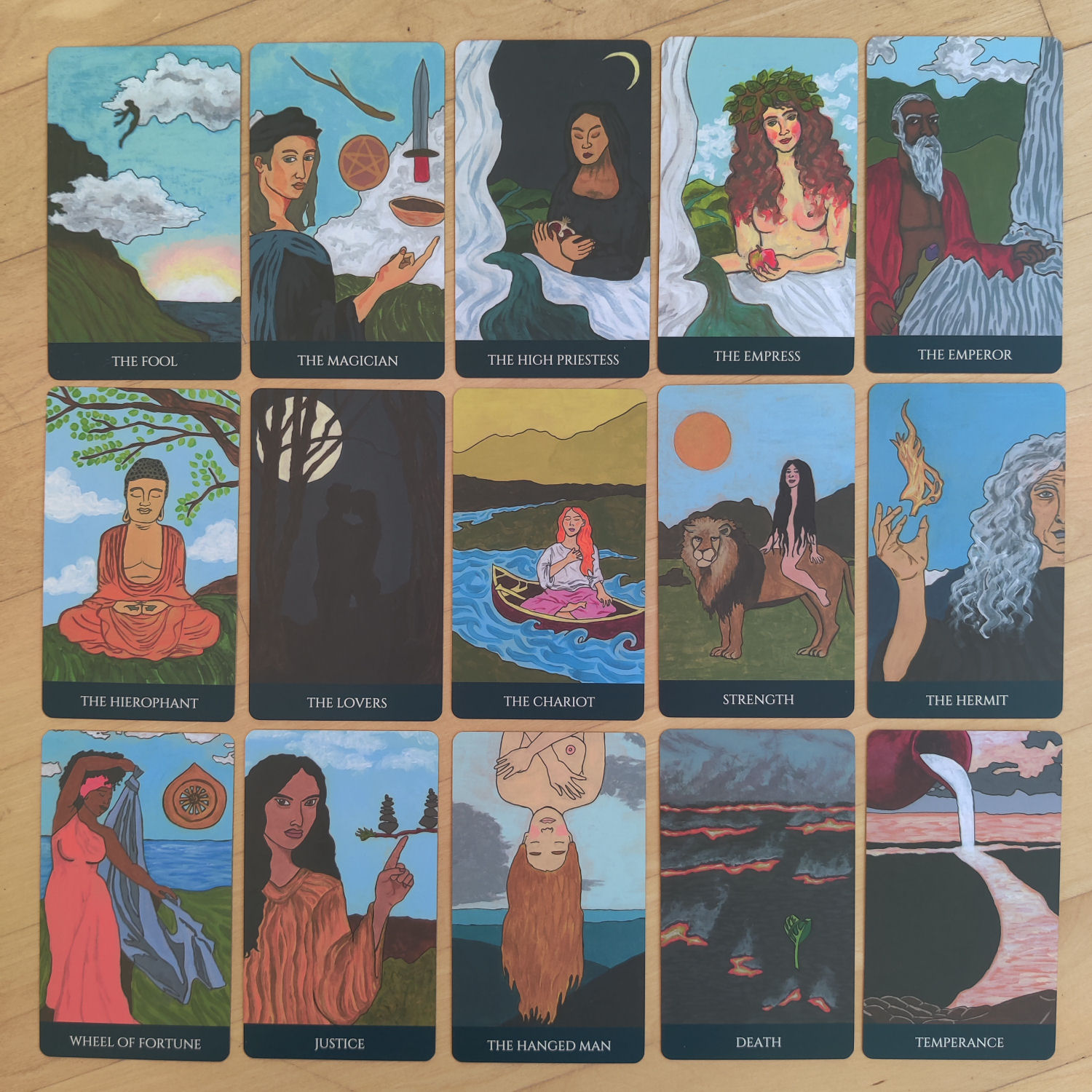
A tarot friend of mine recently proposed that you could (or should be able to) tell a lot about a deck, what to expect from it in terms of style and point of view, how cohesive and how diverse it will be, from the first 15 cards and also, from a random selection of 15 cards from that deck. Above are the first 15 cards of Genius Garden.
I love that Fool card that Huntenberg painted. A figure dauntlessly launches off the edge of a clif, head back, heart forward, trusting the universe. The magical and mystical significance of the stream is front and center in the High Priestess card. The chariot card in Key 7 is reinterpreted as a canoe drifting downstream. The Wheel of Fortune is a dancer.

The painting of this deck awakened the inner divine genius in Huntenburg, and the deck itself, she hopes, will awaken the divine genius within you. This deck is RWS-based, but as you can see, is also deeply personalized with Huntenberg’s point of view. It’s creative. There’s just enough RWS familiarity for the deck to be easily user-friendly and yet truly expresses a unique point of view. These works of art are emotional.
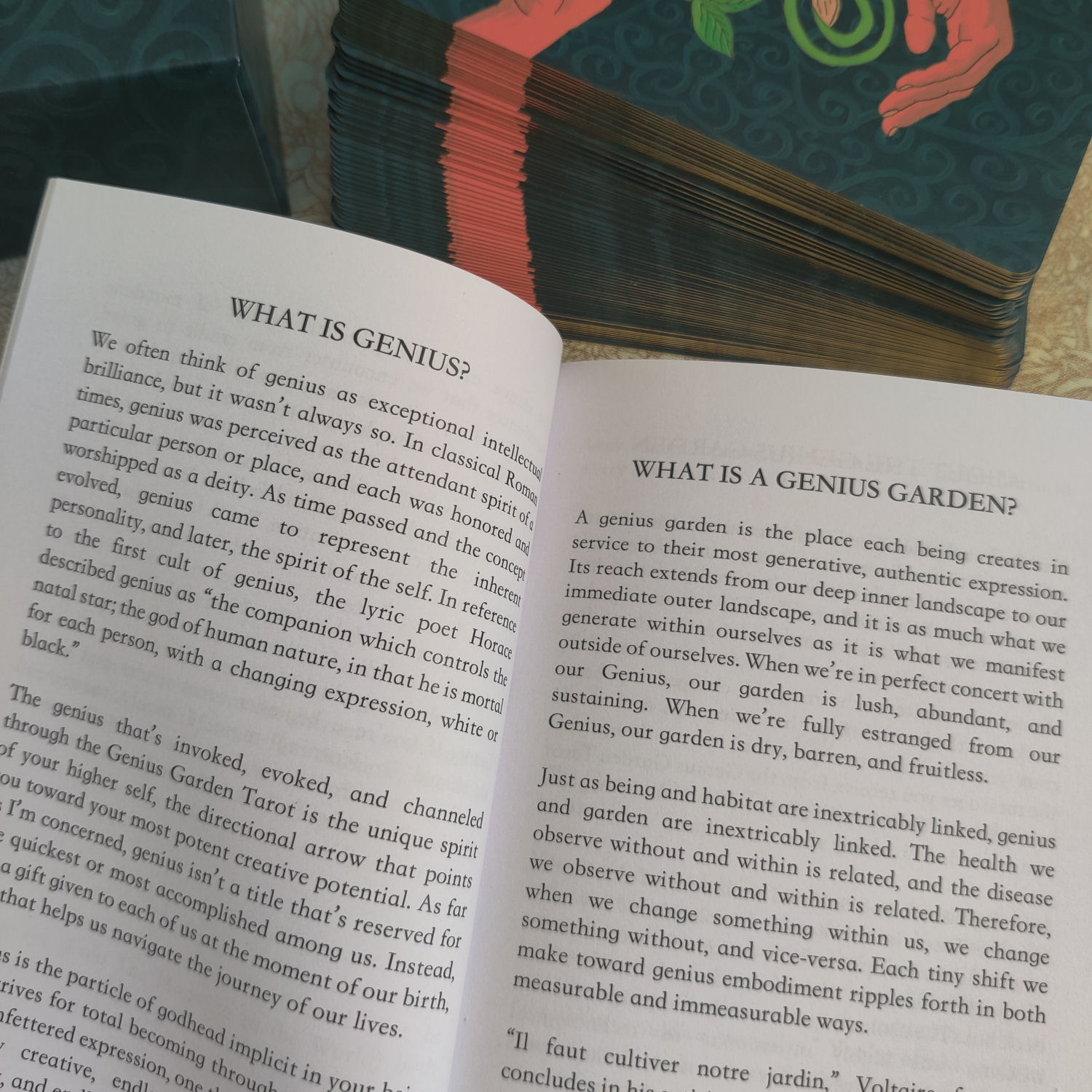
The guidebook introduces you to the deck’s premise, and will be a useful primer of card meanings for the beginner. The Majors consist of two-page spreads while the entries for the Minors are consolidated to a paragraph each.

I love this take on The Devil. The seed for conceiving this deck came to Huntenberg while she was out in nature, and you see the theme of personal growth through connection with nature consistent across the cards. Here in The Devil card, a person is bound in a dead tree trunk, and she is screaming out in rage and frustration. If you zoom in, there’s something really beautiful and detailed about the way The Tower card is painted.

Huntenberg’s interpretation of The World card here depicts an elder woman floating in a placid sea, in harmony with the world around her, unbothered by the ebb and flow of the changing tides, and at peace. It’s a really beautiful conception of the tarot World card archetype.
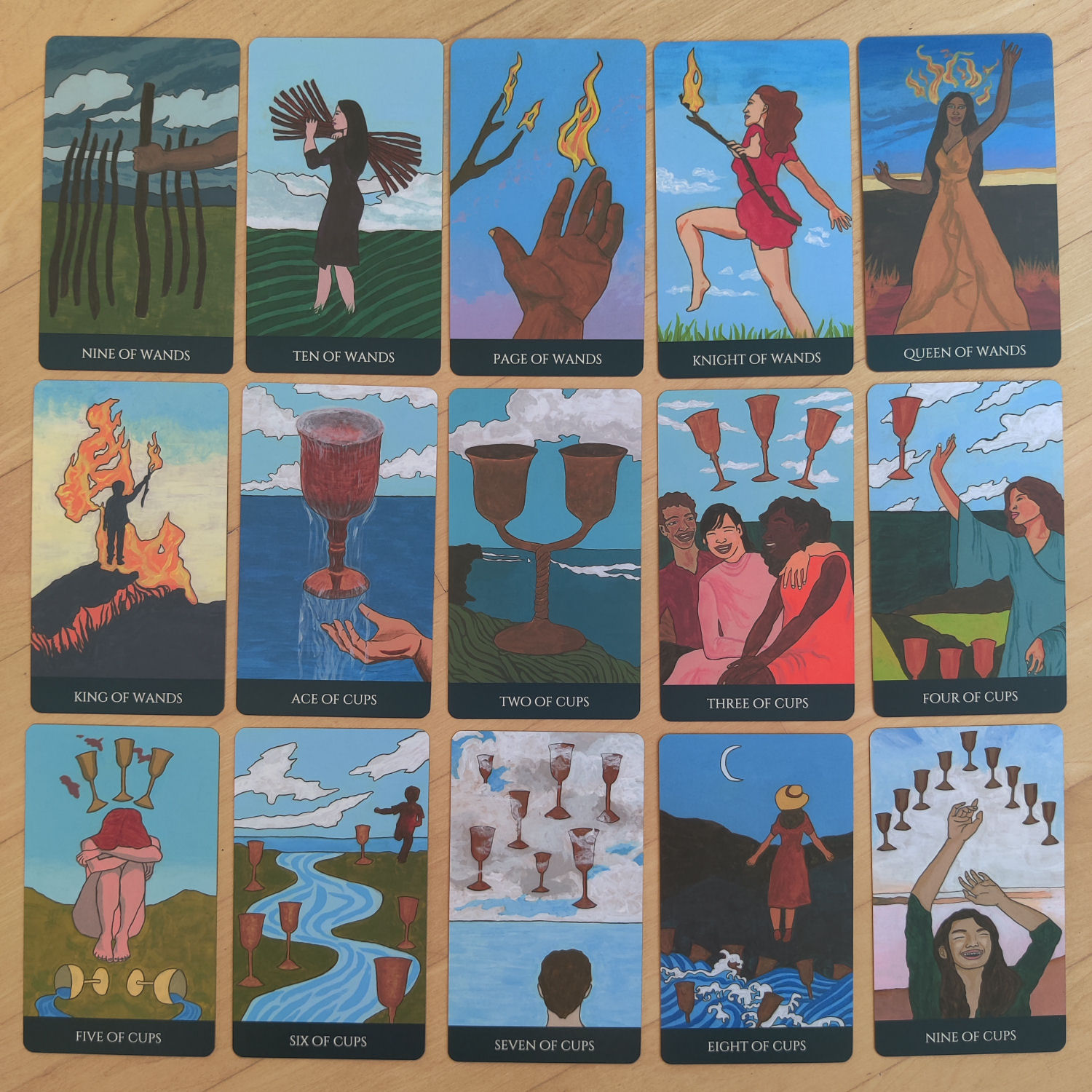
Each of these cards is beautifully painted. They are narrative, scenic, and clear in the stories they tell. There is a strong central focus point in each card and the supporting story elements are cohesive. The style is intentionally pared down to simple allegorical elements.

The artist’s description of the Three of Swords is haunting: “Three swords pierce the flaming heart of a weeping woman. Her tears quench the fire of her pain, making it possible for her to heal, forgive, and move forward.”
Here’s her description for the Four of Swords: “A yogi levitates above a stream at dawn. The rising sun strikes the blade at his shoulder, illuminating the Truth he touches. through mental focus and acuity.” Five of Swords: “A warrior places the tip of his blade at the base of his chin and meditates on the consequences of inflexible righteousness.” Likewise, considering RWS, you’ll see a unique personal take on the Seven of Swords.
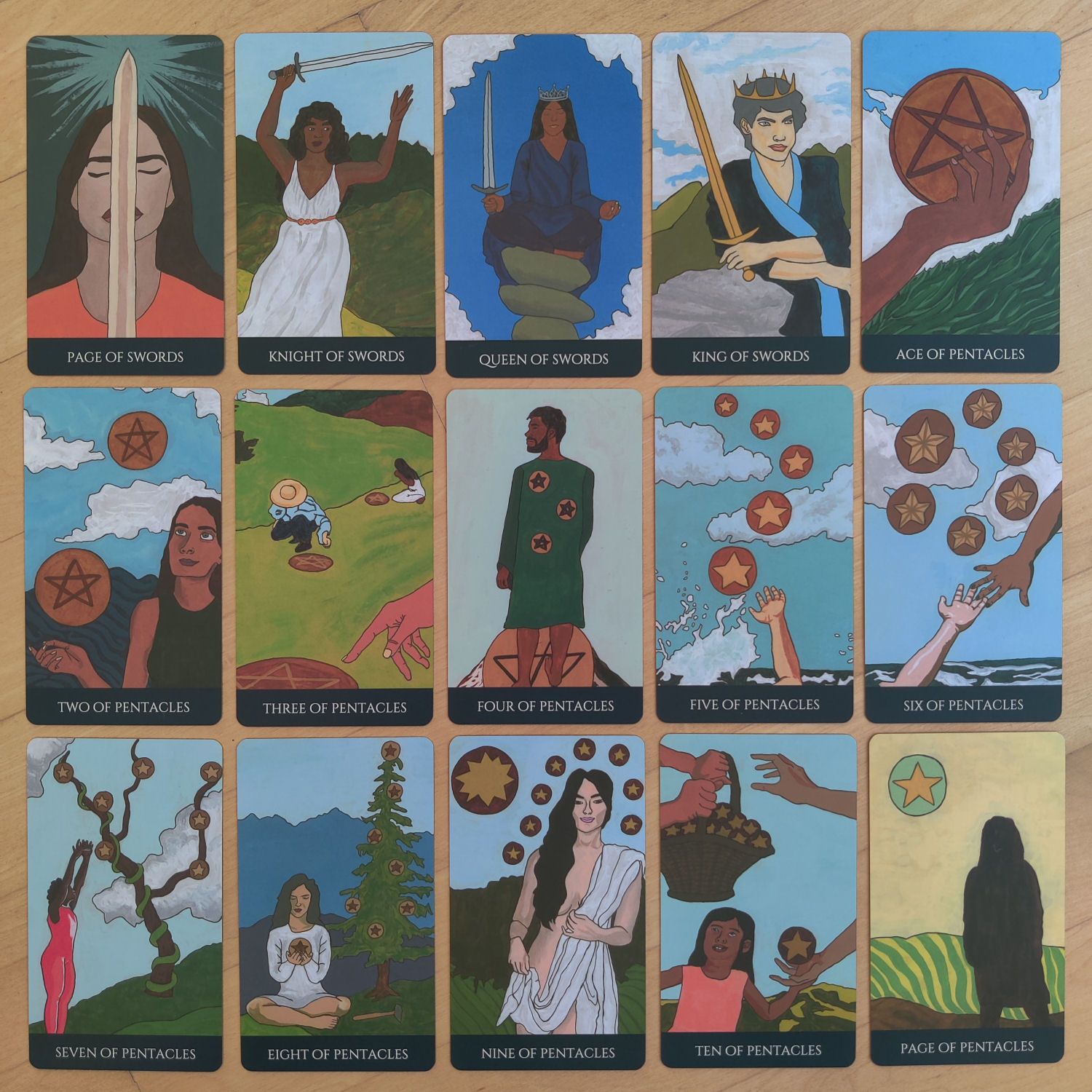
The timing of this review is ripe for talking about the increasing popularity of using AI generated illustrations in tarot and whether it will supplant the role of human artists. I’m not sure you can compare the two approaches head to head.
When art is rendered freehand by a human, there are these perfect imperfections that express vulnerability, of interpreting the human experience that the tarot archetypes are conveying rather than mimicry, and it’s here where a human artist’s soul is most visible.
It’s why we still generally tend to gravitate toward appreciating traditional media, why a deck like Huntenburg’s Genius Garden handles better, reads better. When you feel connected to the artist of the deck, you feel more connected to the deck itself, and that necessary rapport is easier to establish.
So while there may be a place for AI decks, it won’t replace traditional media decks.
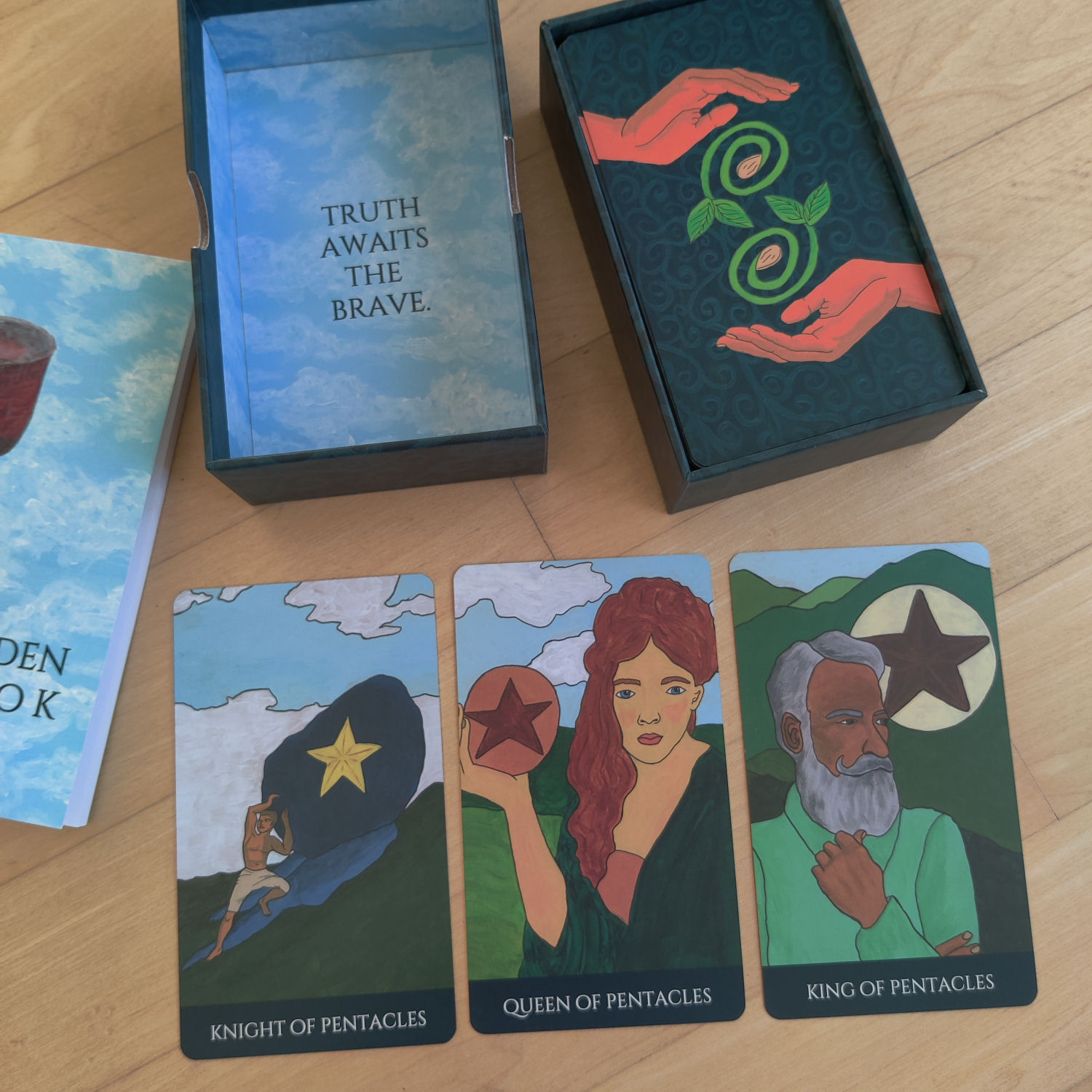
What comes through most prominently in Genius Garden than in many others that try to achieve the same effect is placing you in the position of the Observer.
The Two and Three of Wands, Seven and Eight of Wands, just to name a few, are composed in a first-person point of view, as if you observing the landscape in front of you is integral to the composition itself.
In the King of Wands, Four of Cups, Seven and Eight of Cups, or the Knight of Pentacles, really all of them, you feel like you’re observing what’s happening to the individuals in the scene. Huntenberg’s art is vivid and picturesque in the way every painting draws you in and makes you part of its story.
Huntenberg’s Genius Garden Tarot is a back to basics tarot. The art point of view is about stripping away all our fancy tools and returning to just a paintbrush in hand. The symbolism is crystal clear, designed for simplicity and meditation.
I love the raw courage that Genius Garden embodies, and how these cards inspire you to be raw and courageous with your own creativity.


FTC Disclosure: In accordance with Title 16 of the U.S. Code of Federal Regulations Part 255, “Guides Concerning Use of Endorsements and Testimonials in Advertising,” I received these decks from the creator for prospective review. Everything I’ve said here is sincere and accurately reflects my opinion.
 benebell wen
Thank you so much for this beautiful and nuanced review. I sincerely appreciate the time you took to work with the deck and how you managed to discover my exact intent. You are a treasure to the tarot community and a light in the world. Thank you, Bell!
LikeLike
Pingback: #54321Tarot – benebell wen